
Pole Bean
Phaseolus vulgaris (indeterminate)
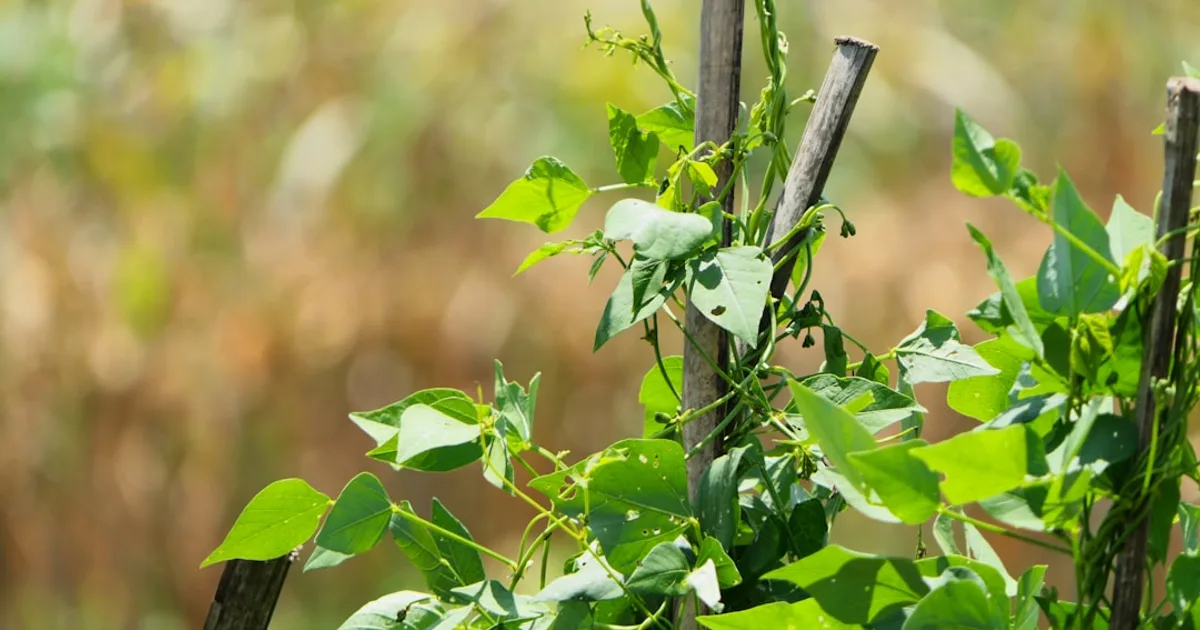
Pole beans and bush beans are the same species (Phaseolus vulgaris), but they operate on entirely different production logic. The distinction isn’t just about height. It’s about how the plant allocates resources and what that means for your harvest over a season.
Bush beans are determinate. They set a flush of pods, you harvest, and production largely stops. That behavior is what you want for canning - you get 4-6 pounds from a 10-foot row over two to three weeks, all at once, in August, when you’re ready to process them. Pole beans are indeterminate. They keep producing new flowers and pods at the growing tips as long as the conditions are right and you keep picking. The plant never decides it’s done. Strip the mature pods every two to three days and the plant treats it as a signal to produce more. Over a full growing season from early summer to frost, a 10-foot row will yield 10-18 pounds from a $2.00 seed investment. The trellis is a one-time infrastructure cost. The picking is what keeps the output coming.
What you’re growing
Phaseolus vulgaris is a New World crop, domesticated from wild bean populations in Mexico and Central America thousands of years ago. Indeterminate types - what we call pole beans - retain the wild plant’s vining growth habit. They will climb 6-10 feet up any structure you give them, producing leaves and flowers continuously along the stem rather than only at terminal nodes.
The “indeterminate” classification matters to the ROI model because yield doesn’t come in a single flush. The 10-18 lb per 10-foot row figure is cumulative, accumulated over 8-12 weeks of picking. Any individual harvest might only be a pound or two. The value is in the duration, not the volume on any single day.
Beans fix atmospheric nitrogen through a symbiotic relationship with Rhizobium leguminosarum bv. phaseoli bacteria in root nodules, which means your soil inputs are low. Do not over-apply nitrogen fertilizer. Excess nitrogen produces vigorous vegetative growth and disappointing pod set. If you’ve grown beans or other legumes in that bed before, the rhizobia are probably already present. If not, or if you haven’t grown legumes there in several years, inoculate your seeds before planting. Inoculant powder is available at most seed suppliers for $3-5 and treats many plantings.
Pole vs. bush ROI comparison
Both crops are worth growing, but for different reasons. The comparison below uses USDA AMS retail pricing for fresh green beans and extension-based yield figures for home gardens.
| Type | Days to Maturity | Harvest Window | Yield per 10-ft Row | Seed Cost | Input Cost | Yield Value at $2/lb | Net |
|---|---|---|---|---|---|---|---|
| Bush bean | 50-55 days | 2-3 weeks | 4-6 lbs | $1.50 | $0 | $8-12 | $7-11 |
| Pole bean | 60-65 days to first | 8-12 weeks | 10-18 lbs | $2.00 | $3 trellis (one-time) | $20-36 | $17-30 |
Sources: USDA AMS Specialty Crop Market News (2023) for retail bean price; Penn State Extension Vegetable Production for the Home Garden for yield ranges.
A few things this table doesn’t fully capture. The trellis cost for pole beans is one-time and amortizes over however long you continue gardening - after year one, the infrastructure cost is essentially $0. The bush bean advantage in days to first harvest (50-55 vs. 60-65) disappears quickly when you account for total season output. And the $17-30 net on a single 10-foot row from $2.99 in seed is a return that very few investments offer in any context.
The bush bean case remains valid when you’re preserving a large batch or when you have limited time to tend a crop. Pole beans require more attention through the season - you need to pick consistently or production stalls. Choose based on how you plan to use the harvest.
Trellis options and economics
Pole beans need vertical structure. The plant can’t stand up on its own and will sprawl and yield poorly without something to climb. The good news is that the infrastructure options range from free to modest, and anything you install this year serves you for years afterward.
Bamboo tripod or teepee ($0-5): Three or four 6-8 foot bamboo poles tied at the top. Plant 3-5 seeds at the base of each pole. This works well for a small planting or a single decorative grouping. Cost is zero if you have bamboo growing nearby or can source poles from a neighbor. Eight dollars at a garden center for a bundle.
Wire cattle panel ($0.50-1.50 per row foot, one-time): A 16-foot cattle panel bent into an arch or stood vertically as a trellis handles 8-16 linear feet of beans and lasts indefinitely. The math: a $25-30 panel covering 16 feet = $1.50-1.87 per foot. Over five years, that’s $0.30-0.37 per foot per year. The structural stability is better than any homemade system.
String and stake system ($3-8 per 25-foot row): Drive stakes every 4-5 feet, string horizontal wire or twine between them, and add vertical strings for the vines to wind up. Labor-intensive to set up but very low material cost. Works well in long rows.
Amortized over five years of planting, even the most expensive trellis option adds less than $1 per year to the cost of production. This makes pole beans economically superior to bush beans in any setup where you’re planning to grow beans more than once. The first season you’re paying for infrastructure. After that, you’re just buying seed.
Variety guide
Not all pole beans produce the same pod or serve the same purpose. Four varieties worth knowing:
Kentucky Wonder (65 days) - The standard by which most pole beans are measured. An American heirloom open-pollinated variety that has been continuously grown since the 1800s. Reliable, productive, and good both fresh and as a shelly bean. Open-pollinated means you can save seed from year to year without any loss of variety integrity. Widely available. No price premium at retail.
Rattlesnake (65 days) - Named for the distinctive purple streaks on the green pods. The streaks fade to green when cooked. Excellent flavor fresh or as a dried bean. More heat-tolerant than many varieties, which matters if you’re in the South or experiencing a hot summer. Open-pollinated. The dried beans are brown-speckled and worth the wait if you let some pods mature.
Dragon Tongue (58 days) - Technically a wax bean type with flat, broad yellow pods streaked with purple. Not a classic round-pod “green bean” but widely grown as a pole type. Flavor is mild and buttery. Commands $3-5/lb at farmers markets where the visual novelty justifies a premium - if you’re selling produce, this is worth growing. Faster to first harvest than most pole types.
Yardlong / Asparagus Bean (Vigna unguiculata subsp. sesquipedalis, 75-80 days) - A different species from common beans, though grown the same way. Pods reach 12-18 inches at full size; harvest at 12-14 inches before they get pithy. Standard in Chinese, Southeast Asian, and Indian cooking. Specialty grocers price them at $2-4/lb, and they are essentially impossible to find fresh outside of specialty markets in most of the US. Heat-tolerant and productive in hot summers where common beans struggle. Save seed and replant annually.
Succession planting note
Pole beans don’t benefit from succession planting the way fast-maturing crops do. Plant one batch two weeks after your last frost date when soil temperature reaches 60°F - this single planting will produce through summer and into fall, stopping only when temperatures drop or frost arrives. There’s no reason to start a second planting unless you want dried beans from the second batch and intend to let it fully mature without picking for fresh use.
The contrast with arugula or lettuce is instructive. Those crops bolt and become unusable after 4-6 weeks, which is why you succession-plant every two to three weeks to maintain supply. A pole bean plant at 10 weeks is still producing at full speed if you’ve been picking. One well-timed planting covers the season.
If your goal is dried beans from some of the harvest, stop picking from the plants you’ve designated for seed or dried-bean production in late summer. Let those pods yellow and dry completely on the vine. The plants you’re still picking fresh will continue producing until frost.
Seed saving
Pole beans are among the easiest crops for seed saving. They are self-pollinating - the flower pollination happens before the petals open, which means cross-pollination from other bean varieties in the garden is uncommon. You don’t need isolation distances that some other crops require.
Select pods from your best-producing plants and let them dry completely on the vine. The pods will turn tan and papery and rattle when you shake them. Bring the pods inside and shell them. Spread the seeds in a single layer on a paper towel or screen and let them dry for another two weeks at room temperature. Fully dried seeds snap rather than bend when you try to fold them.
Store in an airtight container - a glass jar with a tight lid - in a cool, dark location. Label with variety and year. Viability typically runs 3-4 years under good storage conditions, though germination rate declines after year two.
Year two onward: seed cost is $0. Your $2.99 first-year investment covers every subsequent planting from saved seed. The net ROI on pole beans gets better every year you keep the seed line going.
Related crops: Green Bean, Edamame
Related reading: Beginner Homestead Crops - which vegetables make sense for first-season gardens and why
Frequently Asked Questions
How much do pole beans yield per plant?
Pole bean plants produce more than bush beans over a longer season - about 0.5 to 0.75 lbs per plant. A trellised row of 10 plants yields 5 to 8 lbs total.
How long do pole beans take to grow?
Pole beans take 55 to 65 days from direct sowing to first harvest. Unlike bush beans, they continue producing for 4 to 6 weeks after first harvest, not just 2 to 3 weeks.
Is growing pole beans worth it financially?
Grocery green beans average $2/lb. A $2.99 seed packet planted on a 6-foot trellis can yield 5 or more lbs, returning more than twice the seed cost without the need for successive planting.
How do you store pole beans?
Fresh pole beans keep in the refrigerator for about a week. Blanch 3 minutes and freeze for 8 to 12 months of storage. Dry beans can be left on the vine to fully mature and dried for winter storage.
Growing Pole Bean? Track your harvest value and break-even date in the Garden ROI app.
Get the App