
Pomegranate
Punica granatum
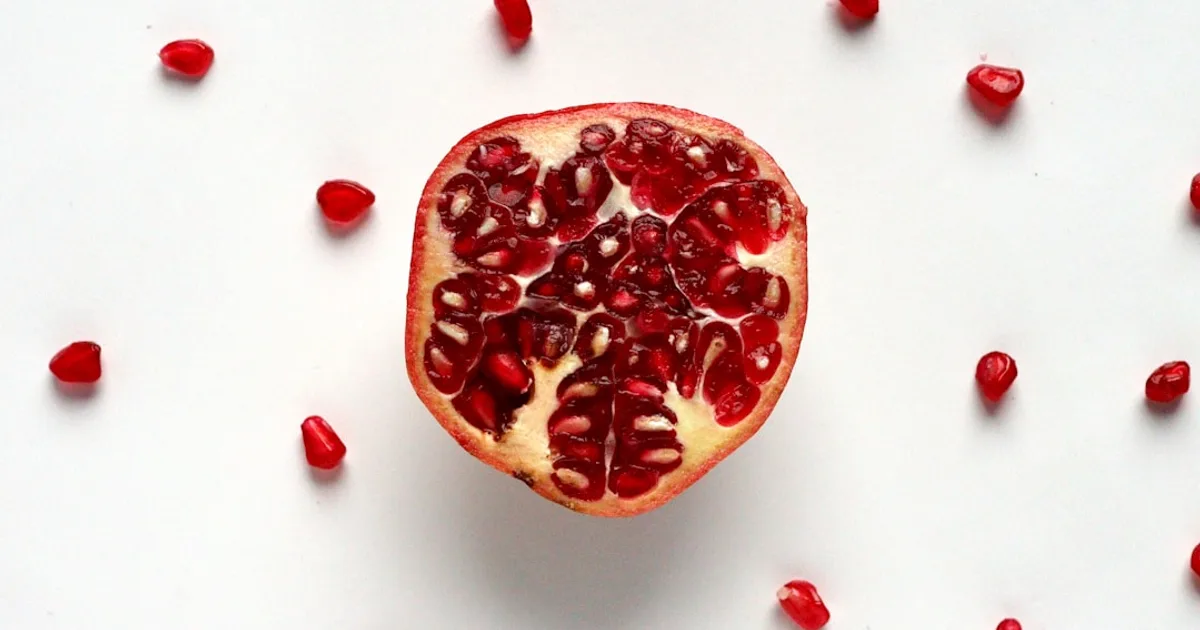
A pomegranate planted in the right zone will handle drought, shrug off alkaline soil, and keep producing through summer heat that would stress most stone fruits. The plant is native to the region from Iran to northern India - adapted to arid and semi-arid conditions over 4,000 years of cultivation - which is why it performs reliably in low-water gardens from California to the Gulf Coast. A mature bush (they’re more shrub than tree in most garden situations) produces 20-40 lb of fruit annually at $3-8 per fruit retail. The arils (seeds with their juice sacs) and juice retail for more per pound when processed.
In zones 8-11, pomegranates are a reliable, low-input perennial. In zone 7, they need a sheltered south-facing site. In zones 5-6, container culture with winter indoor storage is the approach - a 15-gallon pot produces limited but real fruit.
What it actually is
Punica granatum is a deciduous shrub or small tree native to the region from Iran to northern India, cultivated continuously for at least 4,000 years (Stover and Mercure, HortScience, 2007). In warm climates it reaches 15-20 feet as an unpruned shrub; trained as a tree with a single trunk it tops out around 12-15 feet. In most US gardens it behaves as a 6-10 foot multi-stemmed shrub.
The fruit is technically a berry - a thick leathery rind enclosing hundreds of arils, each a juice sac surrounding a seed. The color of both rind and arils varies by cultivar from pale yellow to deep crimson.
Key cultivars:
| Variety | Zones | Flavor | Rind color | Cold hardiness | Notes |
|---|---|---|---|---|---|
| Wonderful | 8-11 | Tart-sweet, complex | Deep red | Hardy to 10°F | Dominant commercial variety; excellent |
| Ambrosia | 7-10 | Sweet, mild | Pink-red | Hardy to 5-10°F | Best fresh eating |
| Grenada | 8-11 | Very tart | Dark red | Similar to Wonderful | Earlier than Wonderful by 4-6 weeks |
| Angel Red | 8-11 | Sweet, low acid | Red | Similar | Soft seeds; excellent juice |
| Sienevyi | 6-9 | Sweet | Pink-red | Hardy to -5°F | Most cold-hardy large-fruited variety |
| Kazake | 6-9 | Good | Red | Hardy to -5°F | Cold-hardy former Soviet variety |
‘Sienevyi’ and ‘Kazake’ extend pomegranate culture into zone 6-7 gardens.
Grafted vs. seedling: for fruit quality, buy grafted trees from a named variety. Pomegranate grown from seed does not breed true - the offspring from ‘Wonderful’ seed produces a plant with unpredictable fruit characteristics, often inferior to the parent. Grafted trees also fruit 2-3 years earlier than seedlings. Named grafted trees cost $20-40 from mail-order nurseries; seedling trees from big-box stores may be inexpensive but you won’t know what you’re getting until year 4 or 5.
The ROI case
Pomegranates begin producing at year 3-4 and reach full production by year 5-7. The 10-year calculation below uses a conservative $4/lb and assumes zone 8-9 reliable production after year 3.
| Year | Yield estimate | Value @$4/lb | Cumulative value | Shrub cost | Cumulative net |
|---|---|---|---|---|---|
| 1-2 | 0 | $0 | $0 | -$24.99 | -$24.99 |
| 3 | 3 lb | $12 | $12 | - | -$12.99 |
| 4 | 10 lb | $40 | $52 | - | $27.01 |
| 5 | 20 lb | $80 | $132 | - | $107.01 |
| 7 | 30 lb | $120 | $332 (est.) | - | $307.01 |
| 10 | 35 lb | $140 | $632 (est.) | - | $607.01 |
Juice value changes the calculation. Fresh pomegranate juice retails for $8-12/lb equivalent. Processing fruit into juice roughly triples the per-pound value, at the cost of time and equipment.
Growing requirements
Climate: full summer heat is required for fruit to develop proper sweetness and color. Pomegranates do best where summers are hot and dry (Mediterranean climates, Southwest US) and winters are mild but include some cold (they need 200+ chill hours to break dormancy properly). Humid summer climates (Southeast US) are less ideal but workable with good air circulation and drainage.
Soil: extremely adaptable. Tolerates alkaline soils that challenge most fruit crops (pH 5.5-8.5). Tolerates poor, rocky soils as long as drainage is adequate. The one failure condition is waterlogged roots.
Planting: plant container-grown shrubs in spring after last frost. Dig a hole 2-3 times the container width; pomegranates establish quickly in warm soil. No staking needed for shrub form.
Watering: needs regular watering during the first 1-2 years while establishing. Once established, pomegranates are drought-tolerant - in their native range they survive on 200-400mm annual rainfall. In production-oriented home gardens, deep irrigation every 1-2 weeks during fruit development (summer through fall) improves yield and fruit size.
Pruning: pomegranates sucker heavily. Train to 3-5 main trunks for a dense shrub, or to a single trunk for tree form. Remove suckers as they appear at the base. Annual pruning in late winter removes dead wood and maintains shape. Fruit develops on short spurs and on tips of new growth.
What goes wrong
Fruit splitting is the most common production problem and the one that most frustrates gardeners who have successfully grown a tree to full production. The mechanism: the rind is a living structure that expands slowly over the growing season. A dry period causes the rind to harden slightly; heavy rain or irrigation following that dry period causes rapid expansion of the interior juice sacs that the hardened rind can’t accommodate. The fruit cracks open, sometimes completely in half. Once cracked, mold and insects enter within days and the fruit is lost. Prevention: consistent irrigation from the time fruits reach full size (August) through harvest. This is the entire management task for avoiding splitting - do not irrigate heavily and lightly in alternating cycles. A drip system on a timer is better than hand-watering for maintaining consistency through late summer heat.
Alternate bearing: pomegranates sometimes produce heavily one year and lightly the next, a pattern common in many fruit trees. Consistent fertilization and irrigation smooths out this tendency over time. Thinning fruit in heavy years (remove 30-40% of developing fruits in June) also helps by reducing the metabolic load that pushes the tree toward a rest year.
Leaf-footed bug (Leptoglossus spp.): large, brown-and-orange bugs that pierce fruit and cause premature dropping. Handpick adults; neem oil spray on nymphs. More problematic in the Southwest.
Cercospora fruit spot and Alternaria fruit rot in humid climates: fungal diseases that attack the fruit in wet falls. Improve air circulation, avoid overhead irrigation during fruit ripening.
Hard freeze damage: even cold-hardy varieties sustain tip dieback at temperatures below their hardiness rating. Heavy mulching around the root zone in fall protects the root system; the shrub may die back to the ground but regrows from roots. In zone 7, plant against a south-facing wall for reflected heat and wind protection.
Harvest and use
Pomegranates ripen late - August through November depending on variety and location, with ‘Wonderful’ typically hitting peak in October in California. The fruit signals ripeness: the skin develops a matte finish (the sheen of unripe fruit disappears), the fruit feels heavy for its size, and a gentle tap produces a metallic sound. Color development is variety-dependent - don’t rely on redness alone.
Harvest by cutting the stem, not pulling. Pomegranates don’t ripen further off the tree but keep exceptionally well - 1-2 months at room temperature in cool, dry conditions; 2-4 months refrigerated at 32-41°F. This extended storage life is one of the practical advantages of home growing over grocery purchasing: a tree producing 30 lb in October provides fruit through February without any processing, canning, or preservation effort. Whole ariled pomegranate seeds also freeze well (spread on a sheet pan to freeze individually, then transfer to bags) for up to 1 year - a convenient way to extend the utility of a large harvest past the fresh storage window.
Ariling technique: submerge the halved fruit in a bowl of water, then break apart the sections and pop out the arils underwater. The arils sink; the white pith floats. This contains the juice and prevents staining.
Core preparations:
-
Fresh arils as garnish or salad ingredient: the standard restaurant use. Arils on yogurt, grain bowls, salads, cheese boards. The crunch and acid make them a versatile garnish.
-
Pomegranate molasses: reduce pomegranate juice over medium heat with sugar and lemon juice until thick and syrupy. Used in Persian cooking for braised meats (fesenjan), salad dressings, and glazes. One cup of juice produces roughly 1/4 cup molasses.
-
Fresh juice: arils blended briefly and strained. 1 lb of arils produces about 1/2 cup juice. At $8-10/lb fresh equivalent, this is where the highest per-unit value lies.
-
Persian walnut pomegranate stew (Fesenjan): ground walnuts and pomegranate molasses braised with chicken or duck. The defining dish of Persian cooking; pomegranate is essential.
-
Pomegranate vinaigrette: pomegranate juice reduced by half, whisked with olive oil, shallot, and salt. Better than commercial pomegranate dressings.
Market Value and Long-Term ROI
Retail pomegranate pricing varies by variety and season. Standard ‘Wonderful’ fruits at grocery stores in October-November run $2-4 each (roughly 1-2 lb per fruit at $1.50-3.00/lb). Fresh arils (pre-seeded, ready-to-eat) at specialty grocers and Trader Joe’s run $6-10 per small container, which is roughly 4-6 oz of arils - making the per-pound aril price $16-26 (USDA Agricultural Marketing Service, Specialty Crops Terminal Market Reports, 2024). At that value, 5 lb of arils from home processing equates to $80-130 in retail equivalent.
Pomegranate juice at specialty grocers runs $8-12 per liter. 1 lb of arils yields approximately 4-6 oz of juice, making the per-liter input cost roughly 2.5-3 lb of arils ($7-9 worth at specialty grocery aril pricing) for a liter of juice that retails at $8-12. The margin is thin for juice but positive.
The long-term case for pomegranate is simple: a single ‘Wonderful’ or ‘Sienevyi’ shrub purchased for $25-40 and properly sited in zones 7-10 produces fruit for 20-30 years or more. Pomegranate trees in Southern California and the Mediterranean exceed 50 years of production. The upfront investment per decade of production is trivial. Consistent fertilization, irrigation, and annual pruning - an hour of work per season on a mature shrub - sustains that production. There are very few perennial fruit crops with this combination of longevity, low input, and high fruit value.
Related reading: Fig - drought-tolerant companion fruit tree with similar Mediterranean origin and long-term ROI; Quince - fellow Middle Eastern fruit with long-lived tree economics
Growing Pomegranate? Track your harvest value and break-even date in the Garden ROI app.
Get the App