
Watercress
Nasturtium officinale
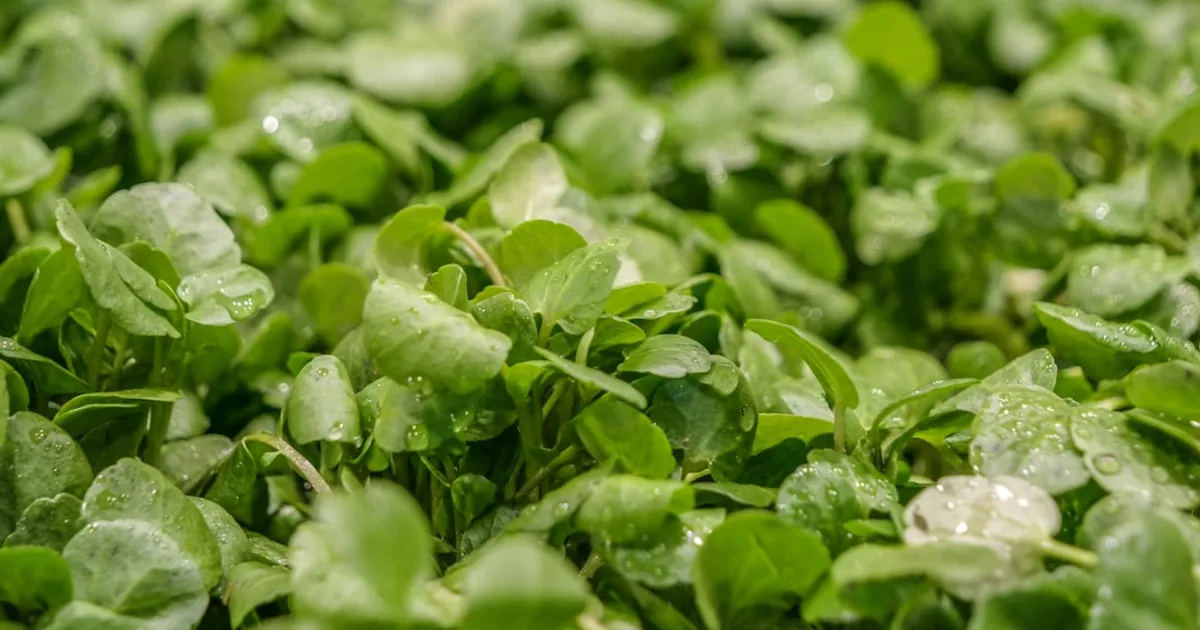
Watercress (Nasturtium officinale) sells for $6-9 per pound at specialty grocers and farmers markets (USDA AMS Specialty Crop Market News, 2023), and you can grow it in a plastic tub of water on a porch. No raised bed required. It’s one of the fastest-maturing greens you can grow - harvestable in 30-40 days from seed - and it regrows after cutting like most salad greens. That combination of high price, fast turnaround, and minimal infrastructure makes it worth growing even if you have limited space.
What it actually is
Despite sharing a common name with nasturtium flowers, watercress is not in the genus Tropaeolum (which is what most gardeners mean by “nasturtiums”). Watercress is Nasturtium officinale, in the Brassicaceae family alongside arugula, kale, and mustard greens. The name overlap causes consistent confusion; the plants are unrelated. Watercress has small, rounded leaflets arranged in a pinnate pattern along trailing stems, with a sharp, peppery, mustard-like bite that mellows slightly when cooked. The flavor compounds are glucosinolates - the same class of compounds that give arugula and horseradish their heat.
In the wild, watercress grows rooted in gravel along the edges of cold, fast-moving streams. In the garden, you’re replicating that condition: saturated substrate, cool water, and reasonable light.
The ROI case
A packet of watercress seed costs $2.99 and contains 300-500 seeds. In a single growing season, you can run multiple succession plantings 2-3 weeks apart, each yielding roughly 0.12 lb per cut from a 12-inch container, with 3 cuts over 6 weeks before bolting. That’s 0.36 lb per container per cycle.
Run four containers through two productive seasons - a spring cycle and a fall cycle - and the math looks like this:
0.36 lb per container x 4 containers x 2 seasons = approximately 2.9 lb per year At $7.50/lb average retail (USDA AMS, 2023): 2.9 lb x $7.50 = $21.75/year Subtract seed cost: $21.75 - $2.99 = $18.76 net value per year, ongoing from the same packet
The seed packet replants all four containers with seeds to spare. In mild climates where watercress overwinters in containers and stays productive indoors, that annual yield climbs further.
Be direct about scale: a single container harvest is 2-3 oz. You are not replacing your vegetable budget. The value here is high price per pound, exceptional freshness compared to refrigerated supermarket bunches, and access to a green that most people cannot find at their local grocery store.
Container culture: the specific method
This is where most home watercress attempts go wrong - people treat it like a normal potted herb and wonder why it dies in two days.
Use wide, shallow containers. A 12-16 inch diameter plastic tub works well. So does a standard 5-gallon bucket. Depth matters less than surface area, since watercress spreads horizontally. Fill with 3-4 inches of heavy potting mix or aquatic compost - regular potting mix tends to float if it’s too light, so mixing in a handful of coarse sand helps anchor it.
Set the container in a tray or shallow saucer and keep 1-2 inches of standing water in that tray at all times. Refresh the water every 3-4 days to prevent stagnation. If you want to skip the daily water check, a small aquarium pump ($10-15 at any pet store) circulating water between the tray and a secondary reservoir handles this automatically and keeps the water oxygenated.
Sow seeds directly on the surface of the substrate and press them lightly into contact - do not bury them. Watercress seeds need light to germinate (Royal Horticultural Society, container watercress guidance). Germination occurs at 50-70°F, typically within 5-7 days. Once seedlings are established, the only maintenance is keeping water in the tray and harvesting before the plants bolt.
This entire setup works on a balcony or covered porch with no garden space. The containers are not heavy, they don’t require drainage holes (the point is standing water), and they can move indoors when temperatures drop.
Year-round production: staggering for continuous supply
A single watercress container stays productive for 6-8 weeks under cool conditions before it bolts and the flavor turns harsh. You can’t fix bolting once it starts. The solution is staggered plantings.
Start a new container every two weeks throughout the cool season. With four containers running on a two-week offset, you always have at least one container at optimal harvest stage. When a container bolts, pull it, rinse it out, and start fresh. The turnaround is fast enough that this doesn’t feel like work.
In climates where outdoor temperatures stay below 70°F for most of the year - coastal Pacific Northwest, for example - watercress can run as a near-year-round crop. In USDA hardiness zones 6 and above, containers moved indoors near a bright window can stay productive through winter (OSU Extension). The plants don’t need a dormant period. They need cool temperatures and constant moisture.
Hot climates (zones 9-10) get two windows: early spring before temperatures climb past 75°F and fall after they drop back below it. Between those windows, the crop is not viable outdoors.
Growing requirements
Cool temperatures (50-70°F) produce the best flavor. Above 80°F, watercress bolts quickly and turns bitter. Like most brassica relatives, it performs best in spring and fall. Full sun works in cool weather; partial shade (4-5 hours of direct light) is actually preferable in late spring when days are warming, since it slows bolting.
Soil pH of 6.5-7.5. In water culture, pH management is not needed for short-cycle harvests.
If growing in ground - which requires consistently wet, low areas beside a rain barrel, at a downspout outlet, or in a permanent low spot - the same temperature rules apply. The in-ground approach produces more volume per planting but requires a location few home gardens have.
What goes wrong
Bolting is the primary failure mode. Warm temperatures above 75-80°F trigger seed stalk production within days. Once it bolts, the stems go woody and the flavor becomes harsh. Harvest before this point and start a new sowing. There’s no way to reverse it.
Water quality matters more than most people expect. Stagnant, warm water in container culture promotes bacterial and fungal growth that rots stems at the water line. Change water on schedule or run a circulation pump.
Brown leaf margins usually indicate water stress - even brief periods of drying out damage watercress faster than most greens. Check your container water level daily in hot weather.
Leaf miners - particularly Hydrellia species aquatic leaf miners - can damage leaves in wet conditions. The damage is cosmetic for most home gardeners; infested leaves are still edible. Row cover prevents egg-laying in high-pressure situations.
Stagnation smell is a sign you’ve gone too long between water changes. It won’t kill the plant immediately, but it creates conditions that will. Three to four days is the outer limit without circulation.
Safety note on wild vs. container watercress
In natural stream or pond edges, watercress can carry Fasciola hepatica (liver fluke) in areas where livestock graze upstream. This is a real hazard: liver fluke infection is a serious helminthic disease, and wild-harvested watercress from agricultural watersheds has caused documented human infections (Penn State Extension, food safety guidance for wild-harvested aquatic plants). Cooking kills the parasites; eating raw wild-harvested watercress near livestock is the risk.
Container-grown watercress eliminates this entirely. Your containers hold tap water or collected rainwater. There are no livestock, no wildlife grazing upstream, no stream system connecting your tub to anything. This is one practical advantage of container culture that goes beyond convenience - you get to eat your harvest raw, which is where most of the flavor and nutritional value is, without any of the wild-harvest risk.
Don’t harvest wild watercress from streams or ditches near farms. Grow your own.
Harvest and storage
Cut stems 2-3 inches above the water line when plants are 6-8 inches tall. Leave the lower stems and roots intact - they will regrow and produce another harvest in 2-3 weeks under cool conditions.
Store cut watercress with stems in a glass of cold water, loosely covered, in the refrigerator. It holds for 3-5 days this way. Don’t store it in a sealed bag without stems in water - it wilts rapidly and loses most of its flavor and color before it’s visibly dead.
A single cut from a 12-inch container yields roughly 2-3 oz. That’s enough for a salad for two people, a cup of soup, or a generous sandwich garnish.
In the kitchen
The peppery bite in watercress comes from glucosinolate compounds, specifically gluconasturtiin. These compounds are heat-sensitive and volatile. Prolonged cooking destroys both the flavor and the bright green color. Add watercress to hot dishes at the very last second - or don’t add it to hot dishes at all.
Potage au cresson (French watercress soup) illustrates the right approach. Build a standard potato-leek base - sweat leeks in butter, add diced potato, stock, simmer until the potato is soft. Blend it. Then, just before serving, drop in the watercress, blend again for no more than 30 seconds, and plate immediately. The residual heat wilts it slightly but preserves the color and pepper. Serve it cold as vichyssoise variation in summer and you don’t even need to heat it at all.
Stir-fried watercress is a Cantonese standard preparation - whole stems, high heat, garlic, oyster sauce, 90 seconds total. The speed is the technique. More than two minutes and you’re eating olive-colored mush.
Raw uses are where container-grown watercress earns its keep. Cream cheese and watercress on dark bread is a combination that hasn’t changed much since Victorian tea sandwiches for a reason. It works with smoked salmon the same way. A watercress and orange segment salad with a light vinaigrette uses the bitterness of the green against the sweetness of the citrus in a way that works better than it has any right to.
In any application: don’t cook it longer than necessary, and if you can use it raw, do.
Volume reality check
Four containers running in rotation will yield roughly 8-12 oz per week at peak production during optimal cool-season conditions. That is a real supplement to your salad rotation, and it’s a green you can’t get at most grocery stores. It is not a larder-filling crop. You’re not canning watercress or building a winter supply.
The case for growing it is simple: high retail price, minimal setup cost, fast harvest cycle, and a fresh product that’s better than what’s available commercially. Freshly cut watercress from your porch tray and day-old supermarket watercress that traveled 1,500 miles in refrigerated transit are not the same ingredient.
Related crops: Arugula, Mint, Spinach
Related reading: Companion Planting Basics - how to structure plantings for mutual benefit in small spaces
Growing Watercress? Track your harvest value and break-even date in the Garden ROI app.
Get the App