
Calendula
Calendula officinalis
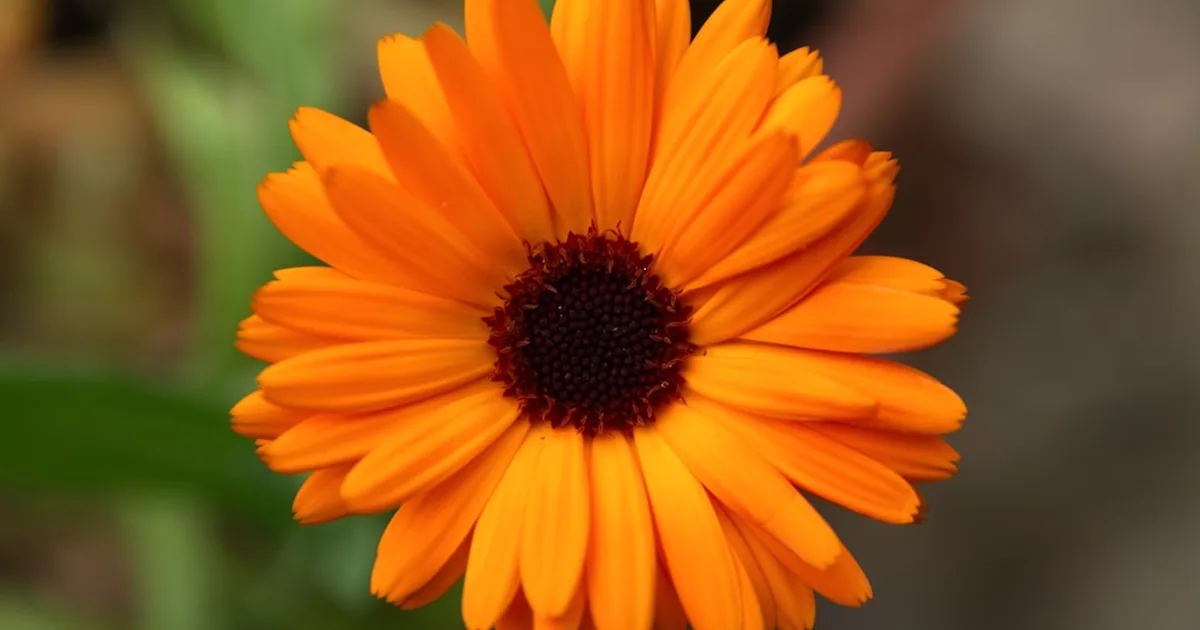
A $2.49 seed packet of calendula is one of the better investments in a kitchen garden. Not because it’s easy to grow - though it is - but because it has three separate revenue streams that most edible flowers don’t have: fresh cut flowers for farmers markets, dried petals for the herbalism and cosmetic ingredient trade, and companion planting value that’s measurable in reduced pest pressure on neighboring crops. Most plants give you one of those. Calendula gives you all three.
The math on the dried petal stream is where it gets interesting. Stick with that calculation, because it changes how you think about the crop.
What it actually is
Calendula (Calendula officinalis) is in the Asteraceae family, native to the Mediterranean, and has been cultivated for at least 900 years for culinary, medicinal, and dye purposes. It’s sometimes called “pot marigold,” which causes real confusion - true marigolds (Tagetes spp.) are unrelated plants in a different genus. The names stuck together historically because both were used as pot herbs and both produce yellow-orange flowers. If you grow both, you’ll notice the difference immediately: Tagetes has a sharp, pungent scent from thiophene compounds; calendula flowers have a mild, slightly resinous fragrance.
The flowers are the commercially useful portion. The orange and yellow pigments are primarily carotenoids - flavoxanthin and auroxanthin. But the compounds that drive the skincare market are not the carotenoids. The active compounds with documented biological activity are flavonoids (isorhamnetin, narcissin, quercetin derivatives) and triterpenoids (oleanolic acid, ursolic acid, and calendulosides A-F) (Muley et al., “Phytochemistry and pharmacological aspects of Calendula officinalis,” Pharmacognosy Reviews, 2009). Both compound classes are fat-soluble, which is why the standard preparation is an infused oil rather than a water extract. You steep dried petals in a carrier oil - usually olive, jojoba, or sweet almond - for 4-6 weeks. That oil becomes the base ingredient for calendula salve, lotion bars, and facial serums.
The petals taste mildly bitter and slightly peppery when raw, neutral when cooked. They’re used to add color to rice, eggs, soups, salads, and baked goods - a function historically served by saffron in households that couldn’t afford it.
The three revenue streams
Cut flowers. Fresh calendula stems sell at $1-3 per stem at farmers markets, alongside other specialty cut flowers. A well-managed plant produces 40-60 flowers over the course of a season. At $1.50 per stem (a conservative market price), that’s $60-90 retail value from a single plant, though you’re obviously not selling individual stems from your garden - the point is the volume potential from a planting.
Dried petals - the real calculation. This is the stream most growers ignore, and it’s the one with the best per-pound economics.
Dried calendula petals sell at $20-40 per pound retail, with $30/lb being a reasonable midpoint for the cosmetic ingredient and herbal tea market. Wholesale to herbalists, soapmakers, or small natural skincare producers runs $15-25/lb (American Herb Products Association market surveys, 2022). The drying ratio matters: it takes 5-8 lb of fresh flowers to produce 1 lb of dried petals, because fresh petals carry a lot of water.
One vigorous calendula plant produces 0.5-1 lb of fresh flowers over a season with consistent deadheading. Run the numbers on a modest 10-plant row:
| Input | Low estimate | High estimate |
|---|---|---|
| Plants in row | 10 | 10 |
| Fresh flowers per plant (lb) | 0.5 | 1.0 |
| Total fresh flowers (lb) | 5.0 | 10.0 |
| Dried petal yield at 6 lb:1 lb ratio (lb) | 0.83 | 1.67 |
| Value at $30/lb dried | $25 | $50 |
| Seed cost for the row | $2.49 | $2.49 |
From a $2.49 packet, a 10-plant row produces somewhere between $18 and $60 in dried petals at $30/lb, depending on plant vigor and growing conditions. That’s not accounting for any cut flower sales along the way. The seed cost essentially disappears.
Companion planting value. This one doesn’t show up in a dollar figure directly, but it’s real. Calendula attracts aphid populations away from neighboring crops - it functions as a trap crop - and simultaneously draws in parasitic wasps, hoverflies, and lacewings that prey on those aphids and on other garden pests. The open, accessible flower structure of Asteraceae species makes nectar available to small beneficial insects that can’t reach nectar in more complex flowers (Robson et al., “Floral resources for beneficial insects,” Biological Control, 2016). Planted at the edges of tomato beds, calendula measurably reduces aphid pressure on the tomatoes themselves. That’s not folk wisdom - it’s a documented mechanism.
Variety selection by use
Not all calendula is the same for production purposes. Variety choice matters more than it does with most herbs because different cultivars are optimized for different outputs.
| Variety | Best use | Bloom size | Key characteristic |
|---|---|---|---|
| Pacific Beauty Mix | Cut flower market | Large, 3-4 in | Wide color range, long stems, showy; grabs attention at market tables |
| Resina | Herbal/skincare production | Medium | Bred specifically for high resin and flavonoid content; most potent for medicinal preparations |
| Neon | Market flowers | Medium-large | Intense orange, high visibility; strong market appeal |
| Touch of Red | Specialty market flowers | Medium | Bicolor petals with red-tipped edges; distinctive and harder to find elsewhere |
| Alpha | General production | Medium | High petal count, reliable producer; good all-around for dried petals |
If you’re drying for skincare use or selling to herbalists, grow Resina. The resin content that makes it the right choice for medicinal preparations also gives it a slightly sticky feel when you harvest - you’ll notice it on your fingers. That’s the triterpenoids. If you’re selling cut flowers at a farmers market, Pacific Beauty Mix or Neon will move faster because of visual impact. Touch of Red is worth a row if you want something that looks different from every other calendula at the market.
Cool-season timing and what “cool-season” actually means
Calendula is not a summer crop. It prefers temperatures in the 60-75°F range and declines noticeably when sustained daytime heat exceeds 85-90°F. Flower production slows, bloom size drops, and petal count decreases. Plants don’t usually die in summer heat - they just stop performing.
In zones 4-6, you get spring and fall as your two productive windows. Sow seed directly outdoors 2-4 weeks before last frost date - calendula tolerates light frost and germinates in soil as cool as 50°F. That puts first sowing in late March or early April in most of the upper Midwest and Northeast. Plants will bloom from May or June through July, then slow down in August heat, then often resume in September when temperatures drop.
In zone 6 and warmer, fall planting is worth doing deliberately. A September sowing produces lush plants by October that are often the most productive of the year. In zones 7-9, those fall-planted plants can overwinter and bloom again in early spring before you’ve gotten around to starting your spring planting. In zone 10, calendula grows as a winter annual.
If you’re in a zone with real summer heat, pull spent plants in June and plan a fresh sowing for late July to early August. You’ll get a full fall flush. Don’t try to nurse summer-stressed plants back to productivity - the seed cost doesn’t justify it.
Managing continuous bloom
Deadheading is the whole job with calendula. The plant’s biological priority is seed production, and the moment you allow a flower to mature and set seed, you’re sending a signal to the plant that its work is done. Flower production slows. New buds don’t form at the rate they did.
Deadhead every 3-5 days during peak bloom. Don’t wait a week - that’s too long. Cut or pinch the stem below the flower head, back to the next lateral bud. You don’t need to be surgical about it; a quick pass with scissors works fine. What you’re doing is resetting the plant’s reproductive urgency and redirecting energy into new flower production.
At peak, a well-deadheaded plant will have multiple buds at different stages simultaneously - one flower open, two in tight bud, one or two small buds just forming below those. That staggered development is what you want to see. If your plant has one open flower and nothing else visible, you’re behind on deadheading.
For drying, harvest flowers when they’re fully open but before any petals start to curl back or fall. Strip petals from the flower head and spread in a single layer on a screen in a warm, ventilated space out of direct sun. A dehydrator at 95°F for 2-3 hours works well. Whole flower heads take longer to dry and can mold at the center if air circulation is poor, so petal-stripping first is faster and safer.
Stop deadheading entirely at season’s end - late August or September depending on your zone. Let the last flush of flowers mature into seed heads. Calendula self-seeds readily and the seed is large enough to collect by hand. Let 5-10 seed heads dry on the plant, then shake them into a paper bag. Store in a cool, dry place. Year 2 in most gardens is essentially free.
The skincare market context
The natural skincare market is worth understanding if you’re considering the dried petal channel. Calendula infused oil - petals macerated in a carrier oil for 4-6 weeks, then strained - is a base ingredient used by brands ranging from Weleda and Annmarie Gianni at the premium end to countless small-batch independent formulators. It goes into salves, balms, facial oils, baby skin products, and soap. A 2-oz jar of calendula salve retails at $15-30 at natural product stores and farmers markets.
The active compounds are why the market exists. The flavonoids (quercetin, isorhamnetin) have documented anti-inflammatory activity in tissue models. The triterpenoids (oleanolic acid, ursolic acid) have shown wound-healing and skin-barrier supporting properties in controlled studies (Hamburger et al., “Preparative purification of the major anti-inflammatory triterpenoid esters from marigold,” Phytomedicine, 2003). These are fat-soluble, which is why oil infusion extracts them more efficiently than water. A water-based tea or tincture doesn’t capture the same profile of compounds.
What this means for a grower: the Resina variety commands a premium in this market precisely because it was selected for high resin and active compound content. If you’re selling to a small cosmetic producer or herbalist, Resina dried petals are worth more than mixed-variety petals. That’s a legitimate quality distinction, not marketing.
For direct-to-consumer sales, jars of your own dried petals with a simple label explaining their use - facial steam, oil infusion, herbal tea blend - are a low-overhead product that moves well at farm stands and farmers markets alongside fresh cut flowers.
Growing requirements
Soil pH of 5.5-7.0. Calendula is not demanding about fertility - it tolerates poor, low-fertility soils better than most flowers. High fertility actually produces more foliage at the expense of flower density. Average garden soil is fine. If you’re amending, add compost for drainage rather than nitrogen.
Direct sow seeds 0.25 inch deep, spaced 4-6 inches initially, thinned to 12 inches when plants reach 4 inches tall. Calendula transplants well from cell packs if you prefer to start indoors 4-6 weeks before outdoor planting. The root system isn’t fragile.
Full sun, 6+ hours minimum. Plants in partial shade bloom less vigorously and are more susceptible to powdery mildew because of reduced air movement and light.
Water at roughly 1 inch per week. Calendula tolerates some drought once established but doesn’t produce well under chronic water stress. The flowers get smaller and the petal count drops.
What goes wrong
Powdery mildew (Erysiphe cichoracearum) is the most common problem, appearing as white powdery coating on leaves, usually in humid conditions or when plants are crowded. Good air circulation prevents most cases. Don’t crowd plantings - the 12-inch spacing recommendation exists for a reason. A milk spray (10% milk, 90% water) applied weekly has demonstrated efficacy in suppressing powdery mildew in controlled trials (Bettiol, “Effectiveness of cow’s milk against zucchini squash powdery mildew,” Crop Protection, 1999). Remove heavily infected plants rather than trying to treat them; it’s not worth the effort when seed cost is under $3.
Aphid colonies on new growth and flower buds are predictable in spring. The same trait that makes calendula valuable as a companion plant - it draws beneficials with open-access flowers - means aphid predators will find your planting quickly. Give the beneficial insect population 7-10 days to build before considering any intervention. Lady beetles, parasitic wasps, and lacewing larvae will do the work if you’re patient.
Slugs target young seedlings in cool, wet spring conditions. Diatomaceous earth around newly germinated seedlings or a slug trap handles this.
Summer heat collapse isn’t really a disease or pest problem - it’s just the plant’s tolerance limits. Smaller flowers, reduced petal count, and general decline above 85-90°F sustained. Plan for it rather than fight it.
Related crops: Tomato, Arugula, Chamomile
Related reading: Companion Planting Basics - how calendula functions as a trap crop and beneficial insect attractor alongside tomatoes
Growing Calendula? Track your harvest value and break-even date in the Garden ROI app.
Get the App