
Chamomile
Matricaria chamomilla
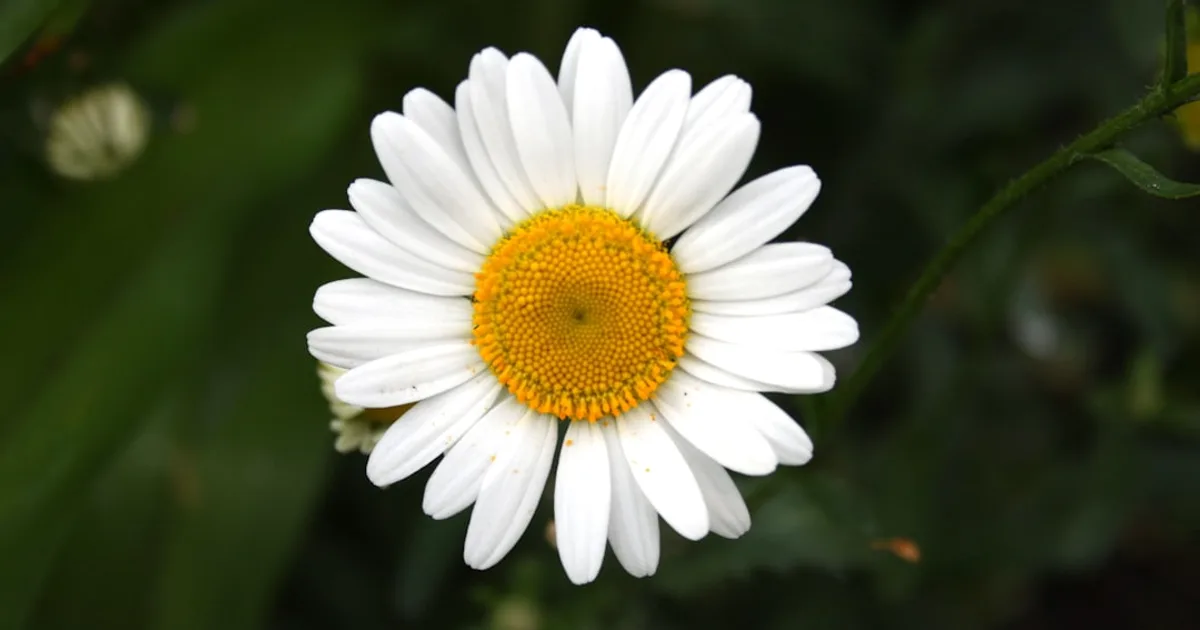
Dried chamomile flowers sell for $10-16 per pound at natural food stores and herb markets (USDA AMS Specialty Crop Market News, 2023). Plant it once, let a few flowers go to seed at the end of the season, and you’ll have chamomile coming up in that spot every spring without replanting. German chamomile is one of the lowest-effort herb crops you can grow - it thrives in poor soil, tolerates drought, requires no fertilization, and the flowers dry easily at room temperature. The only real work is harvesting, which has to happen promptly when the flowers are fully open.
What it actually is
Two plants are sold as “chamomile,” and they grow and function differently.
| Type | Life Cycle | Height | Flower Size | Apigenin Content | Best Use | Cold Hardiness |
|---|---|---|---|---|---|---|
| German (Matricaria chamomilla) | Annual | 18-24 in | 0.5-0.75 in | Higher (0.3-1.0% dry weight) | Tea, drying, culinary | Zone 2+ |
| Roman (Chamaemelum nobile) | Perennial | 6-12 in | Slightly larger | Somewhat lower | Ground cover, lawn substitute, pot herb | Zone 4+ |
German chamomile (Matricaria chamomilla, also listed as M. recutita) is the most widely grown, most commonly dried for tea, and the one with the best-documented apigenin content - the flavonoid compound associated with its calming and anti-inflammatory properties (Janmejai K. Srivastava et al., “Chamomile: A herbal medicine of the past with bright future,” Molecular Medicine Reports, 2010). German chamomile self-sows freely. It flowers prolifically over a long season and produces more dried flower volume per square foot than Roman.
Roman chamomile (Chamaemelum nobile) is a low-growing perennial spreading by runners, with a sweeter scent and slightly larger flowers. The perennial nature is appealing - you don’t replant it - but the yield per square foot is lower than German chamomile grown densely, and it doesn’t self-sow with the same abandon. It works well as a ground cover or lawn substitute in small spaces, particularly in Zones 4-7. For dedicated flower production and drying, German chamomile is the practical choice.
All references below are to Matricaria chamomilla unless specified.
The ROI case
A packet of German chamomile seed costs $2.49 and contains 500-1,000 or more seeds. In a 4 x 4 foot bed with 16 plants, you can expect each plant to produce 0.1-0.2 lb of fresh flowers over the season when you’re picking every 2-3 days. That’s 1.6-3.2 lb of fresh flowers from the bed total.
The drying math matters here. It takes 4-6 lb of fresh flowers to produce 1 lb of dried, because moisture makes up the bulk of the weight. From your 4 x 4 bed: 1.6-3.2 lb fresh converts to roughly 0.3-0.8 lb dried. At $12/lb for dried chamomile, that’s $3.60-9.60 in value from a $2.49 seed investment in the first year.
That’s a decent first-year return. The compounding happens in year 2.
Self-seeding economics
Allow 15-20 seed heads to mature and drop at the end of August instead of harvesting them. The following spring, dozens of volunteers emerge. By year 3, the population is self-sustaining - you’re managing it more than maintaining it.
Amortized over 10 years, that $2.49 packet costs $0.25 per year. If the bed produces even $6/year in dried flower value (a conservative estimate), you’re looking at a 24:1 return every year after year 1. The seed cost effectively disappears.
| Year | Seed Cost | Dried Flower Value | Net Return | ROI |
|---|---|---|---|---|
| 1 | $2.49 | $3.60-9.60 | $1.11-7.11 | 1.4x-3.9x |
| 2 | $0 | $6.00-12.00 | $6.00-12.00 | Full value |
| 3-10 | $0 | $6.00-12.00 | $6.00-12.00 | Full value |
| 10-year total | $2.49 | $57.60-111.60 | $55.11-109.11 | 22x-45x |
The inputs here: $12/lb dried (USDA AMS midpoint), 0.3-0.8 lb dried per bed per year average, zero seed cost after year 1. If you dry and store properly and sell or use what you grow, the floor on this investment is high. The ceiling depends on how aggressively you harvest.
Apigenin content and why home-dried is better than store-bought
German chamomile contains 0.3-1.0% apigenin by dry weight (Srivastava et al., 2010). Apigenin is a flavonoid that binds to benzodiazepine receptors in the brain at low affinity - it’s the compound responsible for chamomile’s documented mild sedative and anxiolytic effects, and it’s what distinguishes medicinal-grade chamomile from decorative chamomile.
Commercial chamomile teas are often weaker than home-dried for a straightforward reason: bulk storage. The flowers sit in a warehouse, then a distribution center, then on a store shelf. Apigenin degrades with exposure to heat, light, and oxygen. A box of chamomile tea that’s been on a shelf for eight months is not delivering the same compound load as flowers you dried last August and stored in a sealed glass jar away from light.
Home-dried, properly stored chamomile retains higher potency. You know when it was harvested. You dried it at low heat. You sealed it in glass. The quality argument for growing your own isn’t just about price - it’s about what you’re actually getting in the cup.
Store in glass jars with tight lids, away from light and heat. Properly stored dried chamomile retains quality for 12-18 months. After that, the color fades and the flavor flattens even if it’s still technically “safe.”
Chamomile in the kitchen
Most people stop at tea. That’s fine, but chamomile has real culinary range when you understand what’s happening chemically.
The primary flavor compounds - bisabolol and chamazulene - are fat-soluble and alcohol-soluble. They extract much better into fat or a spirit than into water alone. A water-brewed tea extracts some of the good compounds, but an infusion into cream or a spirit extracts more.
Chamomile cream: Steep 2 tablespoons dried flowers in 1 cup hot cream for 20 minutes, then strain. The result has floral, apple-honey notes that work in panna cotta, ice cream base, or baked custard. Use it anywhere you’d use plain heavy cream when you want something more interesting.
Chamomile simple syrup: Bring 1 cup sugar and 1 cup water to a simmer, add 2 tablespoons dried flowers, remove from heat, steep 30 minutes, strain. The syrup works in cocktails, lemonade, or iced tea. It keeps refrigerated for 2-3 weeks.
Cocktail applications: Chamomile pairs well with gin, blanc vermouth, and honey-forward spirits. The fat-solubility point is relevant here too - a chamomile-infused gin (steep 2 tablespoons dried flowers in 2 cups gin for 24 hours, strain) extracts more of the aromatic compounds than a simple syrup made with water.
The flavor is subtle. It’s easy to overdo it with dried flowers that have been sitting around too long (no flavor left) or with too much heat that drives off the volatile aromatics. Fresh-dried, low-heat, short steep.
Growing requirements
German chamomile is not demanding. It tolerates poor, sandy, low-fertility soil where most vegetables would struggle. High fertility works against you - too much nitrogen pushes leafy growth at the expense of flower production.
Sow seeds directly in the garden in early spring (it tolerates light frost) or in fall for overwintered germination in cold climates. Seeds need light to germinate - press them onto the soil surface and water in, but don’t bury them. Germination occurs at 50-70°F in 7-14 days. In warm soil, germination is faster but fewer seeds survive to maturity.
Thin to 8-10 inch spacing. Plants in crowded conditions produce fewer flowers and are more susceptible to fungal disease. Full sun (6+ hours) is required for best flower production.
Water 0.5-1 inch per week. Established plants are drought-tolerant and will survive dry periods, though drought stress accelerates bolting. No supplemental fertilization needed in most garden soils.
What goes wrong
Aphid colonies on new growth are common in spring. Insecticidal soap is effective; many beneficial insects also predate chamomile aphids once populations build.
Powdery mildew (Erysiphe spp.) appears as white powdery patches on leaves and stems in humid conditions or when plants are crowded. Good spacing prevents most cases. Affected plants still produce usable flowers but yields decline.
Thrips (Frankliniella spp.) damage flowers and reduce quality. Pyrethrin or spinosad applications during early flowering are effective where pressure is high.
Late-season mold on harvested flowers occurs if you try to dry them too slowly or in humid conditions. Dry flowers immediately after harvest in a single layer in a warm (80-95°F), well-ventilated space out of direct sun. A dehydrator set to 95°F produces consistent results in 1-2 hours.
Companion planting
Chamomile is often listed as beneficial near brassicas and tomatoes, with vague claims about “improving” nearby plants. The chemical mechanism for direct plant improvement isn’t well-documented. What is documented is the pollinator and beneficial insect angle.
Chamomile produces open, shallow flowers that are accessible to short-tongued beneficial insects - hoverflies (Syrphidae family) and parasitic wasps (Braconidae and Ichneumonidae families) in particular. These insects prey on aphids, caterpillar eggs, and soft-bodied pests that damage brassicas and tomatoes. Planting chamomile near those crops does support beneficial insect populations. That’s the mechanism.
The “chamomile makes neighbors grow better” claim appears in folk gardening literature without solid documentation. Treat it as unverified. The pollinator and predatory insect recruitment is real and worth banking on.
Harvest and storage
Flowers are at peak quality when the white petals are fully reflexed (bent backward away from the yellow center) and the center dome is fully formed and bright yellow. Harvest before the center starts to turn brown or the petals begin to fall. This timing window is short - a matter of days per flower. Check plants every 2-3 days during peak bloom.
Harvest by rolling flowers between your fingers and pulling them cleanly off the stem, or use a chamomile comb - a hand-held rake-like tool designed for this purpose that speeds picking. Without a comb, harvesting a full 4 x 4 bed by hand takes 20-30 minutes per pass. A comb cuts that roughly in half and matters when you’re picking every other day at peak season.
Spread flowers in a single layer on a drying screen or paper and dry at room temperature in a warm, ventilated space for 5-7 days, or in a dehydrator at 95°F for 1-2 hours. Dried flowers are ready when they feel papery and the centers crumble slightly. Store in glass jars away from light and heat. Properly dried chamomile retains potency for 12-18 months.
Related crops: Arugula, Tomato, Calendula
Related reading: Companion Planting Basics - the mechanism behind brassica and tomato companion pairings with herbs
Growing Chamomile? Track your harvest value and break-even date in the Garden ROI app.
Get the App