
Catnip
Nepeta cataria
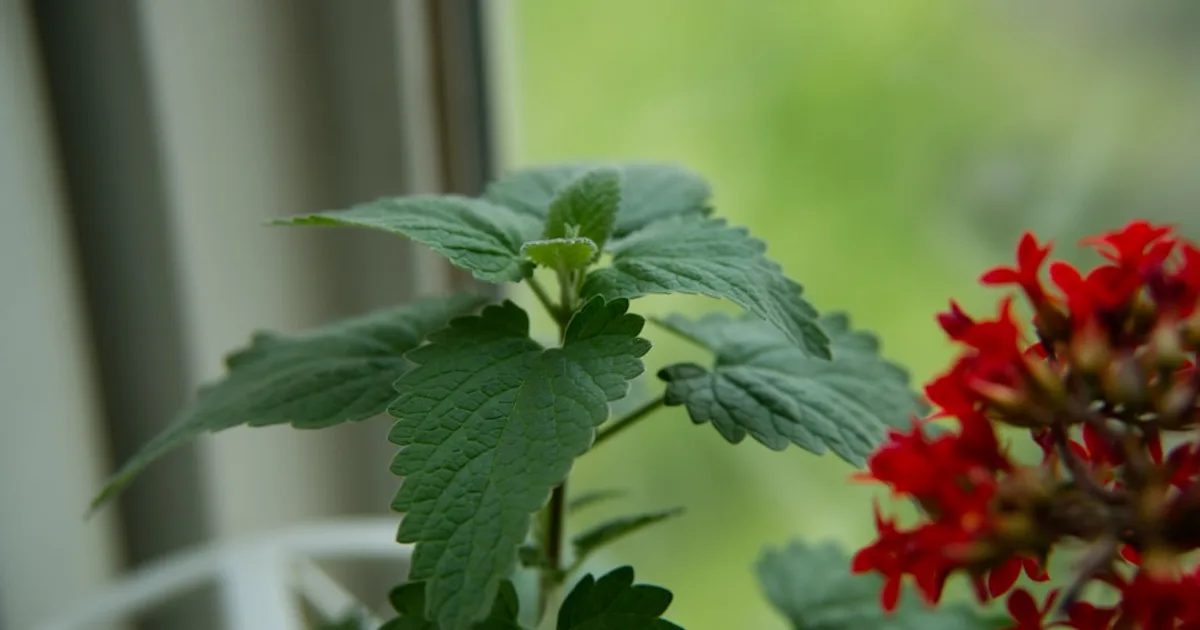
Most of what garden centers sell as “catmint” is not catnip. This distinction matters more than you’d expect.
The plant you want - the one that affects cats, has documented insect-repellent properties, and a history of medicinal use - is Nepeta cataria. The plants commonly sold as ornamental perennials in the catmint category are N. mussinii or its hybrid N. faassenii. Those are good border plants. They have smaller, paler blue-purple flowers, silver-grey foliage, and a tidy mounding habit. They also contain far less nepetalactone than N. cataria, which is the volatile compound responsible for the cat response and most of the plant’s functional value. If you buy catmint at a nursery, expect a nice perennial. If you want catnip - the real thing - buy seed labeled Nepeta cataria and grow it yourself.
The Chemistry: What Nepetalactone Does
Nepetalactone is an iridoid compound - a bicyclic monoterpene - found in the glandular trichomes of N. cataria leaves and stems. When the plant tissue is bruised or crushed, the compound volatilizes rapidly. In the vicinity of a cat, that volatilization triggers a distinctive behavioral sequence in approximately 50-70% of individuals: rolling, face-rubbing, vocalizing, and a period of apparent euphoria lasting 5-15 minutes. After that, there’s a refractory period of roughly 30 minutes during which the cat cannot be re-stimulated even by fresh catnip. Then the response becomes available again.
The response is genetic. Cats either carry the trait or they don’t. Some cats - estimates run between 30 and 50 percent - simply don’t react. Kittens under six months typically don’t respond either. The response is completely benign. Catnip is non-toxic to cats at any quantity a cat would voluntarily consume.
A 2021 study published in iScience (Uenoyama et al.) confirmed the mechanism: nepetalactone activates the mu-opioid receptor system in cats - the same receptor pathway involved in euphoric response generally. The study also demonstrated that the face-rubbing behavior isn’t incidental. Cats rubbing their faces on catnip effectively transfer nepetalactone from the plant to their facial fur, which provides measurable insecticidal protection. Nepetalactone repels mosquitoes - a documented effect the authors connected directly to this rubbing behavior, suggesting it functions as chemical self-application rather than purely play response.
That second finding is worth sitting with for a moment. The cat response to catnip may not be an evolutionary accident. It looks like a pest-repellent behavior that happens to feel good.
Human Use
Humans can use catnip too, though the mu-opioid explanation doesn’t translate across species. The relevant compounds for human use are nepetalactone and related iridoids that have mild sedative effects via ingestion. The traditional application is a calming herbal tea for anxiety and insomnia. Hatch (1972, Economic Botany) documented both the chemistry and human pharmacology of N. cataria in detail. The practical preparation: 1 to 2 teaspoons of dried aerial parts (leaves and stems) steeped in 8 oz of hot water for 10 minutes. Strain and drink before bed. The effect is milder than chamomile and is often combined with it. This isn’t a knock-you-out sedative - it’s a traditional relaxant that many people find useful.
The dried herb for human tea use sells for $12 to $20 per pound at herb suppliers. The same catnip you grow for your cat functions equally well as tea herb. One planting serves both purposes.
The ROI Case
Dried catnip at pet stores runs $10 to $20 per lb for plain bulk herb, and more in branded toy and pouch form. Specialty herb suppliers price it at $12 to $20 per lb. Using $15 per lb as a midpoint:
| Scenario | Yield (dried) | Gross Value | Seed Cost | Net |
|---|---|---|---|---|
| Conservative (1 plant, 1 harvest) | 0.3 lb | $4.50 | $2.99 | $1.51 |
| Typical (1 plant, 2 harvests) | 0.5 lb | $7.50 | $2.99 | $4.51 |
| Productive (2 plants, 2 harvests each) | 1.0 lb | $15.00 | $2.99 | $12.01 |
The ROI multiple at the typical scenario is about 2.5x on the seed investment. That’s the first season, with seed costs. As a perennial, the plant returns in subsequent seasons with no replanting cost.
For households with cats, the savings are more concrete than the bulk herb price suggests. Premium catnip toys at pet stores - the kind with 0.1 to 0.2 oz of catnip packed in a pouch - sell for $5 to $10 each. That’s $400 to $1,600 per pound for packaged catnip in toy form. You can grow a pound of it for $3. Even if you only fill toys and don’t sell or use the excess as tea, the economics work.
The limitation on yield is real. Catnip produces 0.3 to 0.75 lb of dried aerial parts per plant per season depending on growing conditions, with two harvests possible in most climates. Don’t expect to start a catnip business with two plants. But for personal use and cat household savings, the numbers make sense.
Companion Planting: The Mechanism
Nepetalactone’s insect-repellent properties extend beyond mosquitoes. Cornell Cooperative Extension and EPA documentation both reference nepetalactone as an effective natural deterrent for several pest species. Aphids, flea beetles, and squash bugs show documented avoidance of plants with high nepetalactone concentrations in the vicinity. The effect comes from the volatile compound diffusing from intact plant tissue - it’s strongest from a living, actively growing plant, not from dried herb.
This is why catnip planted near squash and cucumbers provides some functional protection against squash bugs and aphids. The volatile release from the catnip acts as a deterrent before the insects establish on the nearby crop. The effect is not a guarantee and doesn’t replace monitoring - squash bugs especially can build to damaging populations quickly once they arrive. But the evidence for nepetalactone as a legitimate insect deterrent is better supported than most companion planting claims, which tend to rest on anecdote rather than mechanism.
One practical note: the insect-deterrent effect requires the plant to be alive and releasing volatiles. Placing dried catnip near your squash does nothing. The growing plant is the functional element.
Growing Catnip
Nepeta cataria is a short-lived perennial, cold-hardy in USDA Zones 3 through 9. It self-seeds readily in suitable conditions, which in practice means plants persist in most gardens even where individual plants die out.
Starting from seed. Direct sow in fall or early spring. Cold stratification improves germination rates - either direct sow in fall and let winter do the work, or refrigerate moistened seeds for two weeks before spring sowing. Germination takes 10 to 20 days at 65 to 70°F. Thin to 18 to 24 inches apart; plants spread and can reach 2 to 3 feet wide at maturity. Seeds are small - don’t bury more than 1/8 inch. Press them to the surface and keep moist until germination.
The cat problem. This is the primary management challenge for young plants. Cats will find new catnip seedlings and destroy them before they’re woody enough to withstand the attention. A six-inch seedling is not sturdy. A cat rolling on it is the end of that plant. The solution is wire cages over new plantings until stems are woody and plants are at least 8 to 10 inches tall. Tomato cages, hardware cloth cylinders - anything that keeps cats off the foliage for the first four to six weeks of establishment. Once the stems are thick and woody, plants shrug off cat attention. The challenge is getting there.
Soil and site. Catnip is not particular. It performs well in average to poor soil with good drainage. Sandy loam is ideal; heavy clay that holds moisture encourages root rot. Full sun produces the most volatile compounds and the best yield. The plant tolerates partial shade, especially afternoon shade in hot climates, but you’ll get somewhat lower nepetalactone content compared to full-sun plants. Once established, catnip is drought tolerant. It will wilt visibly under extreme drought but recovers quickly from watering. Overwatering or poorly drained sites are bigger problems than underwatering once plants are past the seedling stage.
Water needs by stage. Keep seedlings consistently moist until they’re 6 inches tall. After that, water when the top 2 inches of soil are dry. In the second year and beyond, established plants need water only during extended dry periods - 10 or more days without rain.
Harvest
Harvest the aerial parts - leaves, stems, and flower buds - when the plant comes into first bloom. This is the peak for nepetalactone content. Once flowers open fully, the compound concentration in leaves drops as the plant directs resources toward seed production.
Cut plants back by one-third to one-half. Don’t strip them to the ground - you want enough leafy material remaining for the plant to photosynthesize and rebuild. In most growing regions, catnip will produce a second flush of growth after the first harvest and you can take a second cutting before the first frost. Two harvests per season is typical. Three is possible in long-season climates.
Drying. Bundle stems loosely - 6 to 8 stems per bundle - and hang upside down in a warm, well-ventilated space out of direct light. Good airflow is more important than heat. A covered porch or a room with a fan works well. Leaves are adequately dry when they crumble easily, usually 7 to 14 days depending on humidity. Alternatively, spread on dehydrator trays and dry at 95 to 100°F. Low temperature matters here - high heat drives off the volatile compounds you’re trying to preserve.
Storage. Store dried catnip in sealed glass jars away from light and heat. Nepetalactone is volatile and will dissipate from poorly sealed containers or clear glass in a sunny spot over time. Airtight mason jars in a cupboard maintain potency for 12 to 18 months. After that, the dried herb isn’t useless - it just won’t produce as strong a cat response or as potent a tea.
What Goes Wrong
Cats destroy the seedlings. Already covered, but worth repeating because it’s the main reason catnip attempts fail. Use wire cages. Wait until plants are woody before removing them.
Powdery mildew (Erysiphe spp.) in humid conditions. White powdery coating on leaf surfaces, usually starting in late summer when nights cool and humidity rises. Good airflow around plants prevents it. Avoid overhead watering. Cut back affected plants hard and they’ll regrow without the mildew if conditions improve.
Root rot in poorly drained sites. The plant dies from the ground level up, and the roots are black and soft. There’s no saving an affected plant. Improve drainage before replanting in the same spot - add coarse grit to the soil and plant on a slight raised mound.
Aphids on new spring growth. They cluster on the soft tips of emerging stems. A strong spray of water knocks most populations back. Insecticidal soap works for heavier infestations; apply in early morning or evening to avoid leaf scorch.
Self-Seeding and Spread
N. cataria self-seeds aggressively. In zones 5 through 7 this usually isn’t a problem - seedlings show up near the parent plant and are easy to manage. In zones 8 and 9, the plant can naturalize freely. If spread is a concern, deadhead spent flower heads before seeds fully mature. The plant sets seed prolifically, so consistent deadheading takes some attention. Alternatively, cut the entire plant back after each bloom cycle before flowers set seed. You’ll get more vegetative growth and no seedling spread.
If you want more plants - and after the first season you likely will - let a few seed heads go. The seeds are viable and germination rates are decent. Seedlings that come up in fall can be transplanted in spring, or left where they are if the location works.
Related crops: Mint, Chamomile
Related reading: Herb Garden ROI - the 8 highest-value culinary herbs compared
Growing Catnip? Track your harvest value and break-even date in the Garden ROI app.
Get the App