
Hardy Kiwi
Actinidia arguta
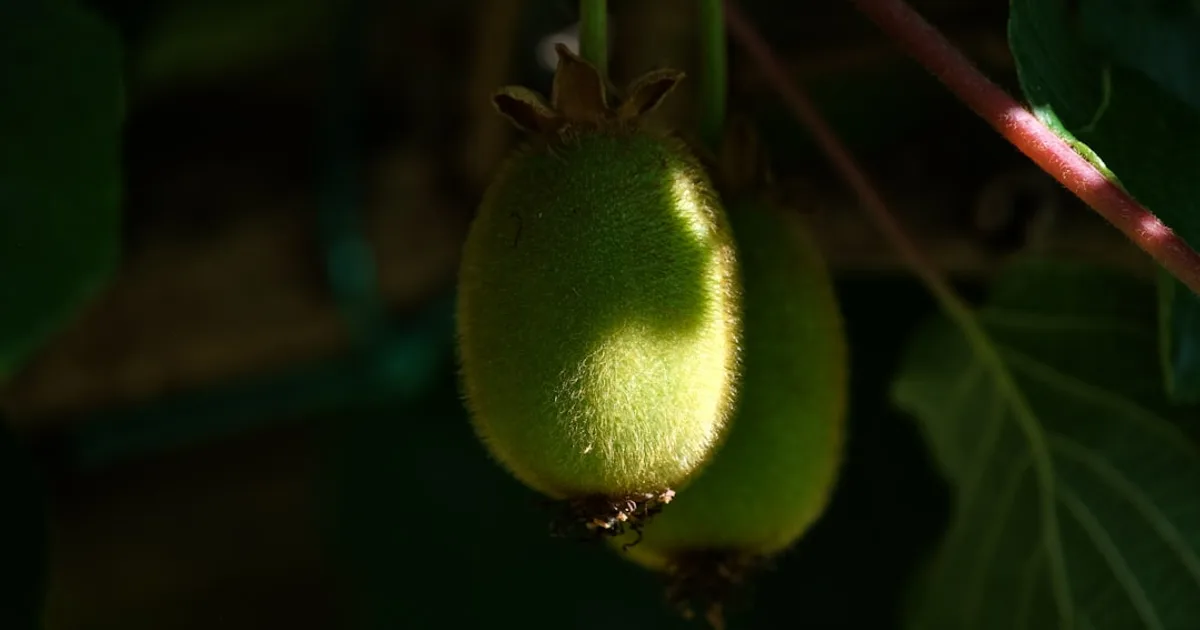
Hardy kiwi produces exactly what the name suggests: a kiwi fruit the size of a large grape, smooth-skinned and eaten whole, growing on a vine that survives winters to -25°F. It’s one of the highest-yielding fruit vines available for temperate gardens, and the fruit - at $6-12/lb at the specialty markets and CSAs that carry it - represents significant value per plant once the vine reaches full production.
The catch is time: hardy kiwi takes 3-5 years to begin fruiting, requires a strong support structure, and needs a male vine for pollination (one male per 6-8 female vines). Once established, though, a mature female vine produces 30-100 lb of fruit annually with minimal pest and disease pressure.
What it actually is
Actinidia arguta (hardy kiwi, bower actinidia) is native to Japan, Korea, and the Russian Far East. It’s distinct from commercial kiwifruit (A. deliciosa) in several important ways: hardier (zones 4-8 vs. zones 7-9), smaller fruit (grape-sized rather than egg-sized), no fuzzy skin (eaten whole), and higher sugar content. The flavor is intensely sweet when fully ripe - sweeter than commercial kiwifruit, with a hint of strawberry.
Related species with similar culture:
- Actinidia kolomikta (Arctic beauty kiwi): zones 3-7, even hardier, smaller fruit (marble-sized), striking pink and white variegated leaves. Lower yield than A. arguta.
- Actinidia polygama (silver vine): zones 4-8, ornamental; fruit edible but strong flavor. Less cultivated for food.
Key cultivars of A. arguta:
| Variety | Sex | Yield | Flavor notes | Season | Notes |
|---|---|---|---|---|---|
| Issai | Self-fruitful (female) | Moderate | Very sweet | Early | Only self-fruitful variety; smaller plant |
| Ananasnaya (Anna) | Female | High | Tropical, sweet | Mid | Most widely planted; excellent flavor |
| Geneva | Female | Very high | Sweet, mild | Late | Cornell introduction; excellent production |
| MSU (Michigan State) | Female | High | Sweet | Mid-late | Cold-hardy selection |
| Meader | Male | Pollinator | - | - | Good pollen production; compatible with most female types |
Pollination: except for ‘Issai’, all A. arguta varieties require a male plant for cross-pollination. One male pollinates 6-8 females. Males don’t fruit; they exist only to provide pollen. If space is limited, ‘Issai’ is the single-vine option - self-fruitful but lower yield.
The ROI case
Hardy kiwi is a long-term investment with high payoff. The vine won’t produce well until year 4-5, but once producing it continues for 30-50+ years with minimal input.
| Year | Yield estimate | Value @$7/lb | Cumulative value | Vine cost (2 vines)* | Cumulative net |
|---|---|---|---|---|---|
| 1-3 | 0 | $0 | $0 | -$49.98 | -$49.98 |
| 4 | 5 lb | $35 | $35 | - | -$14.98 |
| 5 | 20 lb | $140 | $175 | - | $125.02 |
| 6 | 40 lb | $280 | $455 | - | $405.02 |
| 8 | 60 lb | $420 | $1,035 (est.) | - | $985.02 |
| 10 | 70 lb avg | $490 | $2,015 (est.) | - | $1,965.02 |
*One female + one male vine; female ~$25, male ~$25.
A single vigorous female vine at full production (year 6-8) producing 50-70 lb at $7/lb is worth $350-490 per year. That’s one vine. Most gardeners with adequate space plant 2-4 female vines.
Growing requirements
Support structure: this is the non-negotiable requirement. Hardy kiwi is a vigorous twining vine that can grow 20-30 feet per year once established and produces significant fruit weight. A typical pergola, T-bar trellis, or sturdy arbor rated for 200-400 lb is appropriate. The vines are typically trained along horizontal wires at 3-foot intervals between vertical posts, similar to a grape arbor. Do not underestimate the weight and vigor.
Sexes: plant male and female in proximity (within 50 feet). One male to every 6-8 females is the standard ratio. Bloom periods must overlap.
Soil: adaptable; prefers well-drained, moderately fertile, slightly acidic (pH 6.0-6.5) soil. Does not tolerate poorly drained or alkaline conditions. Add compost before planting; mulch annually.
Cold hardiness: A. arguta is rated to -25°F in dormancy. The real vulnerability is late spring frosts after the vine breaks dormancy. New shoots are frost-tender; a frost at 29°F after leafout kills the emerging growth and delays or eliminates that year’s fruit crop. Site on a north or northeast exposure to delay dormancy break.
Fertilizing: heavy feeder. Top-dress with balanced fertilizer in early spring, then switch to lower-nitrogen formula after shoot growth is established. Excess nitrogen produces vigorous vegetative growth at the expense of flowering and fruit set.
Pruning: winter pruning is essential and straightforward once you understand the fruiting habit. Fruit develops on one-year-old wood (the previous season’s growth) and on short spurs on two-year-old and older wood. The goal is to maintain a renewal system: each year, after harvest, prune out canes that fruited heavily, leaving the current season’s vigorous new canes for next year’s fruit.
What goes wrong
Late spring frost damage is the most common production setback. The vine itself survives winter fine; it’s the emerging growth in April-May that’s vulnerable. One hard frost after leafout eliminates the year’s crop from the damaged wood. In frost-prone areas, delay pruning until growth just starts - the dormant tips protect emerging growth longer. Some growers keep frost cloth on hand for predicted late frosts.
No fruit despite mature vines: usually a pollination problem. Confirm you have a male within 50 feet and that bloom periods overlap. Some combinations don’t synchronize well; check variety compatibility. Also check that the female vine has reached productive age - impatient pruning in early years can delay fruiting.
Vine too vigorous with no fruit: excess nitrogen fertilization or excessive vegetative pruning keeps vines in a juvenile, non-fruiting state. Reduce nitrogen; allow some summer pruning (heading back shoots to 6-8 leaves) to encourage spur formation.
Deer pressure: deer browse actively on hardy kiwi vines, particularly on young plants. Protect young plants with tree guards or fencing until the main trunk is well above browse height.
Harvest and use
Hardy kiwi ripens September-October depending on variety and location. The fruit signals ripeness clearly: it softens slightly (similar to a ripe grape), develops a slight translucency, and the stem releases with gentle pressure. Pick and taste a test berry before committing to full harvest - underripe hardy kiwi is starchy and bland.
The fruit is perishable - 2-3 weeks at room temperature when harvested slightly firm; 4-8 weeks refrigerated. For large harvests, freezing individual berries on a sheet pan then transferring to bags preserves them well for smoothies and baking.
Eating: unlike commercial kiwifruit, hardy kiwi is eaten whole without peeling. Rinse and eat like grapes. The skin is thin and smooth; there is no fuzzy exterior to remove.
Core preparations:
-
Fresh out of hand: the primary use. The sweetness and tropical flavor make them one of the best fresh-eating fruits available in temperate climates.
-
Hardy kiwi jam: high pectin content in the skin means good gel without added pectin. Crush berries, cook with sugar and lemon juice. The resulting jam is bright green and intensely flavored.
-
In fruit salads: the intense sweetness and green color add both flavor and visual interest. Works with melon, strawberry, and citrus.
-
Hardy kiwi vinaigrette: blend ripe berries with olive oil, honey, and a little vinegar. The natural acidity of the fruit makes a bright, lightly sweet vinaigrette.
-
Frozen: excellent frozen. Freeze whole, use from frozen in smoothies. The flavor survives freezing better than most fresh fruit.
Related reading: Grape - fellow high-yielding fruit vine; Serviceberry - early-season native fruit to pair with kiwi’s late-season harvest; Fruit Tree Payback Timeline - how perennial fruits compare on investment return
Growing Hardy Kiwi? Track your harvest value and break-even date in the Garden ROI app.
Get the App