
Holy Basil
Ocimum tenuiflorum
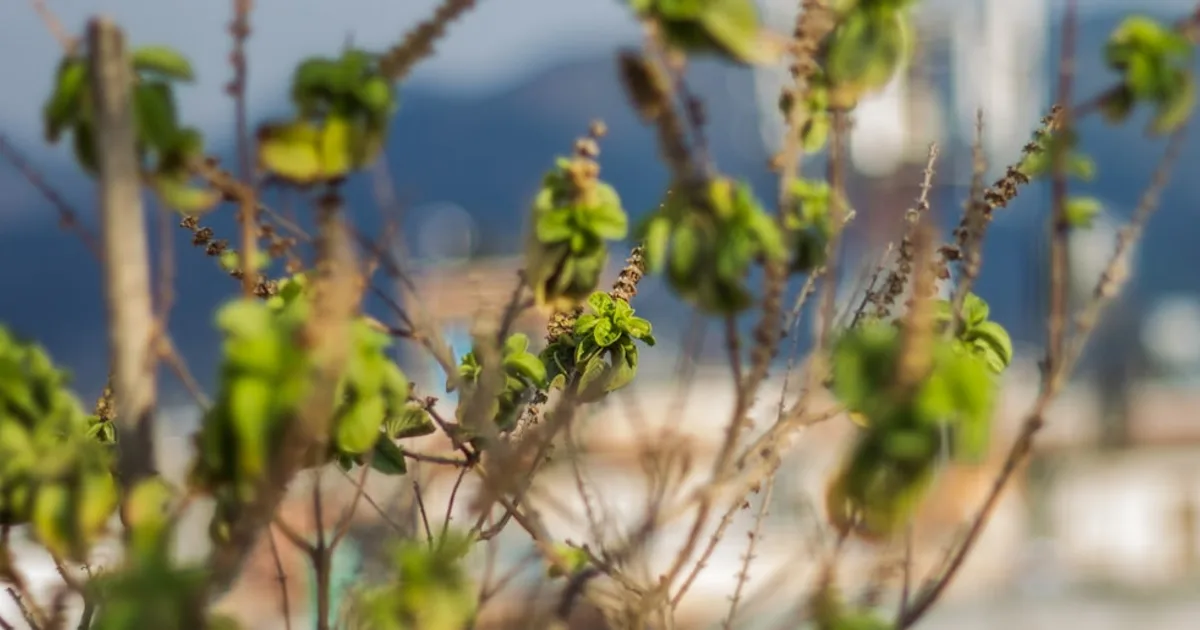
Holy basil (Ocimum tenuiflorum) is not a variant of the basil you put in pesto. It is a different species entirely, with a different flavor profile, different cultural significance, and a retail price structure that puts it in a separate economic category from sweet basil. One ounce of dried tulsi leaf sells for $15–$25 at natural food retailers. One well-managed plant will produce enough dried leaf for 50–100 cups of tea over a growing season. The math is better than most herbs you can grow.
What it is vs. what it isn’t
Sweet basil is Ocimum basilicum. Holy basil is Ocimum tenuiflorum - a separate species, not a cultivar. The USDA Germplasm Resources Information Network (GRIN) lists them as distinct species within the Lamiaceae family, and the flavor chemistry confirms it. Sweet basil is dominated by linalool and estragole, which produce the sweet, slightly floral Italian-cooking aroma. Holy basil contains eugenol (the compound that gives cloves their flavor), methyl chavicol, and beta-caryophyllene. The result is a spicy, clove-forward, slightly peppery flavor with an anise edge - assertive enough that using it in caprese or pesto would be a mistake. These two plants share a genus but not a kitchen application.
Within O. tenuiflorum, there are three main types worth knowing. Rama tulsi has green leaves, a milder flavor, and is the most commonly cultivated form in the US seed market. Krishna tulsi (also called purple tulsi) has dark purple-tinged leaves and a stronger, spicier flavor - higher eugenol content gives it more of the clove-pepper bite. Vana tulsi (wild or forest tulsi) is the most pungent of the three, used most heavily in traditional medicinal preparations. For culinary and tea production, Rama is the practical starting point. Krishna is worth growing if you want more flavor intensity or the visual contrast in a garden bed.
USDA GRIN classifies O. tenuiflorum as originating in tropical Asia, with naturalized populations across South and Southeast Asia. It is widely cultivated in India, where it holds a place in domestic horticulture that has no direct Western equivalent.
The tea market and wellness economy
This is where the economics get interesting. Fresh tulsi at urban farmers markets runs $3–$5 per ounce in cities with established natural foods culture (USDA Agricultural Marketing Service local food market data supports fresh herb price ranges in this tier for specialty culinary and medicinal herbs). Dried tulsi for loose-leaf tea retails at $15–$25 per ounce at natural food retailers - Mountain Rose Herbs and Frontier Co-Op price dried organic tulsi in this range. Pre-bagged tulsi tea retails for $7–$12 per 20-bag box, which contains roughly 0.7–1.0 ounces of dried leaf.
One mature tulsi plant yields approximately 0.25 lb (4 oz) of fresh leaf per season under moderate management. Dried weight is roughly 10–15% of fresh weight, so 4 oz fresh yields approximately 0.4–0.6 oz dried. At $20/oz retail for dried tulsi, one plant’s seasonal dried output represents $8–$12 in replacement value - more than a 3x return on the $2.99 seed packet, and that packet contains 50+ seeds.
At fresh-leaf prices ($3–5/oz), the same plant’s output is worth $12–$20 picked and sold fresh. Home growers who use tulsi regularly for tea can reasonably calculate $20–$35 per season in replaced purchases from a single plant, assuming they’d otherwise be buying packaged tulsi tea.
The case for growing tulsi rather than buying it is stronger than the case for most herbs because fresh tulsi is difficult to source in standard grocery stores outside of Indian specialty markets. In most US cities, if you want fresh tulsi leaf, you either grow it or you don’t have it. That scarcity is the home grower’s structural advantage.
Culinary use - distinct from sweet basil
Do not treat tulsi as a substitute for sweet basil. The eugenol content that makes it medicinal also makes it assertive in ways Italian cooking is not built for. If you add Krishna tulsi to a tomato sauce expecting basil, you’ll taste something closer to cloves and black pepper.
Where tulsi works well in the kitchen: Indian curries and dal, where the clove-pepper note integrates with the spice profile rather than fighting it. Stir-fry applications, particularly with eggplant and ginger. Fresh in cold drinks - tulsi lemonade and tulsi-infused simple syrups are a legitimate culinary use that lets the flavor show without competing with other aromatics.
The most practical culinary use for most US home growers is tea. Fresh tulsi tea - a handful of leaves steeped in hot water for five minutes - has a spicy, slightly sweet, clove-adjacent flavor that is pleasant on its own and blends well with ginger, honey, or lemon. This requires no processing, no drying, no special equipment. You pick leaves and steep them. The flavor of fresh-leaf tulsi tea is better than the dried packaged version.
Growing profile compared to sweet basil
Holy basil is more heat-tolerant and drought-tolerant than Ocimum basilicum. In a Zone 7 or Zone 8 summer where sweet basil wilts and bolts under 95°F full sun, tulsi continues producing and growing. This is not a marginal difference - it is the reason tulsi thrives in tropical cultivation while sweet basil struggles. If you’ve had trouble keeping sweet basil alive through a hot Southern summer, tulsi is the better choice.
Start seeds indoors 6–8 weeks before last frost, same timing as sweet basil. Germination at 70–75°F soil temperature takes 7–14 days. Tulsi is slower to germinate than sweet basil and requires warmth - soil temperatures below 65°F slow or prevent germination. Use a heat mat if you’re starting in a cool space.
Direct sowing is possible after soil temperatures reach 60°F, but indoor starts give you a longer season and more reliable establishment. Thin to one plant per 12–18 inches; tulsi gets bushy.
Soil requirements are similar to sweet basil: pH 6.0–7.5, good drainage, moderate fertility. Tulsi tolerates drier conditions than sweet basil once established - the drought tolerance that makes it a better choice in hot climates also means you can’t overwater it. Consistently wet soil invites root rot. Raised beds with amended soil are ideal; in-ground planting works if drainage is adequate.
Fertilize lightly. Heavy nitrogen pushes foliar growth but reduces the aromatic oil concentration that makes the herb worth harvesting - the same mechanism documented for other aromatic herbs in Penn State Extension’s herb production guidelines. A balanced granular fertilizer at planting and a light liquid feed monthly is sufficient.
In Zone 10 and warmer, tulsi behaves as a perennial and will regrow from established roots. In Zone 9, it may survive a mild winter. In Zone 7 and below, treat it as an annual and start fresh each season. Sweet basil is always annual regardless of zone; this is one practical distinction between the two species.
Pinch flowers as they appear. Tulsi flowers prolifically and will go to seed aggressively if you let it - once seed set begins, leaf production slows and the remaining leaves get tougher. Cut flower spikes before they open. The same pinching approach that works on sweet basil applies here: cut above a leaf node, let the plant branch, repeat.
Sacred use context
Tulsi occupies a different cultural position than any herb commonly grown in Western gardens. In Hinduism, Ocimum tenuiflorum is considered sacred - associated with Vishnu and used in daily puja (worship). Most observant Hindu households in India maintain a tulsi plant, typically in a dedicated clay pot or small raised planter near the home entrance. The plant is tended as an act of devotion, not just cultivation. This context explains why tulsi appears in nearly every Indian household regardless of whether the family cooks with it or uses it medicinally. It also explains the plant’s deep integration into Ayurvedic practice, where it is classified as an adaptogen and used for respiratory complaints, stress, and general wellness support (National Medicinal Plants Board, Government of India). For Western growers, this background is useful because it explains where tulsi’s market positioning in US wellness culture comes from - the herb’s credibility in that market is not constructed; it reflects centuries of documented use in South Asian traditional medicine.
What goes wrong
Tulsi is generally less disease-prone than sweet basil. It does not show the same susceptibility to basil downy mildew (Peronospora belbahrii) that has become a serious problem for sweet basil growers in humid eastern climates. This alone makes it a more reliable crop in the Mid-Atlantic and Southeast.
Root rot from overwatering is the most common failure mode. Tulsi wants to dry slightly between waterings. If leaves start yellowing at the base and the soil has been consistently wet, that is the likely cause. Improve drainage, reduce watering frequency.
Aphids colonize new growth, particularly in cooler weather at the start of the season. A hard water spray removes most colonies. Tulsi’s strong volatile oils provide some deterrence to pest pressure generally, though this should not be relied on as a control strategy.
Leafhoppers can cause stippled leaf damage. In high-pressure situations, row cover early in the season reduces leafhopper access. Remove cover once temperatures are reliably above 75°F to avoid overheating.
Harvest and use
Harvest by cutting stems six to eight inches down, above a leaf node. Morning harvest after dew dries and before midday heat gives the best essential oil concentration. Use fresh immediately, or dry on a screen or in a dehydrator at 95–105°F until leaves are brittle.
Dried tulsi stores well in an airtight container away from light. Dried leaf retains its flavor for 12–18 months. Fresh leaf can be stored stems-down in water at room temperature for 2–3 days, similar to sweet basil.
The most direct use: steep 1 tablespoon fresh leaves (or 1 teaspoon dried) in 8 oz of water just off the boil for 5–7 minutes. Strain, add honey if you want it. That is tulsi tea. No special equipment, no additional ingredients required.
Related crops: Tomato, Eggplant, Sweet Basil
Related reading: Companion Planting Basics - what the evidence actually says about common pairings
Growing Holy Basil? Track your harvest value and break-even date in the Garden ROI app.
Get the App