
Cilantro
Coriandrum sativum
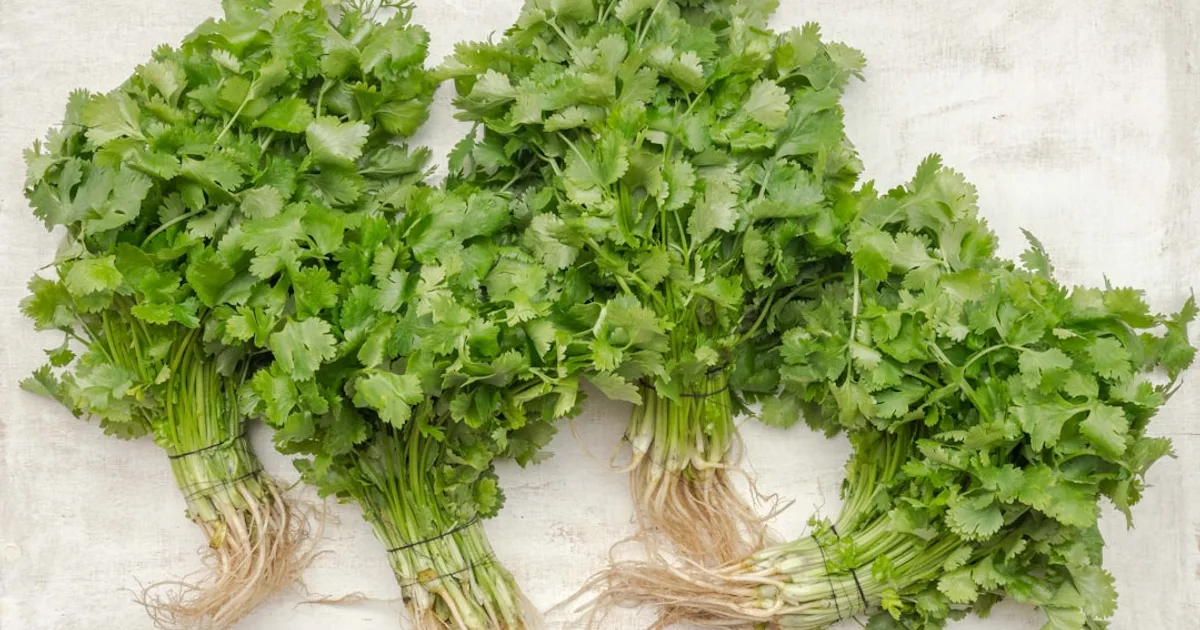
Cilantro (Coriandrum sativum) bolts. That’s the central fact about this herb, and every growing decision flows from it. In warm weather, a cilantro plant can go from leaf to flower stalk in under two weeks, which means a single planting gives you a few weeks of harvest and then you’re done. The solution isn’t to fight the bolting - it’s to plant small amounts every three weeks from early spring through early summer, then again in late summer through fall.
What you’re actually growing
Coriandrum sativum is a single species that produces two distinct products: the fresh leaves (cilantro) and the dried seeds (coriander spice). The same plant gives you both, just at different points in its life cycle. Slow-bolt cultivars like ‘Leisure’ and ‘Santo’ stay in the leaf stage 20 to 30 percent longer than standard types - they don’t stop bolting, but they extend the harvest window enough to matter (Oregon State University Extension, Herbs in the Garden, 2016). If you’re in a region where summers arrive hard and fast, slow-bolt types are worth seeking out.
Leaf cilantro has a flavor profile dominated by aldehydes - the same compounds some people describe as soapy. That perception is genetic, linked to OR6A2 olfactory receptor variation, and no amount of growing technique changes it (Eriksson et al., Flavour, 2012). You either like it or you don’t.
The ROI case
At $1.99 for a packet, cilantro is one of the cheapest herbs to grow from seed. Fresh bunches at retail run $2.00-$4.00 per small bunch, which typically weighs 1.5-3 oz - putting the retail price at $6.00-$8.00/lb based on USDA AMS Specialty Crop Market News. Your 0.25 lb yield per planting at $6.00/lb returns $1.50 in grocery value per succession. That’s thin until you account for the fact that a single packet contains 200 to 300 seeds - enough for a dozen or more succession plantings across a season for that same $1.99.
The coriander seed bonus is real. Let two or three plants bolt fully and go to seed. When the seeds turn tan-brown and the umbels dry, cut the whole stem, hang it upside down in a paper bag for a week, and you’ll collect a tablespoon or more of coriander seed per plant. Ground coriander runs $4.00-$6.00/oz at specialty retailers (USDA AMS, 2023).
Putting the full-season value on paper requires thinking about both harvests across multiple successions:
| Harvest type | Yield per sowing (2-ft row) | Retail price | Value per sowing | Full season (5 successions) |
|---|---|---|---|---|
| Cilantro leaves | 0.15-0.25 lb | $6-8/lb | $0.90-2.00 | $4.50-10.00 |
| Coriander seed (2-3 bolted plants/sowing) | 0.06-0.12 oz dried | $4-6/oz | $0.24-0.72 | $1.20-3.60 |
| Total | $5.70-13.60 |
The full-season return assumes 5 succession sowings - realistic for Zone 5-6 with spring and fall windows. A single $1.99 packet seeds all five. Coriander seed value uses specialty retail pricing; commodity ground coriander runs lower.
The leaf value improves materially if you grow for farmers market sale. Cilantro in bunches routinely brings $2-3/bunch at farmers markets, and a productive 2-ft row can yield 2-3 cuttable bunches before the plant bolts.
Growing requirements
Cilantro germinates best at 55-68°F soil temperature; germination drops sharply above 75°F (Penn State Extension, Herb Production, 2019). This means spring and fall are your windows in most of the country. Crush the seeds slightly before planting - each round seed is actually two seeds fused together, and cracking the hull improves germination rate. Direct sow 1/4 inch deep; cilantro develops a taproot early and transplants poorly once established.
Soil pH of 6.2-6.8 is ideal. Afternoon shade - even just a few hours from a fence or taller crop - delays bolting in warm weather by keeping soil temperatures lower. A north-facing planting in full summer or the shadow of tall tomatoes will extend the leaf harvest.
Water consistently during germination; dry soil combined with heat accelerates bolting. Once plants are 3-4 inches tall, they’re more tolerant of brief dry periods, but consistent moisture keeps them in the leaf stage longer.
Succession planting for continuous harvest
A single cilantro planting gives you 2-4 weeks of harvest before the plant bolts. The solution is staggered plantings - small amounts every 3 weeks - so you always have plants in the productive leaf stage while others are already going to seed for coriander.
Zone 5-6 timing example:
| Sowing | Sow date | Soil temp at sowing | Leaf harvest window | Notes |
|---|---|---|---|---|
| Sowing #1 | April 1-7 | 50-55°F (slow start) | April 30-May 15 | Germination may take 3 weeks at cold soil temps |
| Sowing #2 | April 22 | 55-60°F | May 15-June 1 | Overlaps with Sowing #1 harvest for continuous supply |
| Sowing #3 | May 13 | 60-65°F | June 1-15 | Last reliable spring sowing before summer heat arrives |
| Summer gap | June-July | Too hot (75°F+) | Skip | Germination drops sharply above 75°F; plants bolt in days |
| Sowing #4 | August 15 | Cooling to 70°F | Sept 5-20 | Fall window opens as heat breaks |
| Sowing #5 | September 5 | 60-65°F | Sept 25-Oct 10 | Last fall sowing; light frost doesn’t kill established plants |
Zone 7-8 gardeners get wider windows - spring sowings from March through May, fall sowings from September through November. Zone 9-10 gardeners often grow cilantro only in the cool season (October through March), skipping summer entirely.
The critical move for Zone 5-6 is catching the fall window early. Gardeners who miss the August 15 sow date get one or zero fall harvests because they’re thinking about the summer garden, not planning ahead. Mark the date in June when you’re in the thick of summer production.
Afternoon shade extends the spring window by several days per planting. The shadow from a trellis, a fence, or tall tomatoes keeps soil temperatures 5-8°F cooler during afternoon heat. Plant your last spring sowing in the shadiest spot available (Penn State Extension, Herb Production, 2019; Oregon State University Extension, Herbs in the Garden, 2016).
What goes wrong
Bolting in heat is the most common frustration. It’s not a pest or disease - it’s a photoperiod and temperature response. Manage it with succession planting and site selection. You can cut the flower stalk as soon as it emerges to delay bolting by a few days, but the plant will redirect energy to producing another stalk within a week.
Damping off (Pythium spp., Rhizoctonia solani) kills seedlings at the soil line, especially in cool, wet conditions. Don’t overwater during germination; good drainage is more important than consistent moisture.
Powdery mildew (Erysiphe heraclei) appears as white powder on leaves in humid conditions with poor air circulation. Space plants 6 inches apart and water at soil level.
Carrot motley dwarf virus (vectored by the carrot-willow aphid, Cavariella aegopodii) causes yellowing and stunting. There’s no treatment. Remove infected plants, control aphid populations with insecticidal soap.
Culinary applications
Cilantro is the most heat-sensitive of the common culinary herbs. Add it raw - or in the last 30 seconds of cooking at most. The volatile aldehydes that create its flavor dissipate within seconds of serious heat. A handful stirred into a simmering pot does nothing. The same handful added tableside to a dish that’s just come off the heat does everything.
This is why cilantro works in some applications and fails in others.
Where it works raw: Salsa fresca (pico de gallo) is the canonical cilantro application - the herb is essentially the flavor anchor, along with lime and chile. Standard ratio per batch: 4-5 Roma tomatoes, 1/2 onion, 1-2 serranos, 1/2 cup tightly packed cilantro leaves, juice of 1-2 limes, salt. The cilantro goes in last and should not be prepped far in advance - the aldehydes start oxidizing once the leaves are cut.
Salsa verde: tomatillo, cilantro, lime, and jalapeño blended raw (or with tomatillos briefly broiled). 1 cup cilantro per pound of tomatillo is the standard proportion. The raw version is brighter; the cooked version is earthier. Both work.
Indian cooking: fresh cilantro is the standard garnish for dal, curry, and biryani - added tableside, not cooked in. The practice is sound. Cilantro in a dal pot for 20 minutes of simmering tastes of nothing; the same amount added in a pile at the bowl level perfumes the dish.
Southeast Asian soups and salads: cilantro is foundational in Thai, Vietnamese, and Laotian cooking. Pho is finished tableside with a pile of bean sprouts, basil, and cilantro. The broth gets the long cook; the aromatics go on at serving.
Coriander seed: the dried seeds of the same plant, but a completely different flavor profile. Cilantro leaf’s dominant volatiles are aldehydes (dodecanal, decanal) - the characteristic soapy-floral notes. Coriander seed’s dominant volatile is linalool - warm, citrusy, slightly floral but in a different direction. They cannot substitute for each other. Ground coriander is standard in Indian masala blends, pickling spice, and some Central Asian lamb preparations. To grind your own: toast seeds briefly in a dry skillet until fragrant (30-45 seconds), then grind in a spice grinder or mortar.
Harvest and storage
Harvest outer leaves and stems once the plant reaches 4-6 inches tall. Cut individual stems rather than pulling - leaving the center intact extends the harvest by several weeks. For maximum flavor, harvest in the morning.
Fresh cilantro doesn’t store long. Wrap loosely in a damp paper towel and refrigerate for up to a week, or store stems upright in a glass of water like cut flowers with a plastic bag loosely over the leaves. For longer storage, blend fresh leaves with water and freeze in ice cube trays - the frozen puree holds flavor reasonably well for cooked applications.
Drying cilantro is not worth the effort; the volatile oils responsible for its flavor dissipate almost completely during drying. Freeze or use fresh.
Related crops: Basil, Garlic, Shiso, Vietnamese Coriander, Chervil, Culantro
Related reading: Companion Planting Basics - what the evidence actually says about common pairings; Organic Produce Cost Analysis - fresh herb prices at retail and what home-grown replaces per season; Herb Garden ROI - the 8 highest-value culinary herbs compared; First Garden: 10 Best Crops - why cilantro makes the beginner list; Continuous Harvest Crops - succession planting schedule for cilantro
Frequently Asked Questions
How do I stop cilantro from bolting?
You can slow but not prevent bolting in warm weather. Plant in partial shade to reduce heat, keep soil consistently moist, and avoid nitrogen-heavy fertilizers. The most practical approach is succession planting every 3 weeks rather than trying to extend a single planting.
Is cilantro worth growing if it bolts fast?
At $5 to $8/lb retail (USDA AMS), even a 3 to 4 week harvest from one planting pays. Once a plant bolts, allow the seeds to dry on the plant - these are coriander seeds, a separate spice retailing at $3 to $6/oz, representing a second harvest from the same plant.
Can I harvest coriander seeds from bolted cilantro?
Yes. When seed heads turn from green to tan-brown, cut stems into a paper bag and hang to dry for 1 to 2 weeks. Thresh by rubbing between your hands. Coriander is a distinct culinary spice with broad use in pickling, baking, and spice blends.
Growing Cilantro? Track your harvest value and break-even date in the Garden ROI app.
Get the App