
Lovage
Levisticum officinale
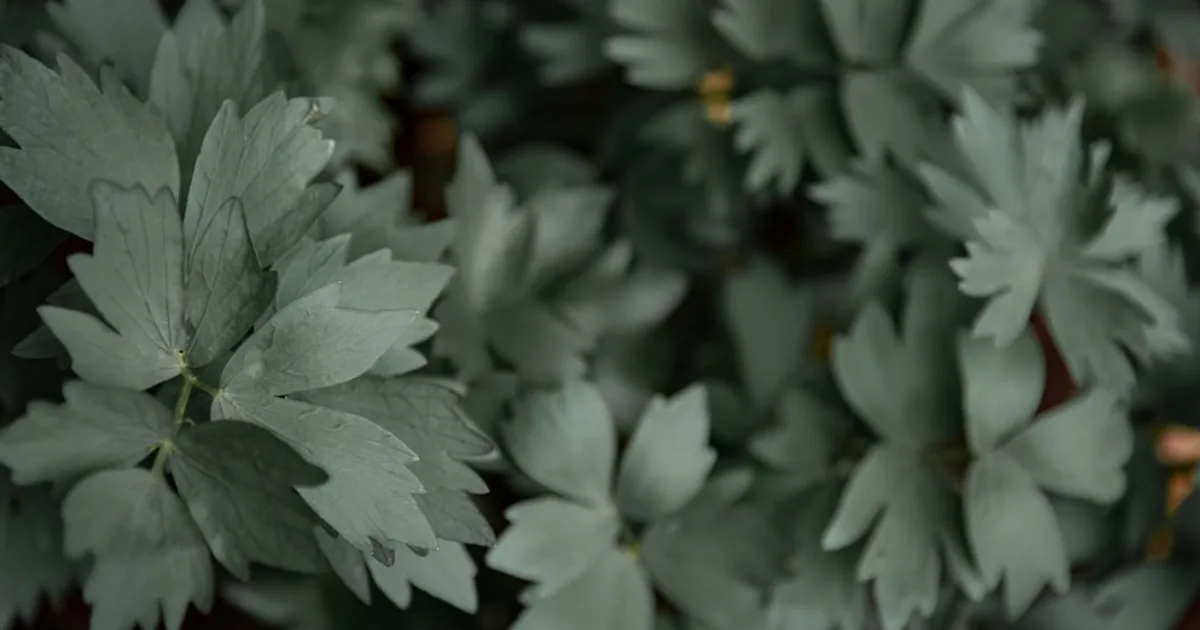
Lovage (Levisticum officinale) solves a problem celery creates. Celery takes 120 days from seed to harvest, requires constant moisture, demands rich soil, and produces a mediocre yield under anything but ideal conditions. Lovage has a nearly identical flavor profile - strong, celery-like, with more intensity - it’s a perennial that comes back for decades in zones 4+, grows 4-6 feet tall at maturity, and tolerates imperfect conditions that would stress celery. If you use celery primarily as an aromatic in cooking (soups, stocks, braises), lovage replaces it completely and is far easier to grow (USDA AMS Specialty Crop Market News, 2023).
Taxonomy and identity
Lovage is Levisticum officinale in the Apiaceae family - same family as celery, carrots, parsley, dill, and fennel. The genus name Levisticum derives from Latin for “of Liguria,” reflecting its Mediterranean origin along what is now the Italian and French Riviera coast. It has been cultivated in European herb gardens since at least the 9th century, appearing in Charlemagne’s Capitulare de Villis, a directive listing plants to be grown in imperial gardens.
Two other plants get confused with lovage often enough to be worth naming. Scotch lovage (Ligusticum scoticum) is a different genus entirely - a milder, coastal plant used in Scottish traditional cooking with a shorter, less intense flavor. Black lovage, also called alexanders (Smyrnium olusatrum), was the dominant pot herb in medieval Europe before celery cultivation spread north from Italy. Neither is a substitute for L. officinale in the kitchen, and neither carries the same flavor intensity.
The flavor compound responsible for lovage’s taste is primarily phthalides - specifically sedanenolide and n-butylidene-3a,4,5,6-tetrahydrophthalide. These are the same class of compounds responsible for celery’s characteristic flavor, present at higher concentrations in lovage. When you smell lovage and think “celery, but more so,” that’s the chemistry (Gijbels et al., “Phthalides in the Essential Oil of Levisticum officinale,” Planta Medica, 1985).
A mature lovage plant is large. The first-year plant is modest and spends most of its energy building root mass. By year two or three it reaches 4-6 feet tall with hollow stems, deeply divided dark green leaves, and flat umbels of small yellow flowers in midsummer. Every part of the plant is usable: the leaves as an herb (fresh or dried), the hollow stems as a celery substitute, the seeds as a spice with a flavor between celery seed and caraway, and the roots (in the first or second year) as a vegetable in northern European tradition.
The ROI case - year by year
The perennial nature of lovage changes the economic math compared to annual herbs. A packet of lovage seed costs $2-4; a small potted plant from an herb nursery runs $3-6. The first-year yield is modest while the plant establishes. By year three, a single plant produces real quantities of leaf, stem, and seed. The table below uses conservative yield estimates based on Herb Society of America guidance and specialty crop pricing from USDA AMS Specialty Crop Market News (2023).
| Year | Plants | Leaf harvest (lb) | Seed harvest (oz) | Value at $8/lb leaf, $10/lb seed | Start cost | Cumulative net |
|---|---|---|---|---|---|---|
| 1 | 1 | 0.25 | 0 | $2.00 | $2.99 | -$0.99 |
| 2 | 1 | 0.75 | 0.5 | $6.31 | $0 | $5.32 |
| 3 | 1-2 | 1.5 | 1.0 | $12.63 | $0 | $17.95 |
| 5 | 1-3 | 2.5 | 2.0 | $21.25 | $0 | $55+ |
Sources: Herb Society of America, “An Herb to Know: Lovage” monograph; USDA AMS Specialty Crop Market News, 2023 for leaf and seed pricing. Yields are conservative estimates for a single established plant in zones 5-7.
By year five, you’ve spent $2.99 and recovered more than $55 in crop value - and that’s priced at retail for fresh leaves, not accounting for the celery you stopped buying. A bunch of celery at the grocery store runs $2-3. If you use one bunch a week from May through October for soups, stocks, and salads, that’s $32-48 annually in celery replaced. The lovage pays for itself in the first season it produces at full capacity.
Seed vs. potted plant start
The frontmatter shows start_cost: 2.99 with label “Potted plant” - and that’s intentional. Lovage seed has notoriously short viability. Commercial packets often contain seed that is one to two years old, and germination rates drop sharply after the first year. A fresh packet from a reputable seed house might germinate at 60-70%; old seed from a garden center rack often fails to germinate at all.
Buying a small potted plant from an herb nursery ($3-6) gives a more reliable start and puts you ahead by a full season. You get a plant with an established root system that will produce harvestable leaf in the same year.
If you want to start from seed, you have two reliable options. The first: sow fresh seed directly in the garden in fall, after the soil cools. The cold winter temperatures provide natural stratification, and seeds germinate in early spring. The second: purchase fresh seed (check the packet date), cold-stratify it in damp sand in the refrigerator for 4-6 weeks, then sow indoors under lights at 65-70°F. Germination takes 10-14 days from stratified seed.
The third option - free if you know someone who grows it - is division. An established lovage plant produces a large crown that can be divided with a sharp spade in early spring before the new growth emerges. A single division from a mature plant is functionally equivalent to a third-year plant within one season.
Growing requirements
Plant in deep, fertile, well-drained soil. Lovage develops a large taproot and does poorly in compacted or rocky ground - if your soil is heavy clay, amend a 12-inch-deep planting hole with compost before setting the plant. Soil pH of 6.0-7.0. Add 3-4 inches of compost to the planting area before transplanting.
Space plants 18-24 inches apart. At maturity, each plant needs that horizontal room for its crown, and the tall stems need air circulation to reduce mildew pressure.
Lovage tolerates partial shade (4 hours of direct sun) but produces more leaf growth in full sun. In zones 7-8, afternoon shade helps prevent early bolting during heat spikes.
Water 1-1.5 inches per week. Consistent moisture produces tender, flavorful leaves; drought stress makes leaves bitter and accelerates flowering.
After the first year, lovage requires almost no maintenance. Cut back dead stems in late fall or early spring. A light application of balanced 10-10-10 fertilizer (or its organic equivalent) in early spring supports the season’s growth. That’s it.
Winter dormancy
The plant goes fully dormant in winter. In December through February it looks dead - the top growth disappears entirely. This trips up new growers every year. Mark the spot clearly with a stake before the first hard frost, because lovage crowns are easy to accidentally plant over when you’re putting in early spring crops while the bed looks empty. The plant re-emerges reliably in early spring, often before the last frost date for your zone (Penn State Extension, Lovage Production, 2019).
What goes wrong
Leaf miners (Phytomyza spp.) create winding pale tunnels in the leaf tissue. They’re primarily cosmetic - the plant survives and produces new leaves. Remove and destroy heavily infested leaves; do not compost them, as the larvae continue developing in the composted material.
Powdery mildew can appear on older foliage in late summer, especially in humid conditions or where air circulation is poor. Remove affected leaves. Good spacing prevents most cases; it doesn’t spread aggressively to young growth.
Crown rot in waterlogged soils kills lovage reliably. This is the one condition it does not tolerate. Ensure drainage is adequate before planting - this is non-negotiable in clay soils.
Bolting reduces leaf quality and triggers die-back of the current season’s stems. Cut flower stalks before they fully develop if you want to extend the leaf-harvest season. Letting some umbels go to seed is worthwhile for the spice harvest or for seed saving.
Harvest - leaf, stem, and seed
Start harvesting outer leaves when the plant is 12-18 inches tall. In the first year, don’t take more than one-third of the plant at once - let it build root mass for the following seasons. From year two onward, harvest freely throughout the growing season.
The stems deserve attention. Young hollow stems in the first and second year - up to 12 inches long before they get too fibrous - are edible as a vegetable in their own right. Peel them and slice thinly into salads, braise them whole, or use them raw as you would celery sticks. After year three, the stems tend toward woodier texture and are better used as aromatics: drop a stem into a soup or stock to flavor it, then remove before serving. The flavor holds up through long cooking.
Harvest seeds when the umbels have turned brown and dry but before they shatter - usually mid to late summer. Cut umbels and hang them upside down in paper bags to finish drying and catch the seeds. Store dried seed in a sealed glass jar away from light.
The leaves dry well but lose some intensity compared to fresh. Blanch and freeze stems for long-term use in soup bases. Fresh leaves keep 3-5 days refrigerated wrapped in a slightly damp paper towel.
Using lovage as a celery replacement
This is where the ROI argument becomes practical. One large lovage leaf equals approximately one rib of celery in soups, stocks, and braises. The flavor is more intense, so start with half the amount called for and adjust from there. You’ll quickly develop an intuition for the ratio.
Lovage seed (dried) functions exactly as celery seed in spice applications. One teaspoon of lovage seed equals one teaspoon of celery seed in any recipe that calls for it - coleslaw, pickling brines, potato salad, bread. The flavor is slightly warmer than celery seed, with a faint anise note.
The hollow stems are the most underused part. Young stems make functional celery sticks for dipping. They can be stuffed. And if you’ve ever wanted the classic Bloody Mary garnish to actually taste like the drink, a lovage stem as a straw works exactly as advertised.
In the kitchen, lovage works best in: soups (add 1-2 leaves per quart of stock; remove before serving or leave them in for pureed soups where the texture doesn’t matter), potato dishes (lovage is traditional with potatoes in northern European cooking - add a leaf or two to the pot when boiling potatoes, the way you’d use a bay leaf), egg dishes (chopped fresh lovage in scrambled eggs and frittatas), marinades for chicken and pork, and bean dishes where you want depth without the sweetness that celery can add.
This is not a minor substitution or a novelty crop. For cooking purposes, lovage replaces celery completely - from a plant that requires a fraction of the labor to grow, returns for 15-20 years, and costs less than $6 to start.
Companion planting
Arugula and fennel are the frontmatter companions, and the pairing deserves some context.
Fennel (Foeniculum vulgare) is allelopathic - it releases compounds from its roots and decomposing foliage that suppress germination and growth in many vegetables, particularly tomatoes, peppers, and beans. This is well-documented and the standard recommendation is to keep fennel isolated from the vegetable garden (Penn State Extension, Companion Planting, 2021). Lovage, as a large perennial herb, tolerates fennel proximity better than annuals do. Both prefer similar well-drained conditions and can occupy a permanent herb corner without the fennel allelopathy causing problems in that microenvironment. Just don’t plant this pairing adjacent to your tomato bed.
Arugula works as a cool-season ground cover under the taller lovage in spring and fall. Lovage emerges early but slowly; arugula fills in the space at the base before the lovage canopy closes. By summer, the lovage shades the arugula enough to slow bolting slightly in warm weather, though arugula will still bolt in full summer heat regardless of shade. The functional benefit is mainly spring and fall - two crops in the same footprint.
Related crops: Arugula, Fennel, Parsley
Related reading: Beginner Homestead Crops - perennials that earn their bed space over multiple seasons
Growing Lovage? Track your harvest value and break-even date in the Garden ROI app.
Get the App