
Medlar
Mespilus germanica
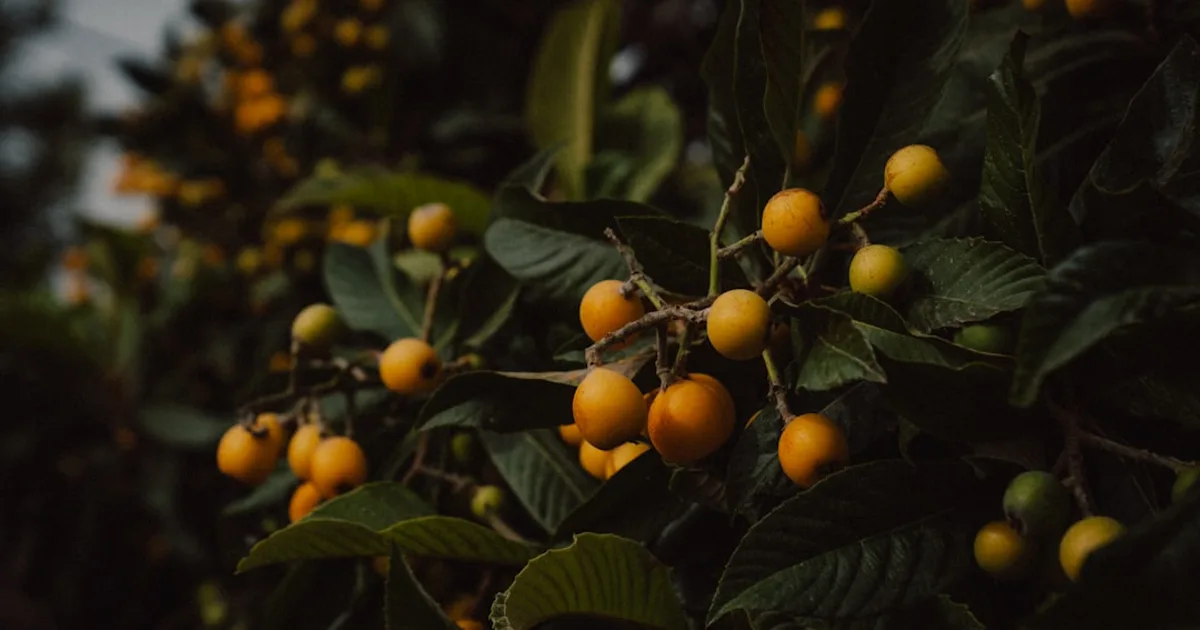
Medlar is a fruit that requires patience on two levels: years to establish the tree, and weeks after harvest before the fruit is edible. The berries are picked in November after the first frost, then stored for 2-6 weeks in a cool location while they undergo bletting - a natural process of partial internal breakdown that converts starch to sugar and transforms the hard, astringent raw fruit into something soft, brown, sweet, and richly flavored. The result tastes like spiced apple butter with notes of wine and dried fruit.
That process - intentional, controlled, and slow - is why medlar fell out of commercial production. Modern supply chains can’t accommodate a fruit that ships unripe and must be held until soft. In medieval and Renaissance Europe, medlar was a respected dessert fruit eaten at the end of a feast, often with wine and cheese. Shakespeare mentioned it. It disappeared from tables as stone fruits and citrus became available year-round.
The tree itself earns its place regardless of the fruit. At 8-12 feet, it’s one of the most ornamental small trees available for a temperate garden: large white flowers in spring, bold corrugated leaves turning orange-red in fall, and russet-brown fruits that persist after leaf drop, holding through December like small ornaments.
What It Actually Is
Mespilus germanica is in the rose family (Rosaceae), native to southwestern Asia and southeastern Europe, and cultivated since at least 3,000 years ago. It’s the sole species in its genus. The tree grows 8-20 feet tall with a spreading crown, slightly pendulous branches, and somewhat thorny stems on wild types (cultivated varieties are less spiny). Flowers are large (1-2 inches), white, and produced singly at the tips of short lateral branches in late spring - after most frost risk has passed in zones 5+.
The fruit is distinctive and unlike any other commercially available fruit: 1-2 inches in diameter, with the calyx end open (showing a star of dried petals), and a flat, roughly textured brown skin. The open calyx creates a characteristic star pattern on the blossom end of every fruit.
Cultivars:
| Variety | Origin | Fruit size | Flavor | Notes |
|---|---|---|---|---|
| Royal | Netherlands | Large (1.5-2 in) | Rich, sweet, complex | Most widely grown; excellent fresh bletting flavor |
| Nottingham | UK | Medium (1-1.5 in) | Sweet, aromatic | More upright tree; reliable producer; good jelly maker |
| Dutch | Netherlands | Large (1.5-2 in) | Good, slightly tart | Productive; fruit holds well during bletting; good for preserves |
| Large Russian | Russia | Large | Good, full-bodied | Adapted to continental climates; strong cold hardiness |
All are self-fertile - one tree produces a full crop without a cross-pollinator. ‘Royal’ is the most widely recommended for fresh eating; ‘Nottingham’ for preservation and jelly making. ‘Dutch’ is a reliable all-purpose choice where both uses are intended.
The ROI Case
Medlar is a long-investment, long-payoff crop. Expect no fruit in years 1-3 and modest harvests in years 4-5. By year 7-10, a well-sited tree should produce 20-35 lb annually and continue doing so for decades. Medlar trees are long-lived - 50-100+ year productive lifespans are documented.
Specialty market pricing: $6-12/lb where available (specialty market and artisanal produce retail; USDA AMS does not maintain a price series for this crop). Commercial availability in the US is nearly zero; bletted fresh medlar is simply not sold at retail scale.
| Year | Yield | Value @$8/lb | Tree cost | Cumulative net |
|---|---|---|---|---|
| 1-3 | 0 | $0 | -$24.99 | -$24.99 |
| 4 | 3-5 lb | $24-40 | - | -$0.99 to $15.01 |
| 5 | 8-15 lb | $64-120 | - | $63.01-$135.01 |
| 7 | 15-25 lb | $120-200 | - | $183.01-$335.01 |
| 10 | 20-35 lb | $160-280 | - | $343.01-$615.01 |
The real scarcity value exceeds the per-pound price. Bletted medlar eaten fresh, medlar jelly, and medlar cheese (a solid conserve similar to quince paste) are not available commercially in the US at any price. Growing your own is the only access to these preparations.
Zone Fit
Zones 5-7: the primary production zone for medlar in North America. Full cold hardiness without special management; reliable fruiting each year. The tree enters dormancy early enough in autumn that it completes its growth cycle before hard freezes. Most available named cultivars perform well across this zone range.
Zones 4 and colder: possible with appropriate cultivar selection. Established medlar trees are hardy to approximately -15°F; ‘Large Russian’ and other continental-origin selections push the cold tolerance further. The main risk in zone 4 is not winter kill on established trees but late spring frost on open flowers - medlar blooms in late spring and generally misses late frost dates, but an unusual late cold event can damage the crop for that year.
Zone 8: the southern limit. Medlar requires approximately 300-500 winter chilling hours (hours below 45°F) to break dormancy and flower properly. Zone 8 winters are marginal for this requirement in warm areas; in cooler zone 8 locations (high-elevation areas, northern zone 8), adequate chilling is more reliable. The Pacific Northwest zone 8 is better suited than inland Deep South zone 8.
Zone 9+: not suitable. Insufficient winter chilling prevents normal flowering and fruiting. Choose a different ornamental-edible tree for warm climates.
Light: prefers full sun for maximum fruit production. Tolerates partial shade (5-6 hours direct sun) with reduced yields. As an ornamental, partial shade is acceptable; for fruit production, site in full sun.
Growing Requirements
Planting: plant bare-root trees in early spring before bud break, or container-grown trees in spring or fall. Medlar establishes slowly in the first two years; don’t expect significant growth until year 3. Plant in a well-drained location; standing water causes root problems.
Soil: tolerant of a wide range of soils, including heavy clay and slightly acidic conditions (pH 5.5-7.0). More forgiving of imperfect soils than most fruit trees - it evolved in marginal conditions across southern Europe and southwestern Asia. Good drainage is more important than soil richness.
Water: 1 inch per week during the growing season; drought-tolerant once established (year 3+). Newly planted trees need consistent moisture for the first two growing seasons to establish. Drip irrigation at the root zone rather than overhead watering helps prevent fungal issues in humid climates.
Pruning: medlar is easy to maintain at a manageable size (8-12 feet) with annual pruning after harvest in late winter. Remove crossing and crowded branches to maintain air circulation. No specialized fruit pruning is needed - medlar produces on the tips of short lateral branches that develop naturally on established wood. Don’t over-prune; the tree fruits on spurs that take 2-3 years to develop.
Fertilizer: light - compost top-dressed annually at the drip line is sufficient for most established trees. Excess nitrogen produces vegetative growth at the expense of flowering and fruiting. If annual growth is less than 6-12 inches, a balanced slow-release fertilizer in early spring is appropriate.
The Bletting Process
Bletting is not optional. Medlar harvested and eaten immediately from the tree is inedible - hard, dry, astringent, and high in tannins. The fruit must blet before it is edible.
Bletting is a controlled, natural process of cellular breakdown and enzymatic activity that converts starch to sugar, softens the flesh, and reduces astringency. It is superficially similar to rotting but is distinct: the fruit does not putrefy - it transforms. A properly bletted medlar smells of warm spiced fruit and dried wine, not decay.
Harvest timing: collect fruits in late October to early November, after the first light frost but before sustained hard freezes. The fruits should still be firm at harvest - they are not ripe, just frost-kissed. The frost matters: it triggers the onset of bletting and initiates the enzymatic process. Unharvested fruits can blet partially on the tree after hard frosts, but controlled indoor bletting produces more consistent results.
Bletting setup:
- Spread harvested fruits calyx-end up (blossom end up) on wooden or paper-lined trays in a single layer, not touching
- Store in a cool (35-50°F), slightly humid location - a cool shed, unheated garage, or cool basement works well
- Do not refrigerate below 32°F; freezing damages the cell structure differently than bletting and produces inferior results
- Check fruits every 3-4 days beginning at week 2
Signs of proper bletting: the skin turns from green-brown to dark brown. The flesh softens and gives to gentle pressure. The interior flesh, when cut open, is uniformly soft and brown throughout with a texture like soft caramel. The smell shifts from astringent-fruity to rich spiced fruit. Properly bletted fruit tastes of caramel, spiced apple, wine, and something slightly fermented.
Under-bletted: flesh is white or pale inside, firm, astringent. Return to the tray and check again in a week.
Over-bletted: flesh has gone gray and slimy, smells sour or musty, and the skin has collapsed. Discard. The over-bletted window typically begins 1-2 weeks after the fruit becomes properly bletted; check frequently once softening begins.
Time from harvest to properly bletted: 3-6 weeks depending on variety, harvest ripeness, and storage temperature. Warmer storage (50°F) speeds bletting; cooler (38°F) slows it.
What Goes Wrong
Fireblight (Erwinia amylovora): the most significant disease concern, especially in wet springs when blossoms are open. Symptoms include shoot tips that turn black and curl downward (the “shepherd’s crook” symptom), bark that turns reddish-brown under the surface, and rapid dieback. Prune affected tissue 12 inches below the visible margin of infection in dry weather; sterilize cutting tools between cuts with 70% isopropyl alcohol or 10% bleach solution. Apply copper bactericide spray at early bloom (pink tip stage) as a preventive measure in high-pressure years. Fireblight is more severe after warm, wet springs - the infection requires open flowers and humid conditions.
Poor bletting uniformity: individual fruits in a batch blet at different rates. Check fruits every 3-4 days from week 2 onward and remove each fruit when it reaches proper softness. Don’t wait for all fruits to blet simultaneously before eating - you’ll lose some to over-bletting.
Insufficient bletting: the single most common quality problem. The fruit looks dark and feels soft on the outside before the inside is properly converted. Always cut and taste before committing to a preparation. Under-bletted medlar is astringent and unpleasant.
Low yield in first bearing years: normal and expected. Medlar trees gradually increase production over the first 8-10 years as fruiting spurs develop. Early harvests of 2-5 lb are typical; 20-30 lb crops in year 7-10 are the reward for patience.
Preservation
Fresh bletted medlar: keeps 1-2 weeks after reaching proper softness, refrigerated. The fully bletted fruit is stable for a short window; over-bletting begins if kept too long even under refrigeration. Use promptly once properly bletted.
Medlar jelly: the primary preservation method and the most practical outlet for a large harvest. Simmer bletted or near-bletted medlar (the fruit doesn’t need to be fully soft for jelly making - slightly under-bletted fruit works and provides better pectin) with water until completely soft. Strain through a jelly bag overnight without pressing. Measure the juice, add equal volume of sugar plus 2 tablespoons lemon juice per quart. Cook to gel point (220°F at sea level). Process in water-bath canner 10 minutes (USDA NCHFP, Complete Guide to Home Canning, 2015). The resulting jelly is amber-brown with a complex fruity flavor - earthy, slightly sweet, faintly tannic. Keeps 12-18 months sealed.
Medlar cheese: a solid conserve similar to quince paste or membrillo. Cook bletted medlar pulp (flesh pressed through a food mill to remove skin and seeds) with equal weight of sugar over medium-low heat, stirring frequently, until the mixture thickens and pulls away from the sides of the pan. Pour into oiled molds or shallow pans; cool completely. Refrigerate up to 3 months, or process in water-bath canner for shelf stability. Sliced thin and served on a cheese board.
Frozen pulp: scoop and press bletted flesh through a food mill, freeze in 1-cup portions. Keeps 10-12 months; use for sauces, baked goods, and smoothies.
Kitchen Applications
Properly bletted medlar eaten fresh is the starting point. Scoop the soft flesh from the skin with a spoon. The flavor is dense, complex, slightly alcoholic, and unlike anything commercially available. Rich enough that most people prefer it in small portions alongside cheese or cream rather than by the bowlful.
Bletted medlar with cream and brown sugar: the original dessert preparation, documented in English and French cookbooks from the 14th century onward. Soft bletted medlar flesh served in small bowls with heavy cream and dark brown sugar. Simple, historical, and still excellent. The cream tones down the intensity of the flavor; the brown sugar adds caramel depth. Serve in dessert portions of 2-3 fruits per person.
Medlar jelly with game: the classic pairing in English cooking. Medlar jelly alongside roast venison, pheasant, or duck, in the same role as redcurrant or quince jelly. The earthy, slightly tannic flavor cuts through the richness of game better than sweeter fruit jellies.
Medlar jelly on cheese: medlar jelly on a cheese board alongside aged cheddar, manchego, or comté. Similar function to quince paste but with a more complex flavor. The amber color is attractive on a board.
Medlar sauce for pork: bletted medlar flesh simmered briefly with butter, stock, a splash of brandy, and black pepper into a pan sauce for pork tenderloin or pork chops. The medlar provides body and fruitiness without sweetness dominance.
Medlar crumble: bletted medlar flesh with diced apple (to add structure and temper the intensity), topped with an oat-butter-sugar crumble. Bake at 375°F until bubbly. Serve with vanilla ice cream or thick cream. The medlar flavor is more complex than apple alone; the apple provides the fruit acidity and structural texture that bletted medlar lacks.
Related crops: Quince - fellow ancient fruit requiring processing before eating; Serviceberry - fellow underused ornamental fruit tree; Hawthorn - related rosaceous fruiting hedgerow tree
Related reading: Fruit Tree Payback Timeline - how long-lived fruit trees amortize initial investment over decades
Growing Medlar? Track your harvest value and break-even date in the Garden ROI app.
Get the App