
Stevia
Stevia rebaudiana
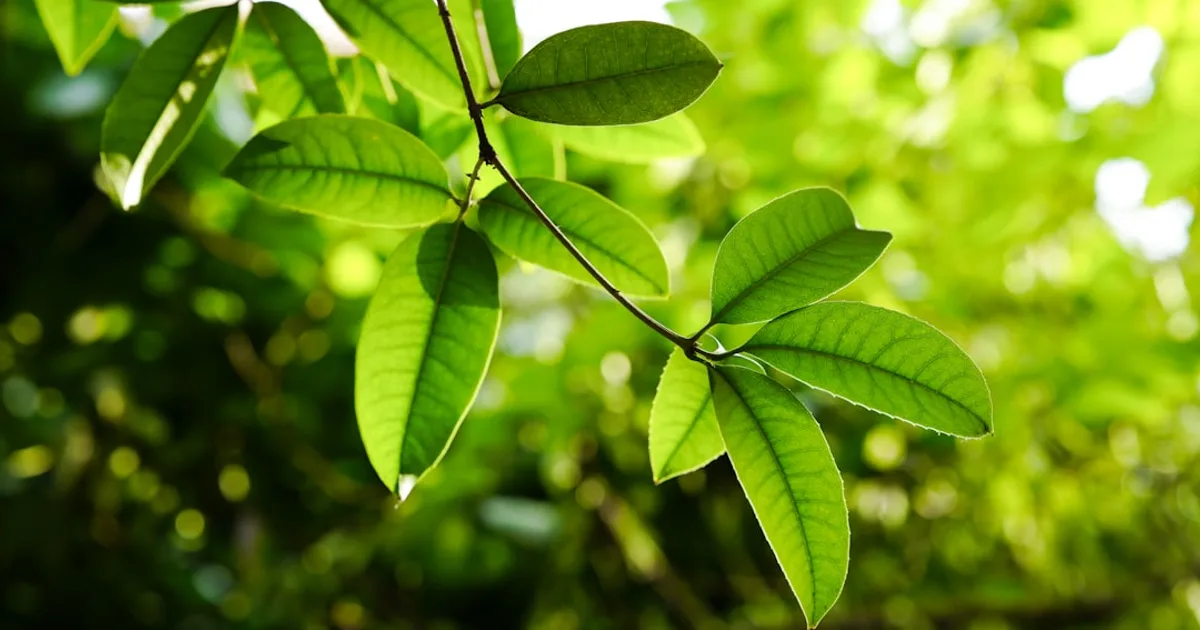
Dried stevia leaf goes for $15-25 per pound at health food stores and herb markets (USDA AMS Specialty Crop Market News, 2023). The active compounds - steviol glycosides, primarily stevioside and rebaudioside A - are 200-300 times sweeter than sucrose by weight (USDA Agricultural Research Service, Steviol Glycoside Content in Stevia, 2018). One small plant yields enough dried leaf to sweeten hundreds of cups of tea. If you use caloric sweeteners and would prefer not to, this is the most direct substitution available from a home garden.
What it actually is
Stevia is a semi-woody perennial shrub native to Paraguay and Brazil, in the Asteraceae family (same family as chamomile, calendula, and sunflowers). The species used commercially and in home gardens is Stevia rebaudiana. Plants grow 18-24 inches tall, with small, oval, serrated leaves and tiny white flowers when they bolt.
The sweetness comes from the leaf, not the flower. The glycoside concentration is highest just before flowering. Once plants begin to flower, glycoside content drops and plants put energy into seed production rather than leaf growth.
Stevia is a tender perennial - it survives outdoors year-round only in zones 9-11 (where frost is rare to absent). In zone 8, it may survive mild winters with heavy mulching over the crown, but there’s no guarantee. In zones 4-7, it dies with hard frost and must be overwintered indoors as a potted plant or propagated from cuttings before frost. It regrows vigorously from the root crown if protected from freezing.
Variety selection matters more than most people realize
Standard Stevia rebaudiana grown from generic seed is variable. Some plants taste clean and sweet. Others carry a pronounced bitter or licorice aftertaste that makes them nearly unusable in delicate applications. That bitterness is not a processing problem - it comes from the ratio of stevioside to rebaudioside A in the leaf. Stevioside carries most of the bitterness; rebaudioside A is the cleaner-tasting compound. A high-Reb-A plant tastes noticeably better than a high-stevioside plant, and you can’t tell from the seed packet which you’re getting.
Named cultivars bred for Reb-A dominance include ‘Candy’ (widely available at US garden centers, sweet with low bitterness), ‘Stevia Select’ (bred specifically for Reb-A dominance), and ‘Sugar Leaf’ (a common name applied to several high-Reb-A strains - not a single standardized cultivar). If you’re buying transplants rather than seeds, ask specifically for a Reb-A dominant variety. If the person selling starts can’t tell you the cultivar name, buy from somewhere else or find a named variety online.
The flavor difference is significant enough that it determines whether you’ll actually use the plant. A bitter-tasting stevia plant sitting in your garden is not a productive asset.
The ROI case
A packet of stevia seed costs $3.99. The practical problem with seed is that germination rates run 20-30% even from fresh, correctly stored seed (Cornell Cooperative Extension, Stevia Production Guide, 2019). Sow at least 3-4 times as many seeds as you need plants, or skip seed entirely and buy starts. One established plant produces roughly 0.25-0.5 lb of dried leaf per season.
The dollar figure for dried leaf understates the actual value. The better comparison is against what you’re replacing: sugar equivalent.
One pound of dried stevia leaves yields approximately 30-40 teaspoons of usable leaf powder after grinding and sifting. Based on USDA ARS steviol glycoside data, 1 teaspoon of dried stevia leaf powder is roughly equivalent in sweetening power to 1 cup of sugar. That means 1 lb of home-dried stevia replaces 30-40 cups of sugar (USDA Agricultural Research Service, Steviol Glycoside Content in Stevia, 2018).
| Input | Cups sugar equivalent | Sugar cost avoided (at $1.50-2.00/cup) | vs. commercial stevia powder ($30-50/lb) | vs. stevia packets ($0.50-1.00 each) |
|---|---|---|---|---|
| 0.25 lb dried leaf | 7-10 cups | $10-20 | $7-12 | $50-100 (100-200 packets) |
| 0.5 lb dried leaf | 15-20 cups | $22-40 | $15-25 | $100-200 (200+ packets) |
| 1 lb dried leaf | 30-40 cups | $45-80 | $30-50 | $200-400 (400+ packets) |
Note: organic cane sugar runs $1.50-2.00/lb and roughly $1.50-2.00/cup in sweetening equivalent. Commercial stevia powder (purified Reb-A extract) runs $30-50/lb. Individual stevia packets run $0.50-1.00 each at retail. An average home garden plant producing 0.5 lb of dried leaf replaces $22-40 worth of sugar or $15-25 worth of commercial stevia powder in a season. Not a transformative number - but if you keep the plant alive for multiple seasons through overwintering, the seed cost disappears from the calculation and the math improves every year.
Home stevia is not the same as commercial stevia
Commercial stevia products extract and purify rebaudioside A specifically. What you get in those little packets or the white powder is a highly refined compound with a relatively clean sweetness profile.
Whole dried leaf is different. It contains the full spectrum of steviol glycosides, along with other plant compounds - some of which contribute earthy, grassy, or slightly herbal notes. This is not a flaw. In tea, those notes often blend in and the overall effect is pleasant. In baked goods, particularly light-flavored applications like vanilla cream or delicate icings, the complexity can be noticeable in a way some people find off-putting.
Know what you’re making before you reach for the stevia jar. It works well in: coffee, tea, smoothies, plain yogurt, strongly flavored sauces or dressings, and anything where a supporting sweetness is the goal. It works less well in: applications where the sweetener is the primary flavor note, or anything where visual clarity matters (dried leaf powder will tint a preparation green-brown).
Propagation: cuttings over seed
The most reliable way to establish stevia - and the most reliable way to preserve a plant with good flavor - is cuttings, not seed. Stevia roots readily from softwood cuttings taken in June or July.
Take 4-6 inch cuttings from actively growing stem tips. Remove the lower leaves, leaving 2-3 pairs at the top. Dip the cut end in rooting hormone (IBA at 1,000-3,000 ppm powder formulation). Insert into moist potting mix or perlite, cover with a humidity dome or clear plastic, and keep in bright indirect light at 70-75°F. Roots develop in 2-3 weeks. Remove the dome gradually to acclimate before transplanting.
Cuttings accomplish two things seed cannot. First, germination of 20-30% is a real constraint when you want reliable plant counts - cuttings root at 80-90%+ under reasonable conditions. Second, if you’ve grown a stevia plant that tastes exceptional, cuttings reproduce it exactly. Seed from that same plant will generate a genetically variable population, some of which will taste worse.
If you find a stevia plant at a farmers market or in a neighbor’s garden that tastes clean and sweet, offer to take a cutting. That cutting is more valuable than anything you’ll grow from a generic seed packet.
Growing requirements
Start seeds indoors 8-10 weeks before your last frost date. Press seeds onto the surface of a well-drained seed-starting mix - stevia seeds are tiny and need light for germination. Keep soil moist but not wet at 70-75°F. Given the low germination rates, sow at least 3-4x as many seeds as you need plants.
Transplant after all frost risk has passed and soil temperature is above 65°F. Stevia is cold-sensitive; a late frost will kill transplants that haven’t hardened off sufficiently. Harden off over 7-10 days by gradually increasing outdoor exposure.
Soil pH of 6.5-7.0. Well-drained, moderately fertile soil - stevia is susceptible to root rot in wet or compacted soils. Raised beds or mounded rows improve drainage. Do not over-fertilize; high nitrogen pushes vegetative growth but dilutes glycoside concentration in the leaves. A light application of balanced fertilizer at transplant and once mid-season is sufficient.
Full sun (6-8 hours) is non-negotiable for good glycoside development. Shade-grown stevia produces lower sweetener content. Space plants 18-24 inches apart. Pinch growing tips at 8 inches tall to promote branching and higher total leaf yield.
Zone limitations, stated plainly
Zone 9+: stevia is a perennial. Plant it, cut it back each fall, mulch lightly, and it comes back. A 3-year-old plant is a larger and more productive shrub than a first-year transplant.
Zone 8: possible overwintering outdoors with 3-4 inches of mulch over the crown after frost kills top growth. Not reliable. Some winters you’ll lose it. Worth attempting if you’re attached to a particular plant; not worth counting on as your growing strategy.
Zone 7: overwinter as a container plant. Dig before hard frost, cut back by half, pot in a container, and bring indoors to a south-facing window or under grow lights. Water sparingly through winter - the plant is semi-dormant and susceptible to root rot in wet winter soil. Return outdoors after last frost.
Zone 4-5: treat as an annual. Your plants won’t reach full productive size before frost. A first-year stevia plant started from seed in zone 4 might yield 0.1-0.15 lb of dried leaf, not the 0.25-0.5 lb you’d get from a full-season plant in zone 7. That’s still worth growing if you use stevia regularly, but be realistic about yield. The ROI math at those yields is closer to break-even than a strong positive return. Short-season growers get more from this crop by starting plants as early as possible indoors (10-12 weeks before last frost) and using the largest transplants they can manage.
What goes wrong
Root rot is the most common failure, almost always caused by poorly drained soil or overwatering. Stevia’s roots are shallow and intolerant of saturated conditions. Plant in raised beds or well-amended, fast-draining soil. Water 1 inch per week and let the top inch of soil dry between waterings.
Low germination from seed is expected, not a failure. Commercial stevia seed has low viability even when packaged correctly. Plan for it by sowing heavily, or skip seed entirely and buy starts.
Aphid infestations on new growth are common, particularly indoors on overwintered plants. Treat with insecticidal soap at first sign. Aphids on outdoor plants are usually managed by natural predators once the season is underway.
Bolting triggered by long daylength (above 12-14 hours) reduces leaf quality. Pinch flowering stems before they fully develop. In northern gardens (zone 6 and above), bolting typically occurs in August. This is also your signal to do a major harvest before the plant shifts energy to seed production.
Harvest, drying, and processing
Harvest just before the plant flowers - this is when stevioside and Reb-A content are both at their peak. A useful rule: harvest when 20-30% of flower buds have opened. Cut stems back by two-thirds, leaving the lower foliage to regrow for a second harvest before frost.
Strip leaves from stems by gripping the stem near the top and pulling your thumb and forefinger down toward the base. The leaves strip off in one motion. It’s tedious on a large harvest but faster than picking individual leaves. Discard the woody stems.
Dry in a single layer at 95-100°F in a dehydrator for 1-2 hours, or air-dry in shade (not direct sun, which degrades glycosides) over 3-5 days. Properly dried leaves crumble easily between your fingers with no flexible or rubbery texture remaining.
Grind dried leaves in a spice grinder or coffee grinder dedicated to herbs - 30-45 seconds to a fine powder. Sift through a fine mesh strainer to remove fibrous stem fragments and larger leaf material that didn’t break down. The sifted powder is your usable product. Potency declines slowly over 2-3 years; store in a sealed glass jar away from light and heat.
The ratio of fresh leaf to dried leaf is roughly 5:1 by weight - 5 lb of fresh leaf yields approximately 1 lb of dried. Plan harvest volumes with that in mind.
Related crops: Basil, Mint, Chamomile
Related reading: Seed Saving Guide - why saving stevia cuttings beats saving seed, and how propagation by division works
Growing Stevia? Track your harvest value and break-even date in the Garden ROI app.
Get the App