
Vietnamese Coriander
Persicaria odorata
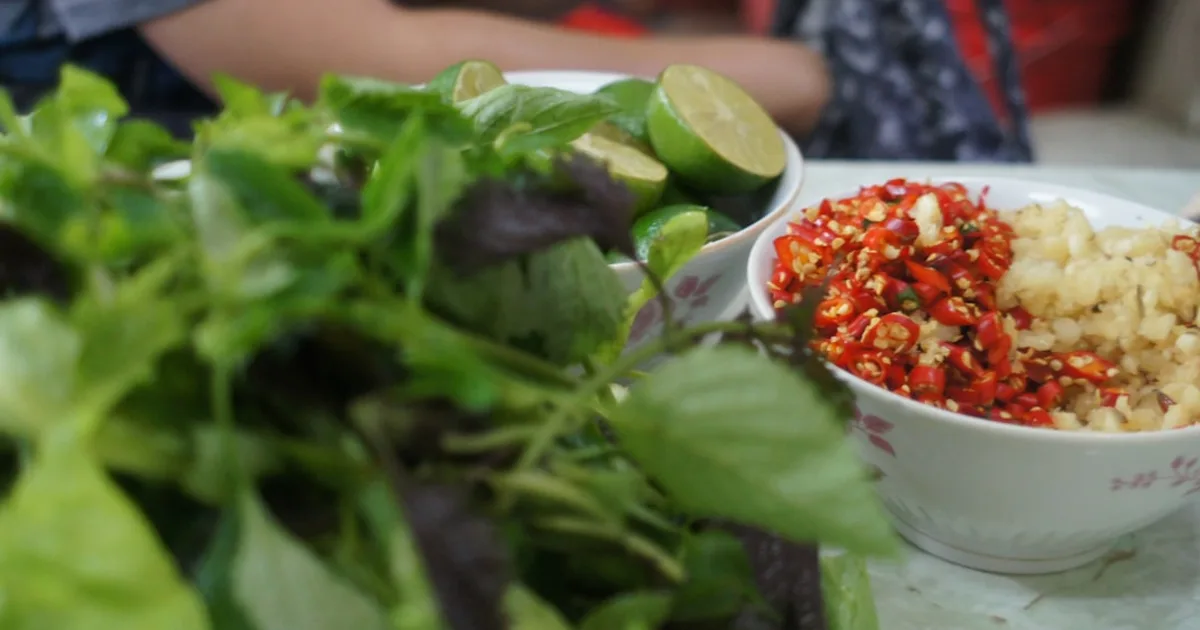
Vietnamese coriander is the herb that appears on every Vietnamese restaurant table alongside mint and bean sprouts: the one with long pointed leaves showing distinctive dark chevron markings, the one most non-Vietnamese diners can’t identify by name. It’s called rau răm in Vietnamese, and it’s the defining herbal note in Vietnamese cold dishes, green papaya salad, and the herb plates that accompany pho, bún bò Huế, and other noodle soups.
The flavor is distinct from cilantro despite superficially similar pungency: sharper, more peppery, with a citrusy note and an almost-menthol finish. It neither tastes like cilantro nor like mint, though it suggests both. At Southeast Asian markets it sells for $8-15/lb for fresh bunches. Outside areas with Vietnamese or Cambodian communities, it’s essentially unavailable commercially.
The plant is a tropical perennial that, unlike cilantro, does not bolt in heat. It grows through summer, roots at nodes like mint, and expands into available space without hesitation.
What It Actually Is
Persicaria odorata is in the buckwheat family (Polygonaceae), native to Southeast Asia. It has no botanical relationship to cilantro (Coriandrum sativum) - the flavor similarity is coincidental; the plants are not related beyond broad plant kingdom membership. Persicaria is more closely related to knotweed and water pepper than to any culinary herb in the carrot family.
The stems are reddish-tinged, jointed (characteristic of the Persicaria genus), and root readily at any node that contacts moist soil. The leaves are 2-3 inches long with a pointed tip and often show a distinctive brown or maroon chevron pattern in the center of the upper leaf surface - a reliable identification feature once you know to look for it.
Flavor in detail: the characteristic compounds include decanal, undecanal, and other long-chain aldehydes that create the citrusy pungency, combined with p-cymene and related terpenoids responsible for the peppery-menthol quality. The flavor profile overlaps with cilantro’s broadly (both have aldehyde-driven character) but the specific compounds differ. People who dislike cilantro because of the soapy-aldehydic note often find rau răm more tolerable, though it can also be divisive. Like cilantro, it’s not universally enjoyed raw in quantity.
Regional names: rau răm (Vietnamese), laksa leaf (Malaysian/Singaporean), daun kesum (Indonesian/Malay), Cambodian mint, Vietnamese mint, hot mint.
The ROI Case
Vietnamese coriander’s value is access. There’s no commercial equivalent in conventional US markets. A single container planting produces enough for regular cooking use through the warm season.
Specialty market pricing: $8-15/lb for fresh bunches (specialty and ethnic market retail; USDA AMS does not track this crop).
| Planting | Plants | Seasonal yield | Value @$10/lb | Start cost | Net |
|---|---|---|---|---|---|
| 3 plants (container) | 3 | 0.25-0.5 lb | $2.50-5.00 | $1.50* | $1.00-3.50 |
| Ground patch (4 sq ft) | 6-8 | 0.5-1.0 lb | $5.00-10.00 | $2.99 | $2.01-7.01 |
| Year 2+ (established) | Same plants | Same | Same | $0 | Full value |
*Often propagated free from cuttings taken from grocery store purchase.
After year 1, start cost drops to zero. Cuttings taken from the mother plant in fall, rooted indoors over winter, replace the outdoor planting in spring with no additional cost.
Zone Fit
Zones 9-11: perennial ground planting. Survives mild winters; grows year-round in frost-free conditions. Will spread into available garden space if not contained. May become semi-persistent without much management.
Zones 7-8: overwintering is possible with protection (container moved indoors, or plants heavily mulched against a south wall in Zone 8). More reliably, take cuttings in September and root indoors; discard the outdoor plant; grow on indoor cuttings through winter. Replant outside in May.
Zones 5-6: annual outdoors. Direct plant or transplant rooted cuttings after last frost. Grows vigorously from mid-May through first frost - 5-6 months of production. Take cuttings in September before frost; overwinter indoors; repeat cycle.
Zone 4 and colder: possible in containers with strict indoor overwintering. The outdoor production season is shorter but adequate for culinary use. Container culture simplifies the cold-zone management.
Growing: Propagation from Cuttings
Vietnamese coriander is rarely grown from seed - commercial seeds are almost unavailable, and germination is unreliable. Propagation is entirely by stem cuttings, which is both easy and free once you have a plant.
Starting from a grocery store purchase: buy a fresh bunch of rau răm from a Vietnamese market. The stems are alive and root readily. Cut stems into 4-6 inch sections. Strip the lower leaves, leaving 2-3 leaves at the tip. Place stems in a glass of water at room temperature. Change the water every 2-3 days. Roots develop in 7-14 days. Transfer to soil once roots are 1-2 inches long.
This is the most practical starting method and is essentially free. One bunch from a market provides enough cuttings for a 4-square-foot ground patch or two 6-inch containers.
Seasonal cutting cycle: in Zone 5-6, take cuttings in early September (before first frost risk). Root indoors in water. Pot up in 4-inch containers with moisture-retentive potting mix. Keep in a bright, warm (65°F+) location through winter. In spring, transplant outdoors after last frost or take new cuttings from the overwintered plant to expand the planting.
Container growing: Vietnamese coriander grows well in containers, where the spreading tendency is naturally contained. A 10-12 inch pot per 3 plants is adequate. The trailing stems hang over the container edge attractively.
Growing Requirements
Soil: adaptable; tolerates moist, even slightly boggy conditions. The plant grows naturally along stream banks and moist forest edges in tropical Asia. In containers, use a moisture-retentive mix. Does not tolerate completely dry soil - drought stress causes leaves to drop and slows recovery.
Light: prefers 5-7 hours of direct sun but tolerates partial shade. In partial shade, leaf flavor is slightly less intense. In intense afternoon heat above 95°F, afternoon shade prevents heat stress.
Water: 1-1.5 inches per week; keep consistently moist. More drought-tolerant than most tropical herbs once established, but a moist root zone produces the best leaf quality.
Spreading: like mint, Vietnamese coriander roots at nodes wherever stems contact soil. In ground plantings, contain with buried edging (4 inches deep minimum) or grow in containers. Unconstrained plants can occupy a 4-6 foot area within one season.
Harvest: cut stem tips (last 4-6 inches with leaves) regularly. The plant branches at each cut, producing more tips. Harvest every 10-14 days during peak growth. Regular harvesting maintains compact, bushy form and prevents leggy, unproductive stems.
What Goes Wrong
Cold damage: leaves turn black and mushy below 40°F. Stems may survive light frost if covered, but foliage quality drops immediately. Bring containers in before the first frost forecast; don’t push the temperature limit.
Slugs: in partially shaded or moist ground plantings - conditions the plant prefers - slug pressure is real. Slugs feed on young leaves and growing tips at night. Iron phosphate bait applied around the planting perimeter is effective and safe around edible herbs.
Leggy plants: results from insufficient light or not harvesting frequently enough. Cut back hard to 4-6 inches; the plant regrows bushier from the cut nodes. Move containers to brighter locations if stretching is persistent.
Rooting failures: cuttings in stagnant water develop bacterial rot. Change water every 2-3 days. Use young green tip growth for cuttings rather than older woody stems. Cuttings from stems that have been refrigerated in a bunch may be slower to root but usually succeed if the water is fresh.
Preservation
Fresh: 3-5 days refrigerated, wrapped in a damp cloth. Leaves are delicate after harvest; handle gently to avoid bruising.
Drying: not suitable. The volatile compounds that give rau răm its character degrade rapidly with drying; the result is essentially flavorless. Dried rau răm has no useful culinary application.
Freezing: acceptable for cooking applications but not for fresh garnish use. Blanch very briefly (20-30 seconds in boiling water), pat dry, freeze flat on a sheet pan, then bag. Add frozen rau răm directly to soups, braises, or laksa broth during cooking. The flavor survives heat cooking; the fresh-herb freshness doesn’t survive freezing.
Oil infusion: blend fresh leaves with neutral oil and freeze in ice cube trays. Adds rau răm character to cooked dishes when fresh isn’t available. Works well for laksa and curry applications.
The practical conclusion: grow it for fresh use, freeze surplus for cooked applications. Don’t try to extend the fresh shelf life through preservation.
Kitchen Applications
The flavor intensity note: rau răm is potent. In dishes where it’s a garnish (pho herb plate), 3-4 leaves per serving is appropriate. As a primary ingredient in a salad (duck salad, papaya salad), a larger quantity is used - it functions as a vegetable component, not a finishing herb.
Pho herb plate: fresh rau răm leaves placed alongside bean sprouts, Thai basil, fresh chilies, and lime wedges. Diners add leaves to the hot broth at the table; they wilt in seconds and release peppery-herbal aroma into the soup. The specific combination of rau răm with Thai basil in pho is characteristic of southern Vietnamese preparation.
Vietnamese green papaya salad (gỏi đu đủ): shredded green papaya dressed with fish sauce, lime juice, chili, and a generous amount of rau răm leaves. The herb’s sharpness cuts through the fish sauce and complements the papaya’s neutral crunch.
Vietnamese duck or chicken salad: cold poultry, shredded fine, with glass noodles, shallots, roasted peanuts, and a large quantity of rau răm leaves. The herb is not a garnish in this preparation - it’s added by the cup, making it a primary flavor.
Rice paper rolls (gỏi cuốn): fresh rice paper rolls (often called summer rolls) may include rau răm as one of the herbs alongside mint and lettuce. The peppery quality adds complexity to the roll without dominating.
Laksa: in Sarawak laksa and Assam laksa (Malaysian regional preparations), daun kesum (the Malaysian name for this herb) is simmered briefly in the broth and added fresh as garnish. The herb is specifically responsible for the herbal note that distinguishes these preparations from other Southeast Asian coconut soups.
Taste Comparison: Rau Răm vs. Cilantro vs. Culantro
For gardeners deciding which heat-tolerant herb to grow, here’s the direct flavor comparison:
| Herb | Flavor character | Heat tolerance | Bold use | Substitute for |
|---|---|---|---|---|
| Cilantro | Bright, citrusy, soapy to some | Bolts above 75°F | Vietnamese, Mexican, Indian | Nothing exactly |
| Rau răm | Peppery, citrusy-menthol, sharp | Does not bolt | Vietnamese, Cambodian, laksa | Partial cilantro substitute |
| Culantro | Very pungent cilantro-like; earthy | Does not bolt | Caribbean, Latin American, pho | Closest to cilantro by flavor |
Rau răm is not a cilantro substitute in Mexican cooking - the flavor profile doesn’t translate across cuisines. It is a reasonable substitute in Vietnamese cooking when used at about 30-40% of the cilantro volume a recipe calls for.
Related crops: Culantro - tropical cilantro relative with similar heat tolerance and bolt resistance; Thai Basil - fellow Southeast Asian fresh herb; Lemongrass - companion in Thai and Vietnamese cooking
Related reading: Herb Preservation Guide - freezing and preserving tropical fresh herbs
Growing Vietnamese Coriander? Track your harvest value and break-even date in the Garden ROI app.
Get the App