
Adzuki Bean
Vigna angularis
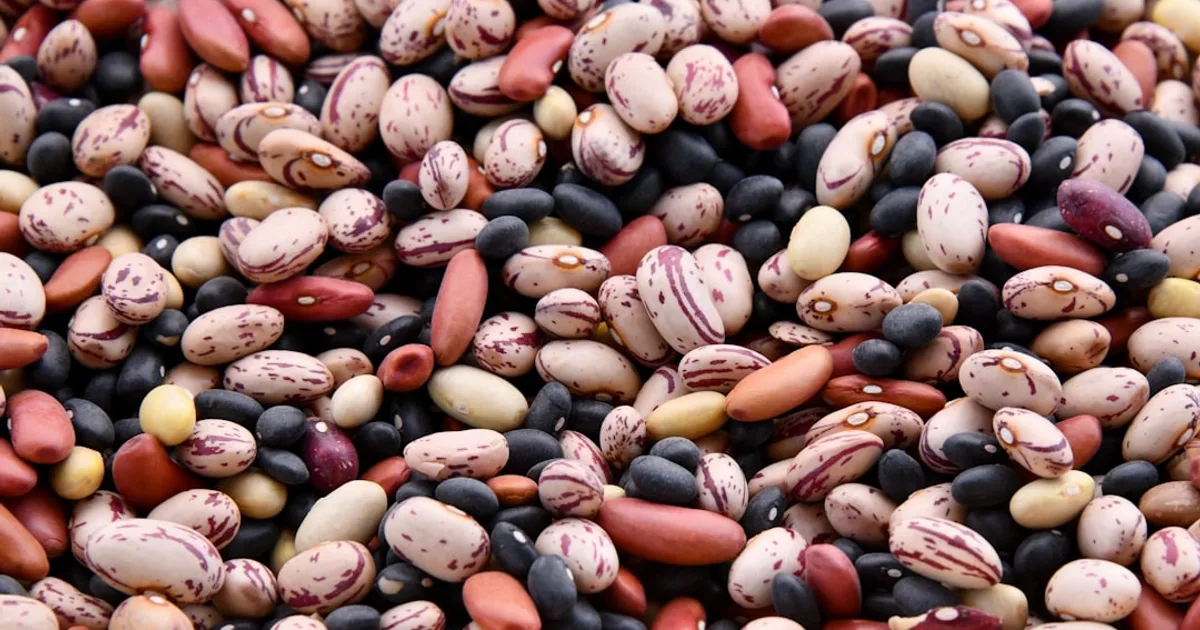
Adzuki beans (Vigna angularis) sell for $3-5/lb at natural food stores under brands like Bob’s Red Mill and Eden Foods - two to three times what commodity black beans or navy beans fetch at retail. The premium exists because demand for anko (red bean paste) has grown faster than domestic supply can fill it, and because the Japanese and Korean food culture that anchors that demand tends to pay for quality. If you use adzuki beans in cooking, this is one of the few storage legumes where growing your own actually beats the price point of whatever is on the shelf.
The crop is a 120-day warm-season annual. That schedule rules it out for many northern gardeners - zones 5 and 6 have a narrow window - but in zones 7-9 it fits cleanly between last frost and first fall freeze with time to spare.
What it actually is
Adzuki bean is a member of the legume family (Fabaceae), closely related to mung bean (Vigna radiata) and cowpea (Vigna unguiculata) rather than to common beans (Phaseolus vulgaris). The plant grows 1-2 feet tall as a bushy, semi-erect annual, producing thin pods 4-6 inches long containing 8-12 small, dark red seeds with a distinctive white hilum (seed scar). The seed has a mildly sweet, nutty flavor relative to other dried beans - this is the quality that makes it the defining ingredient in confectionery applications.
Two broad types exist: Japanese adzuki bred for large seed size, bright red color, and sweetness (varieties like ‘Erimo’ and ‘Dainagon’ command the premium price tier in specialty markets), and Chinese and Korean types that are generally smaller-seeded and used in savory applications as well. For most US home gardens, seed sourced as “adzuki bean” without a named cultivar is typically an unspecified Asian-market type that performs adequately for both cooking and storage.
Unlike edamame or garden beans, adzuki is almost exclusively grown for the dry seed harvest. Fresh shell use is uncommon in Western cooking. Plan around a dry bean harvest from the start.
Market context
The primary driver of adzuki demand in the US is anko - the sweet red bean paste used in mochi, dorayaki, daifuku, yokan, and a range of Japanese and Korean confectionery. US grocery store shelf presence for adzuki beans expanded alongside the growth of Japanese supermarkets (H Mart, Mitsuwa, Nijiya) and the mainstreaming of Japanese and Korean cuisine in major metros. Outside those retail channels, adzuki are a specialty item.
Retail pricing breaks down this way, based on USDA AMS commodity price reports and retail survey:
| Source / Grade | Price per lb |
|---|---|
| Bob’s Red Mill, Eden Foods (natural food stores) | $3-5/lb |
| Premium Japanese-origin (imported, specialty retail) | $6-10/lb |
| Bulk bin (co-ops, natural food stores) | $2.50-4/lb |
| Commodity dried beans (black, navy) | $1-1.50/lb |
The premium over commodity beans is real and consistent. It reflects a combination of lower domestic production volume, import reliance for the top-quality tier, and demand from a market segment willing to pay for quality.
Growing your own at $5.00 in seed cost, producing 1-1.5 lbs of dry beans per 10-foot row, gives you a break-even of roughly 1 row to recover seed cost at the low end of retail pricing ($3/lb). Everything beyond that row is net positive relative to what you’d spend at the store.
Growing profile
Adzuki is a warm-season annual that needs soil temperatures above 65°F to germinate reliably. In zone 5, that puts direct sow around Memorial Day with harvest coming right at or just after first fall frost - viable but tight, requiring a full-season warm summer. In zones 6-9, the schedule opens up, with first frost dates in October-November giving 140-160 frost-free days.
Sow seeds 1 inch deep, 4-6 inches apart, in rows 18-24 inches apart. Germination in 7-10 days at 70°F soil temperature. Direct sow is strongly preferred - disturbing roots during transplanting disrupts nitrogen-fixing nodule formation. There is no benefit to starting indoors; adzuki germinates and establishes fast in warm soil.
Soil pH of 6.0-7.0. Average soil fertility is sufficient; avoid high-nitrogen amendments, which push vegetative growth at the expense of pod set and suppress nitrogen fixation. If you haven’t grown legumes in that bed before, inoculate seeds with cowpea/mung bean inoculant (Bradyrhizobium spp. appropriate for Vigna) - the species group is distinct from soybean (Bradyrhizobium japonicum) and from garden bean (Rhizobium leguminosarum bv. phaseoli). Mismatched inoculant doesn’t harm the plant; it just doesn’t improve nitrogen fixation.
Water at 1 inch per week. Adzuki is more sensitive to waterlogging than most common beans - standing water or consistently saturated soil causes root rot and poor nodule development. Raised beds or slightly mounded rows on flat ground help drainage. On the other end, drought stress during flowering and pod fill (roughly 80-100 days in) cuts yield hard; maintain consistent moisture during that window.
Plants are indeterminate, setting new flowers over several weeks. Harvest timing is based on pods rather than days: when pods have turned yellow-brown, the beans inside rattle audibly when you shake the pod, and the lower pods on the plant begin to shatter open on their own. At that point, cut the whole plant at the base and hang it to finish drying in a sheltered, well-ventilated space for 1-2 weeks before threshing. If weather turns wet at harvest time, pull plants early and dry indoors; adzuki pods are prone to mold on the seed at high post-harvest moisture.
Yield expectation: 0.75-1.5 lbs dry seed per 10-foot row at standard spacing, per University of Minnesota Extension legume production guidelines. Upper-end yields require good soil drainage, consistent moisture during pod fill, and a full 120-day season without early frost.
ROI compared to other legumes
The case for growing adzuki instead of a cheaper bean comes down to whether you use them. If your kitchen calls for adzuki, the premium is your advantage. If you want the biggest calorie-per-square-foot return on dried bean space, navy or black beans win on yield per row.
| Bean | Retail price (natural food stores) | Notes |
|---|---|---|
| Adzuki | $3-5/lb | USDA AMS; Eden Foods / Bob’s Red Mill |
| Mung | $1.50-2.50/lb | USDA AMS retail survey |
| Black bean | $1-1.50/lb | USDA ERS commodity data |
| Navy bean | $1-1.25/lb | USDA ERS commodity data |
The practical comparison: a 10-foot row of adzuki at 1 lb yield and $4/lb retail value equals $4 recovered against a $5 seed cost investment (roughly half a packet for that row length). A 10-foot row of black beans at 1.25 lb yield and $1.25/lb equals $1.56 recovered - a worse dollar return from the same garden real estate. The premium makes the math work for adzuki specifically; without it, common beans dominate.
Nitrogen fixation value
Like all legumes, adzuki fixes atmospheric nitrogen through symbiosis with Bradyrhizobium bacteria in root nodules attached to the root system. The nitrogen fixed during the growing season stays in those nodules. When you cut the plant at harvest and chop the roots into the soil rather than pulling them out, that nitrogen is released as the root mass decomposes.
University of Minnesota Extension estimates legume nitrogen fixation at 50-200 lbs of nitrogen per acre depending on plant stand, soil conditions, inoculant use, and season length (Legumes for Minnesota, University of Minnesota Extension). In practice, a well-inoculated adzuki planting in good conditions lands toward the middle of that range. The economic value of that nitrogen - at roughly $0.50-0.70 per lb for equivalent synthetic nitrogen fertilizer - adds a second-order return on top of the bean harvest that doesn’t appear in any revenue calculation but is real.
The soil improvement argument for growing storage legumes in rotation is not marketing language. Beans in rotation with heavy feeders like corn, tomatoes, or brassicas measurably reduce nitrogen fertilizer requirements in the following season.
Dry storage
Dry adzuki beans store 2-5 years at 40-70°F in airtight containers with low humidity, and indefinitely in the freezer (National Center for Home Food Preservation, University of Georgia). The key is getting moisture content below 12% before sealing - beans that rattle freely in the pod, feel hard to the fingernail, and have no give when pressed are typically at or below safe storage moisture. Beans that sealed before fully dry will mold in storage.
For freezer storage, seal in moisture-proof bags and freeze directly. No blanching or processing required for dried beans - freezing preserves them as-is. When ready to use, thaw and cook as normal.
This storage life is the resilience argument for growing dry storage legumes in general. A 5-lb harvest from a good season, stored properly, represents 18 months to 2 years of cooking supply. You are not producing perishables that need to move immediately or go to waste. The value accumulates.
What goes wrong
Poor germination in cold or wet soil is the most common failure mode. Adzuki germinates fast in warm soil and stalls or rots in cold or waterlogged soil. If your soil is below 65°F at sowing, wait. Planting into wet, cold conditions in a hurry to hit the season window typically means replanting.
Aphids (Aphis craccivora, the cowpea aphid, and other Aphis species) will colonize adzuki in numbers during wet springs and are particularly attracted to new growth and flower buds. Natural enemies - ladybeetles, parasitic wasps - provide good control if you haven’t disrupted the beneficial insect population with broad-spectrum sprays. A hard spray of water dislodges aphid colonies effectively on small plantings.
Bean mosaic viruses (various strains of Bean common mosaic virus, BCMV) cause mottled, distorted leaves and reduced yield. There is no cure; remove infected plants. Aphids are the primary vector. Keeping aphid populations low reduces transmission risk.
Pod shatter at full maturity means seed loss if you wait too long. Once pods start splitting on the lower third of the plant, you are losing beans. Cut and hang rather than waiting for the whole plant to dry standing.
Root rot (Rhizoctonia solani, Pythium spp.) in wet soils is the drainage problem showing up underground. If plants yellow and collapse before pod fill without obvious above-ground pest damage, check the soil drainage and look for brown, sunken stem tissue at the soil line. There is no recovery from established root rot; the fix is site selection next season.
Related crops: Edamame, Green Bean, Fava Bean
Related reading: Beginner Homestead Crops - includes legumes as soil-building, multi-return crops with storage value
Growing Adzuki Bean? Track your harvest value and break-even date in the Garden ROI app.
Get the App