
Cauliflower
Brassica oleracea var. botrytis
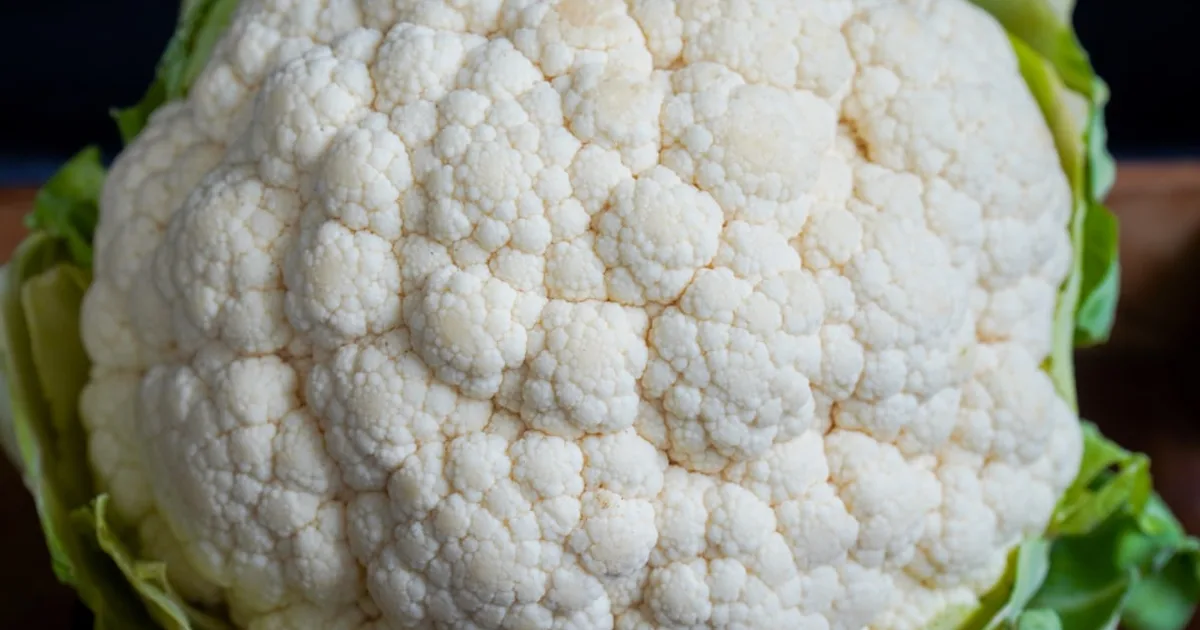
Cauliflower (Brassica oleracea var. botrytis) is the most temperature-sensitive brassica in the home garden. Heat at the wrong moment - specifically during head formation - produces loose, ricey curds or no head at all. Get the timing right and you have a crop that retails for $3.50-5.00/lb for standard white heads and $5-8/lb for orange, purple, or romanesco types (USDA AMS Specialty Crop Market News, 2023). Get the timing wrong and you have an expensive ornamental.
What you’re choosing between
White cauliflower is what most grocery stores carry. The colored types are where the home garden advantage is clearest.
Orange cauliflower (cultivars like Cheddar) gets its color from beta-carotene accumulation. Sweeter than white and holds color through cooking better than purple. Commands a noticeable price premium at farmers markets.
Purple cauliflower (Graffiti, Violet Queen) turns green when cooked - the anthocyanins are heat-sensitive. Best eaten raw or barely steamed. Retail price at specialty stores runs $5-8/lb.
Romanesco is technically a cauliflower. Its lime-green spiral structure sells out at farmers markets. It’s also harder to grow - heat-sensitive, slow to mature, and unforgiving of timing errors. Save it for your second season with cauliflower.
The ROI case
A $3.49 packet contains 200-300 seeds. At $3.50/lb retail for a 2 lb head, you’re looking at $7/plant in grocery value from $0.02 in seed cost. The catch is failure risk - an unexpected heat spike during heading ruins an entire planting. This is not a low-variance crop the way kale or collards are.
Growing requirements
Cauliflower needs cool temperatures throughout its growth cycle, especially during head initiation. Temperatures above 80°F for more than a few days during heading cause curd problems. Below 40°F for extended periods during early plant development trigger buttoning - tiny premature heads that never develop properly (Cornell Cooperative Extension, Cauliflower Production, 2018).
The target window is 60-75°F during daylight for the heading period. In most of the US: spring (transplant 4-6 weeks before last frost, harvest before summer) or fall (transplant in late summer so heading occurs in September-October as temperatures drop).
Soil pH 6.0-7.0. Cauliflower is a heavier feeder than most brassicas. Work in 2-3 inches of compost before transplanting; apply nitrogen fertilizer every 3-4 weeks until heads begin forming. Nitrogen-deficient plants produce small, loose heads.
Space transplants 18-24 inches apart.
Blanching white varieties: When the head reaches golf ball size, pull outer leaves over the curd and secure with a rubber band. This blocks sunlight and keeps the head white and mild. Orange and purple types don’t need it.
What goes wrong
Buttoning - tiny premature heads on young plants - results from cold stress below 40°F during early development, or from transplanting root-bound starts. Use young, actively growing transplants.
Ricey or loose curds come from heat during heading. Harvest what you have and use it; there’s no fixing it.
Imported cabbageworm (Pieris rapae) and cabbage looper (Trichoplusia ni) are the primary caterpillar pests. Bacillus thuringiensis var. kurstaki (Bt) applied weekly while caterpillars are small is effective. Row cover prevents egg-laying.
Clubroot (Plasmodiophora brassicae) causes swollen, distorted roots and wilting. Raise soil pH above 7.2 by liming; rotate brassicas out of infected beds for 4+ years (Penn State Extension, Crucifer Diseases, 2019).
Harvest and storage
Cut the head when it’s compact and firm, before any separation between curds begins. 2 lb is a solid target. Once curds begin separating or the surface looks grainy, quality drops fast - harvest immediately.
Refrigerates for 1-2 weeks. Blanch and freeze for up to 8 months.
Variety ROI comparison
Not all cauliflower sells for the same price. The spread between white standard and specialty colored types is large enough to change the economics of the crop.
| Variety | Type | Retail price range (per lb) |
|---|---|---|
| Snowball Y | White standard | $2.50-3.50 |
| Cheddar | Orange | $4.50-7.00 |
| Graffiti | Purple | $5.00-8.00 |
| Romanesco | Green spiral | $5.00-8.00 |
Source: USDA AMS Specialty Crops Market News.
The colored varieties command a $3-4/lb premium over white for identical growing effort. The plant doesn’t care what color it is - your inputs are the same. Cheddar and Graffiti are worth growing if you have access to a farmers market or a CSA box. At $5-7/lb on a 2 lb head, a single plant yields $10-14 in market value.
The one caveat: white cauliflower has broader demand. If you’re growing purely for household use and don’t sell, white is fine. If there’s any chance you’ll sell or trade surplus, grow colored types.
Blanching and the economic stakes
Blanching is the practice of tying the plant’s outer leaves over the developing head to exclude light. It applies only to white varieties. The goal is to prevent the curd from yellowing as it grows.
A yellow or off-white head is not a storage or food safety problem - it’s a market value problem. A firm, well-developed head that yellowed in the sun drops from roughly $3.50/lb to near-zero salability. The 10 minutes you spend tying leaves over the curd protects $5-7 of harvest value.
The timing matters. Check your plants daily once the head reaches 2-3 inches across. At that point, gather the outer leaves over the curd and secure them loosely with a rubber band or a strip of cloth. Don’t cinch them tight - you’re blocking light, not compressing the head.
From curd visible to harvest-ready is typically 5-10 days under normal conditions. In heat, that window compresses to 3-5 days. Once you see the head forming, check it every single day. A head that was perfect on Monday can be over-mature by Thursday if temperatures spike.
Orange and purple varieties skip this step entirely. Their color comes from pigment accumulation that isn’t affected by light exposure. This is one practical reason to consider colored types: fewer daily checks during the most critical period.
Zone timing and failure modes
Cauliflower’s temperature requirements create different optimal windows depending on where you garden.
Zone 4-5: Transplant 2-3 weeks before your last frost date for a spring crop, aiming to have heads mature before daytime temperatures climb above 75°F. The fall crop is often more reliable in northern zones - start transplants indoors and set them out 10-12 weeks before your first fall frost, so heading occurs as temperatures drop in September and October. Spring timing in Zone 4-5 is tight: a late cold snap triggers buttoning; an early heat wave ruins heading. The fall window is more forgiving.
What goes wrong in Zone 4-5: Spring planting often gets caught between the last hard frost and the first heat. If you transplant on schedule but get a warm May, heading is compromised before it starts. Fall crops occasionally run into early freezes before the head fills out fully.
Zone 6-7: Both spring and fall crops are viable. Fall timing is easier to manage - transplant in late July or early August for an October harvest. The soil is warm enough for fast establishment, and temperatures drop reliably as the head forms. Spring crops work but require precise timing: transplant early, expect to harvest by late May before summer heat sets in.
What goes wrong in Zone 6-7: Fall crops fail when August stays hotter than usual through transplant time, stressing young plants during establishment. Spring crops fail when April warms faster than expected and heads attempt to form in 80°F weather.
Zone 8 and above: Cauliflower is primarily a fall and winter crop. Plan for transplanting in September or October for a December through February harvest. Spring cauliflower almost always fails in Zone 8+ - the window between “cool enough to transplant” and “too hot for heading” is too narrow for the crop to complete its cycle.
What goes wrong in Zone 8+: Attempting a spring crop and losing the entire planting to heat. This happens every year to gardeners who are used to growing warm-season crops and apply the same timing logic. Cauliflower is not a spring crop in the South. The fall crop occasionally runs into an unexpectedly warm December; if that happens, harvest what you have even if the head hasn’t fully filled out.
Side crop potential: stems and leaves
The head gets all the attention, but a cauliflower plant that produced a full-sized head also yields 1-2 lbs of edible stems and leaves. The leaves and stems are prepared the same way as broccoli - roast them, sauté them, or add to stock. The flavor is milder than broccoli leaves but similar.
One important distinction: cauliflower does not produce side shoots after the main head is harvested. Broccoli plants continue producing smaller side heads for weeks after the central head is cut. Cauliflower does not. Once you harvest the head, the productive life of that plant is over. The leaves and stems are your secondary yield, not an ongoing one - harvest them when you harvest the head, or shortly after.
If you’re evaluating yield-per-square-foot, factor in that 1-2 lbs of usable stems and leaves alongside the main head. At cauliflower leaf prices (often sold as “cauliflower greens” at $1.50-2.50/lb at specialty markets), the full plant yield is higher than the head alone suggests.
Related crops: Broccoli, Kale, Romanesco, Kohlrabi
Related reading: Soil pH by Crop - brassica pH requirements directly affect clubroot pressure and nutrient availability
Frequently Asked Questions
What causes loose or ricey cauliflower heads?
Temperature stress during curd formation is the primary cause. Temperatures above 80 degrees while the head is forming produce loose, discolored curds. Time plantings so head development occurs in consistently cool weather (60 to 65 degrees).
What does blanching cauliflower mean?
Blanching ties or bands the outer leaves over the developing curd to block sunlight. This keeps white varieties white and prevents the bitterness that sun exposure causes. Self-blanching varieties like Snowball and Igloo do this naturally without intervention.
How long does cauliflower take to grow?
Cauliflower matures in 80 to 100 days from transplant. Most growers back-calculate from first frost to time heading for cool September or October weather, starting transplants in mid-summer.
Growing Cauliflower? Track your harvest value and break-even date in the Garden ROI app.
Get the App