
Curry Leaf
Murraya koenigii
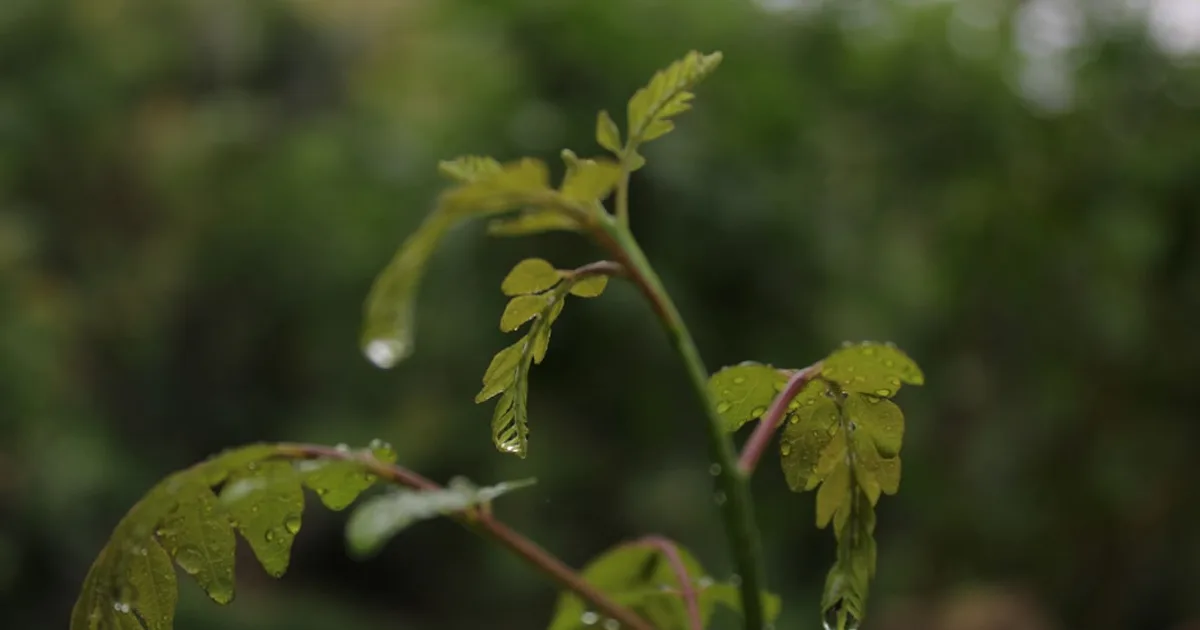
Curry leaves are one of the clearest examples in the herb world of why fresh matters. The fresh leaves - small, glossy, dark green, with a flavor that is aromatic, citrusy, slightly bitter, and unlike anything else - are fundamental to South Indian cooking: tempering in coconut oil for dal and chutneys, in sambar, in rasam, in coastal fish curries. Dried curry leaves are sold in Indian grocery stores and are essentially useless. The volatile compounds that give them flavor degrade almost completely during drying. A jar of dried curry leaves is a gesture, not an ingredient.
Fresh curry leaves at Indian grocery stores run $8-15/lb when available. Outside areas with significant South Indian populations, you often can’t find them at all. Growing your own - even a single potted tree - gives you access to a fresh ingredient that changes the character of South Indian cooking in a way no substitute accomplishes.
What it actually is
Murraya koenigii is a small tropical tree in the citrus family (Rutaceae), native to South and Southeast Asia. In its native range it grows 10-20 feet tall; container-grown specimens in temperate climates are managed at 2-5 feet through pruning. The leaves are pinnately compound - 8-15 pairs of leaflets on each leaf stalk - each leaflet roughly 1/2 to 1 inch long.
The aromatic compounds are primarily in the leaf oil: linalool, sabinene, and other terpenoids that give fresh curry leaves their distinctive citrus-herbal fragrance. These compounds are volatile at room temperature, which is why dried leaves fail and why fresh curry leaves frozen at harvest retain more flavor than dried ones.
The plant also produces small white flowers with jasmine-like fragrance, followed by small black berries. The berries are mildly toxic (contain toxic alkaloids in high quantities); don’t eat the fruit.
Not to be confused with: “curry powder” is a spice blend with no relationship to curry leaves. Curry powder typically contains cumin, coriander, turmeric, and other spices. Curry leaves are a fresh aromatic from a tree, used whole in cooking and typically removed (or left in the dish and eaten around, in South Indian home cooking style).
The ROI case
The ROI case for curry leaves is access, not volume. A single established plant provides enough fresh leaves for regular South Indian home cooking year-round in zones 9-11, or through the warm months with container culture.
| Scenario | Yield | Value @$10/lb | Plant cost | Net |
|---|---|---|---|---|
| Established outdoor tree (zones 9-11) | 0.5-1.0 lb/year | $5-10 | -$3.49* | Growing each year |
| Container plant, 3+ years established | 0.25-0.5 lb/year | $2.50-5 | -$3.49* | Growing each year |
*Many gardeners propagate from stem cuttings taken from a plant obtained at an Indian grocery store (fresh stems with leaves sometimes root), reducing seed cost to zero.
The financial case is modest compared to high-yield vegetables, but the access case is strong: there is no commercial equivalent to fresh curry leaves in most of the US.
Growing requirements
Climate: Murraya koenigii is tropical and frost-sensitive. Outdoor in-ground culture works in zones 9-11. In zones 7-8, container culture with winter indoor storage is the standard approach. In zones 5-6, the container overwinters in a warm, sunny indoor location.
Container culture: use a well-draining potting mix; add extra perlite for drainage. A 5-10 gallon pot accommodates a productive plant. Repot annually as the plant grows. Move outdoors when nighttime temperatures reliably stay above 50°F; bring back indoors before first frost. Keep near a south-facing window indoors; supplemental grow lights improve winter growth.
Propagation: there are three approaches, and they’re not equally reliable.
Seeds: germinate slowly and erratically at 70-80°F, typically 3-6 weeks, often longer. The critical issue is seed viability. Curry leaf seeds lose viability rapidly after the berry is removed from the plant - within weeks, not months. Fresh seed direct from a ripe berry germinates acceptably; dried seed sold in packets often has poor germination rates because of age. If you want to grow from seed, get it fresh from a plant with ripe berries, remove the berry flesh, plant immediately.
Stem cuttings: take 6-inch semi-hardwood cuttings from new growth in late summer, remove lower leaves, dip the cut end in rooting hormone powder, and keep in a warm, humid location at 70-80°F until roots develop (4-8 weeks). Success rate is moderate. This method requires patience and doesn’t always work.
Root suckers: by far the easiest method. Established curry leaf plants produce suckers - new shoots arising from the roots around the base of the plant. These are already rooted, genetically identical to the parent plant, and need only to be dug carefully with their attached roots and potted. If you know someone with an established plant, ask for a sucker. One established plant produces several per year, and dividing them is a 10-minute task. An Indian grocery store with live potted curry leaf trees is the fastest path to an established plant.
Water: consistent moisture during the growing season. Does not tolerate prolonged drought; leaves drop quickly under water stress. In winter (indoor storage), reduce watering - allow soil to partially dry between waterings.
Fertilizing: curry leaf trees are moderate nitrogen feeders when actively growing. Liquid fertilizer (fish emulsion, liquid kelp, or a balanced liquid fertilizer with nitrogen) every 2-3 weeks during the growing season produces noticeably more leaf growth than monthly feeding. Slow-release granular fertilizers are less effective here because the plant responds better to regular, smaller doses of available nitrogen than infrequent larger ones. Iron deficiency (yellowing between leaf veins on new growth, with veins remaining green) can occur in alkaline soils or with alkaline tap water; treat with chelated iron applied as a foliar spray or soil drench.
Hardening off in spring: container plants brought outdoors after winter indoor storage need gradual reintroduction to outdoor light levels. Move the plant to a shaded outdoor location for 3-5 days before transitioning to full sun. Skipping this step causes sun scorch on leaves that have adapted to indoor light - a setback that slows the plant’s productive season by several weeks.
Pruning: regular harvesting is the primary pruning. Remove entire branch tips as needed to keep the plant compact and bushy. The plant responds well to shaping.
What goes wrong
Leaf drop after moving indoors: the most common issue. Curry leaf trees often drop leaves when moved from outdoor light levels to indoor conditions in fall. New growth resumes in spring when the plant returns outdoors. The plant is not dead; it’s adjusting to lower light. Minimize light stress by transitioning gradually (a few hours less light each day over a week) rather than moving the plant directly from full sun to indoors.
Root rot from overwatering indoors in winter: the most common fatal error. During low-light winter storage, the plant grows slowly and uses little water. A wet, cold potting mix invites root rot. Water only when the top inch of soil has dried.
Scale insects: flat, waxy insects attached to stems and leaves. Scrape off with a soft brush; spray with horticultural oil. Scale is the most common pest on container curry leaf trees.
Failure to fruit/produce seeds: plants grown primarily for leaf harvest rarely need to produce seeds. If you want seeds for propagation, allow a few flower clusters to develop.
Harvest and use
Harvest individual leaflets as needed, or cut entire leaf stalks for larger quantities. The plant produces new growth continuously in warm months; regular harvesting encourages bushy growth.
Using fresh: add fresh curry leaves directly to hot oil or ghee at the beginning of cooking as part of the tarka/tadka (tempering). They will crackle and pop in the oil, releasing their aromatic compounds. Add the hot oil and leaves to dal, chutneys, or other preparations. Alternatively, add whole leaf stalks to soups and curries during cooking; the flavor infuses the dish.
Freezing: the most practical preservation. Freeze fresh curry leaves on a baking sheet, then transfer to a bag. Frozen leaves retain 70-80% of fresh flavor and work well in cooked applications (not for garnish).
Core preparations:
-
Dal tadka: cook lentils (toor dal or moong dal) until tender with turmeric and salt. For tadka: heat ghee or oil until smoking, add mustard seeds until they pop, add dried red chilies and curry leaves - they should crackle and darken instantly. Pour over the cooked dal. The curry leaves are the aromatic heart of this preparation.
-
Coconut chutney (South Indian): blend fresh coconut, green chili, and ginger. Temper with mustard seeds, urad dal, and curry leaves in oil; pour over chutney. Without fresh curry leaves, the chutney lacks the herbal depth that defines the preparation.
-
Rasam: thin, peppery South Indian tomato-tamarind soup. Curry leaves are added during cooking and in the final tadka. A daily meal staple in Tamil Nadu homes.
-
Keema (minced meat curry): curry leaves tempered in oil at the start of cooking provide an aromatic base that distinguishes South Indian keema from North Indian versions.
-
Curry leaf oil: heat neutral oil with a large quantity of fresh curry leaves until the leaves crisp. Cool, strain. Use as a finishing oil over dosas, rice, or roasted vegetables.
Market Value and the Substitution Argument
Fresh curry leaves at Indian grocery stores in US cities with significant South Indian populations run $2-4 per bunch (roughly 2-3 oz of leaves). That’s $10-20/lb when you do the math, though most buyers purchase by the bunch without thinking about per-pound cost. Outside those markets, fresh curry leaves are hard to find. Dried curry leaves sell for $5-8 per oz in the spice aisle - a price that would suggest high value, but dried curry leaves are not a real substitute for fresh. The volatile compounds that define the flavor - the citrusy, aromatic quality that makes them worth cooking with - are largely gone after drying.
This is the core substitution argument for growing your own: no commercial product adequately replaces the fresh leaf. Frozen curry leaves (which can be purchased from some Indian grocery stores or online) retain roughly 70-80% of fresh flavor and are the practical alternative when you can’t grow outdoors year-round. But a container plant with 6 months of productive growing season produces enough fresh leaves to keep up with regular South Indian cooking and still have surplus to freeze for winter.
For gardeners who sell at farmers markets or through a CSA, fresh curry leaves are a specialty item with a specific customer - the South Indian home cook who can’t find them locally. Pricing at $3-4 per bunch is appropriate and sells readily to that buyer. The market is narrow but not tiny, and demand is consistent with the supply.
Related reading: Lemongrass - fellow aromatic tropical grown in containers in cold climates; Fenugreek - South Indian spice herb companion
Growing Curry Leaf? Track your harvest value and break-even date in the Garden ROI app.
Get the App