
Malabar Spinach
Basella alba
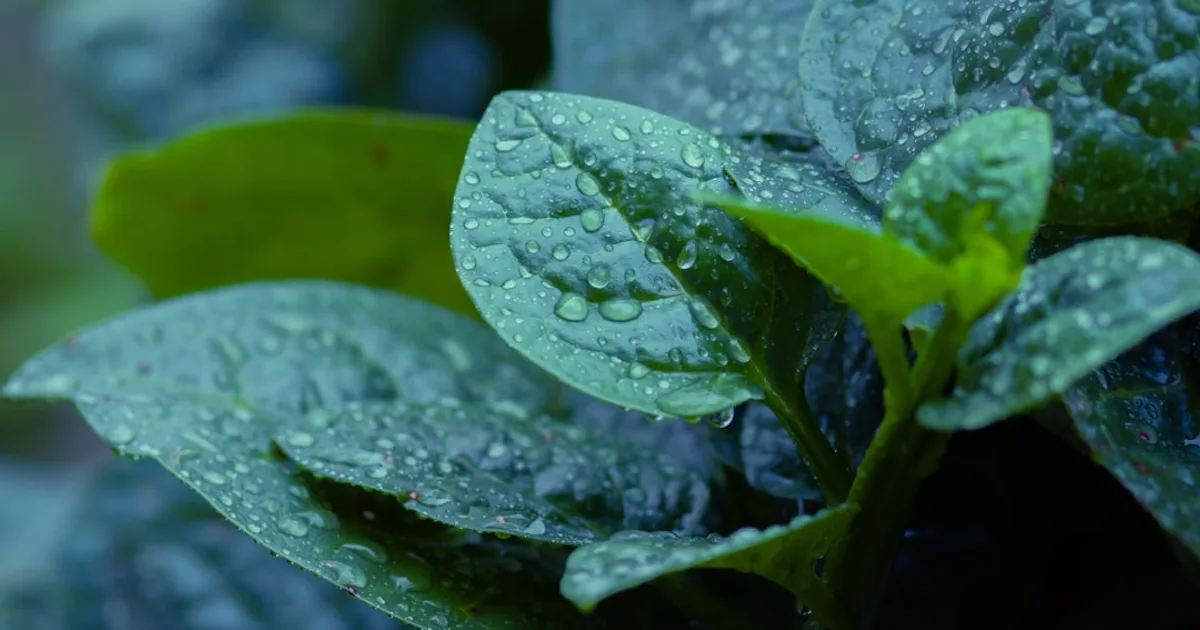
Malabar spinach is not a spinach. It’s a tropical vine in its own family, with fleshy, succulent leaves that look and cook like spinach but grow in conditions that would kill true spinach instantly. In South Asian and Southeast Asian cooking it’s a routine pot herb - leaves added to dal, curry, and stir-fries. At South Asian grocery stores it sells for $3-6/lb when available. For a gardener who wants cooked greens through July and August, it’s one of the most productive plants you can grow per square foot of trellis.
The case is simple: true spinach (Spinacia oleracea) is a cool-season crop that bolts when temperatures climb above 75°F. Your spring spinach is done by early June in most of the US. Malabar spinach comes on exactly when true spinach fails - and keeps producing right up to first frost. It doesn’t replace raw salad spinach. It replaces the cooked summer greens you’d otherwise be buying at the store.
What It Actually Is
Basella alba and Basella rubra are tropical perennial vines in the family Basellaceae, native to tropical Asia and Africa. They’re not related to true spinach (Amaranthaceae) despite sharing a common name and culinary use. In frost-free climates they’re perennial; in temperate zones they’re grown as warm-season annuals, started indoors in early spring and killed by the first hard frost in fall.
The two types are distinct enough that choosing between them matters:
| Characteristic | Green Malabar (B. alba) | Red Malabar (B. rubra) |
|---|---|---|
| Stem color | Green | Red-purple |
| Leaf size | Slightly larger | Slightly smaller |
| Leaf color | Deep green | Green with reddish tint |
| Berry color | Dark purple when ripe | Reddish-purple |
| Flavor | Mild, neutral | Marginally earthier |
| Ornamental value | Moderate | High |
| Culinary preference | Primary food variety | Equally edible |
Both grow at identical rates and have the same heat requirement. The red-stemmed type is popular for ornamental kitchen gardens because the color holds into late season. For pure production, the green type is more widely available as seed and has a slightly larger leaf. Neither is notably superior in yield; grow whichever is available.
The leaves are 2-4 inches across, oval to heart-shaped, thick and slightly succulent. The texture when cooked is slippery - a mucilaginous quality from polysaccharide compounds similar to what you get from okra. This is not a defect to manage around. In South Indian cooking the mucilage thickens curries naturally. In soups it adds body. Once you understand that this is the point, you stop trying to cook it like regular spinach.
The ROI Case
Malabar spinach is priced as a specialty item at South Asian and ethnic grocery stores where it’s available: $3-6/lb fresh (specialty and ethnic market retail pricing; USDA AMS does not maintain a regular price series for this crop). It’s not commonly available at conventional supermarkets. If you have access to a South Asian market and see how often it’s out of stock, you understand the supply constraint.
The yield math is straightforward. A single vine on a 6-foot trellis, harvested consistently by cutting growing tips every 5-7 days, will produce 3-5 lbs of usable greens over a season in Zones 7-9. At 3 plants on an 8-foot section of trellis, the numbers look like this:
| Planting | Plants | Season yield | Value @$4/lb | Seed cost | Net |
|---|---|---|---|---|---|
| 3-plant trellis | 3 | 9-15 lb | $36-60 | $1.25* | $34.75-58.75 |
| 6-plant trellis | 6 | 18-30 lb | $72-120 | $2.49 | $69.51-117.51 |
*Estimated from $2.49 packet at approximately half the seeds used.
The honest qualifier: these numbers assume consistent tip harvesting every 5-7 days and warm weather from June through September. A gardener who harvests irregularly or plants in a sheltered cool microclimate will get the lower half of the range. The upper range requires Zones 8-9 with a long warm season, consistent picking, and a trellis that lets the plants get enough sun.
The real value proposition is that nothing else fills the summer cooked-greens gap as well. If you want leafy greens from your garden in July and August, your options are Malabar spinach, New Zealand spinach, and Swiss chard. Malabar spinach yields the most per square foot of vertical space and tolerates the most heat.
Zone Fit
Zones 8-10: Malabar spinach thrives here. Long warm seasons mean it can be transplanted in April and harvested until November. In frost-free zones (9b-10), it will overwinter and re-grow in spring from the root crown. Treat it as a perennial fixture.
Zones 6-7: Productive but requires planning. Start indoors 4-5 weeks before last frost. Transplant after last frost to a south-facing, sheltered site - ideally against a wall that stores heat. The vines won’t grow aggressively until July when soil and air are warm. You’ll get productive harvesting from mid-July through late September: 8-10 weeks instead of the 14-16 weeks a Zone 8 grower sees. Still worth it if you have the trellis space.
Zone 5 and colder: Marginal. The vine needs 70-85 days to reach peak production, and if nighttime temperatures drop below 50°F regularly, growth is erratic. You can try it - start indoors early, use row cover to extend the season - but New Zealand spinach handles Zone 5 summers more reliably.
Growing Requirements
Starting from seed: Sow indoors 4-5 weeks before last frost. Germination at 75-85°F takes 10-21 days - it’s slow compared to most vegetables, and inconsistent at cooler temperatures. Keep the soil warm (a seedling heat mat helps) and consistently moist. Germination rate from fresh seed is 70-85%; older seed drops sharply.
Direct sowing after last frost is possible in Zones 7+, but you lose 4-6 weeks of growing season. In Zone 6 and below, indoor starts are not optional.
Transplanting: Move outdoors after last frost when nighttime temperatures are reliably above 55°F and soil temperature is above 65°F. Plants set out too early will sit for weeks without growing. If your average last frost is May 1 (Zone 6), wait until late May to transplant.
Trellis: Required. The vine climbs by twining and reaches 10-20 feet in a full season in warm climates - 8-10 feet in Zone 6. Any vertical structure works: string, wire mesh, cattle panel, or bamboo poles. The vine weight is modest; a lightweight trellis is sufficient. Allow 6-8 feet of vertical height in Zones 8-9.
Spacing: 12-18 inches between plants along the base of a trellis. They grow up rather than out.
Fertilizing: Malabar spinach is a moderate feeder. Work balanced fertilizer or finished compost into the planting hole. Side-dress with nitrogen-heavy amendment once a month during the growing season - the rapid leafy growth responds well to nitrogen. A dilute liquid fertilizer applied to leaves every 2-3 weeks also works.
Watering: 1-1.5 inches per week during active growth. Consistent moisture prevents leaf quality from dropping. Drought stress produces smaller, tougher leaves. Mulch around the base to retain moisture in midsummer.
What Goes Wrong
Slow start in cool weather: This is the most common failure. Malabar spinach sits and sulks below 70°F. If you transplant too early or to an unsheltered site, it establishes slowly and may not reach peak production until August - losing weeks of the already-compressed cool-zone season. Wait for genuine warm weather.
Slugs: In wet conditions or partially shaded sites, slugs will damage young plants and young leaves. The damage is most severe during early establishment when plants are small. Iron phosphate bait (Sluggo) applied around the base of plants is effective and safe around vegetables. Once plants are established and growing fast, slug damage becomes cosmetically minor.
Aphids: Aphis fabae (black bean aphid) and other aphid species will colonize the growing tips - the exact part you’re harvesting. Check tips during harvest. Knock aphids off with a strong stream of water, or spray with insecticidal soap (1 tbsp per quart of water) on the undersides of young leaves. A light infestation is mostly cosmetic and washes off the harvested tips.
Powdery mildew in late season on older, lower leaves: common in dry late-summer conditions with warm days and cool nights. It rarely affects production because you’re harvesting the growing tips, not the old lower leaves. Remove and compost heavily affected lower leaves.
Not suitable for raw salads: The thick, mucilaginous leaves are unpleasant raw. It’s a cooking green, full stop. Gardeners who try it raw, dislike it, and stop growing it are solving the wrong problem.
Preservation
Malabar spinach doesn’t store fresh for long - 3-4 days refrigerated before quality declines. The leaves release water quickly once cut, making them unsuitable for fresh storage in quantity.
Freezing is the correct approach for surplus. The blanch-and-freeze method:
- Harvest tips and young leaves; discard tough stems
- Rinse thoroughly
- Blanch 2 minutes in boiling water
- Transfer immediately to ice water; hold 2 minutes
- Drain; squeeze out excess water
- Freeze flat on a baking sheet, then bag
Blanched frozen Malabar spinach maintains acceptable texture for cooked applications for 10-12 months (National Center for Home Food Preservation, USDA, Freezing Vegetables, 2023). The mucilaginous quality increases slightly on freezing - this is fine for curry and soup applications where it integrates into the liquid. It’s not ideal for stir-fry after freezing; use fresh for that application.
Drying is not recommended. The fleshy leaves don’t dry evenly and lose most of their culinary character when dehydrated.
Harvest and Kitchen
Harvest the tender growing tips - the top 6-8 inches of each shoot including leaves - every 5-7 days. Each harvested tip branches into 2-3 new growing points, increasing production over the season if you maintain the harvest schedule. The large mature leaves lower on the vine are edible but increasingly mucilaginous and less tender; use them in soups and dal where texture matters less.
The mucilaginous quality is the defining feature in the kitchen. It’s not something to compensate for - it’s the reason the plant works in these applications. Understand that and you’ll find good uses for it.
South Indian Malabar spinach curry (bachali koora): the primary preparation in Telugu and Kannada cuisine. Leaves sautéed with mustard seeds, curry leaves, dried red chili, onion, and ground coconut. The mucilage thickens the curry without added starch. Served over rice. This is the dish the plant was grown for across South India for centuries.
Malabar spinach dal: leaves added to split lentil dal in the last 10-15 minutes of cooking. The slippery quality integrates naturally with the dal’s texture. Popular in coastal South India and Sri Lanka.
Stir-fried with garlic and oyster sauce: common preparation in Chinese and Vietnamese home cooking. High heat, 2-3 minutes, garlic, oyster sauce, a splash of soy. The mucilage becomes a sauce coating on the leaves. Good over rice.
Soups: add leaves in the last 5 minutes of any vegetable or chicken broth soup. Adds body without the graininess of starch thickeners.
Blanched with sesame dressing: blanch 1-2 minutes, squeeze out water, dress with toasted sesame oil, soy sauce, and sesame seeds. The Japanese preparation ohitashi works well with Malabar spinach in place of regular spinach.
The practical kitchen note: buy Malabar spinach once from a South Asian market if one is accessible before you grow it. Cook it once the way the recipe says. After that, you’ll know exactly what you’re working with.
Related crops: New Zealand Spinach - different summer greens without mucilaginous texture; Okra - heat-loving crop with similar mucilaginous properties; Amaranth - another summer leafy green for cooked applications
Related reading: Summer Garden Planning - sequencing warm-season crops to avoid the mid-summer greens gap; Beginner Homestead Crops - which crops to grow first and why
Growing Malabar Spinach? Track your harvest value and break-even date in the Garden ROI app.
Get the App